February 26, 2026
Monetized Is Dead: The Category Shift Reshaping Game Growth in 2026
%20(1).png)
For a decade, “monetized” was the milestone.
Ads integrated. Revenue flowing. Dashboard green. Ship it.
That definition built an industry. It lowered barriers and gave small teams access to real revenue without massive ad ops departments.
But in 2026, monetized is not an achievement. It is table stakes. And studios that still treat monetization as a box to check are quietly capping their own growth.
Every Mature Market Goes Through This
Every industry follows a pattern.
Phase one: Access. Make the capability widely available.
Phase two: Automation. Simplify complexity so anyone can participate.
Phase three: Optimization. Separate average operators from elite ones.
Mobile ad monetization has completed phase two. We are entering phase three.
The winners will not be the studios who “have ads.” They will be the studios who understand their revenue ceiling.
That is the category shift.
.png)
The Dangerous Illusion of Revenue Visibility
Revenue showing in a dashboard creates psychological safety. Money is coming in. eCPMs look stable. Fill rates look fine. So the team moves on to UA, content, and roadmap priorities.
But visibility is not clarity.
Most studios know what they are earning. Very few know what they could be earning. That difference is not incremental upside. It is a structural ceiling.
And in tighter markets, structural ceilings become growth limits.
The Hard Truth: Optimization Is Now a Growth Lever
Let’s be direct.
If your monetization strategy looks like this:
• Install mediation
• Connect one or two networks
• Leave default logic in place
• Review performance occasionally
You are not optimizing. You are participating.
Participation was enough when traffic was cheaper and competition was lighter. It is not enough when:
• CPIs fluctuate unpredictably
• Privacy changes reduce targeting precision
• Ad demand cycles impact CPM stability
• Investors demand capital efficiency
In tight markets, small inefficiencies compound.
Optimization is no longer a monetization improvement. It is a UA multiplier.
That is the shift many teams are only beginning to recognize.
The Revenue Ceiling Conversation Is Coming
The shift becomes obvious when new questions enter the room:
• What is our monetization ceiling?
• What uplift is realistically possible?
• How competitive is demand per impression in our top geos?
• Is our current setup structurally limiting LTV?
When those questions appear in leadership meetings, the category has moved.
The conversation is no longer about SDK integration. It is about performance ownership. That is a maturity leap.
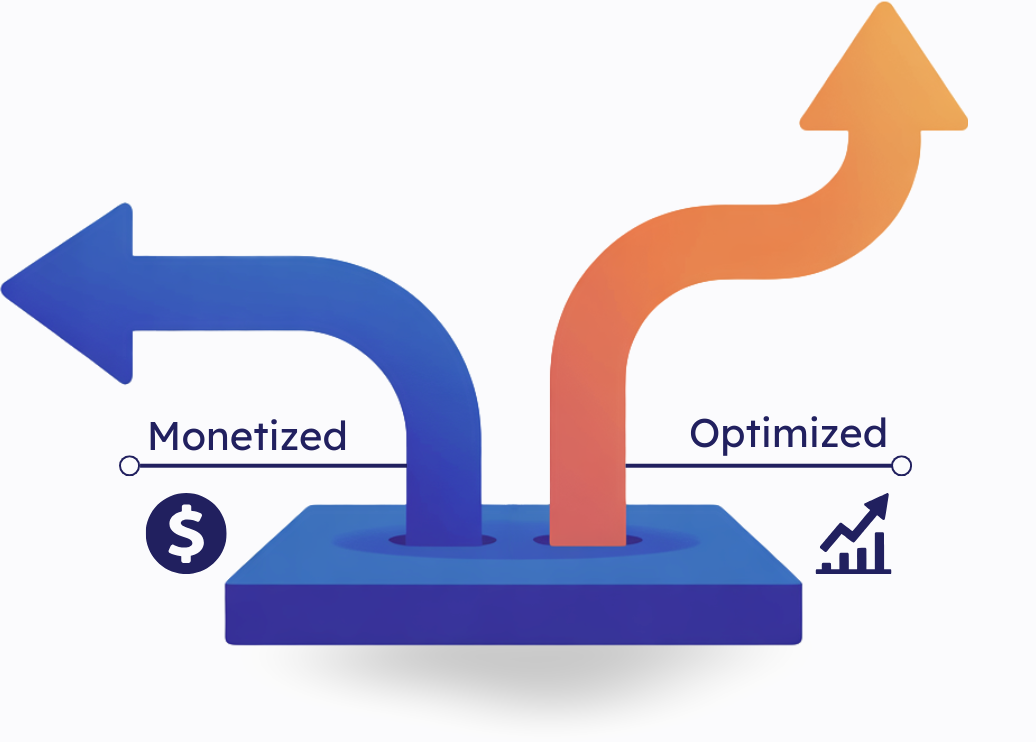
Monetized Was Infrastructure. Optimized Is Strategy.
Monetized means revenue exists. Optimized means revenue is engineered.
Monetized sustains. Optimized scales.
Monetized is defensive. Optimized is offensive.
The difference might look subtle in a dashboard. It is massive in a growth model.
If yield improves even modestly, LTV expands. If LTV expands, bidding flexibility expands. If bidding flexibility expands, market share expands.
Optimization is leverage. Leverage defines leaders.
The Industry Will Quietly Divide
Over the next few years, the industry will split into two camps.
Camp one: Ads are live. Revenue looks fine. Monetization is “handled.”
Camp two: Yield is owned. Floors are strategic. Competition is maximized. Revenue gap is measured.
Camp one will experience unexplained UA pressure. Camp two will scale more predictably.
The difference will not be loud. It will show up in margins. It will show up in confidence. It will show up in how aggressively studios can pursue growth.
The Provocation
If you cannot clearly articulate:
• Your revenue ceiling
• Your optimization roadmap
• Your realistic uplift range
• Your demand competitiveness by geo
You are not optimized. You are monetized. And monetized is no longer enough.
This is not criticism. It is evolution.
Markets mature. Definitions tighten. Performance gaps widen.
The shift from monetized to optimized is already underway. The only question is whether you are leading it or reacting to it.
In 2026, monetization is no longer plumbing. It is a growth discipline. And disciplines create category leaders.
Still Just Monetized?
If you can’t clearly define:
• Your revenue ceiling
• Your optimization roadmap
• Your realistic uplift potential
Then you’re not optimized yet.
Our MAS team works with studios to close the revenue gap and unlock scalable growth.

Table of Content