Welcome to the Yodo1 Blog
Bringing you the latest news and updates from Yodo1, the mobile gaming industry, and work-from-anywhere culture
IP Licensing

The Power of Brand Injections in Mobile Games
06.02.2021
•
5 mins read
The Power of Brand Injections in Mobile Games
The collaboration between IP holders and game developers to integrate top brands into existing games or make brand new ones has been around for a long time. In the early 90s Battletoads/Double Dragon was an early example of the power of brand injections into games and the success it can bring. It had great reviews at the time and retrospectively won the best overall game at the 1993 Nintendo Power Awards.
Since then gaming has obviously moved on and the advent of the mobile phone has made this segment of the gaming industry a fast growing and exciting area , enabling both IP holders and game developers to grow their audience and revenues, a true win-win.
Brands being integrated into games range from iconic characters in movies, TV shows and anime to fashion, sports teams and players or musical artists and influencers. These types of integrations facilitate increased engagement with the brands from players who are able to enjoy fresh and exciting content using the brands they love in the games they play.
Yodo1 is a company leading the charge in this field of gaming, exemplified by its partnership with Hasbro. By licensing Hasbro’s world-class IPs such as TRANSFORMERS, Yodo1 has been able to help its partner studios to amplify, enhance or create new games in cooperation with these IPs. An excellent example of this is the Mobile Legends x TRANSFORMERS collaboration that ran in August 2021.
See trailer
How Games and IP HoIders Benefit From Brand Injections
Brand injections offer both the IP holders and the game developers great opportunities and benefits:
The IP holder can
- Expand their brand’s exposure by reaching new audiences in the most engaging format of entertainment.
- Generate a new or an additional revenue stream for their brand.
- Provide another marketing channel for the brand overall.
- Reclaim lapsed brand audiences/fans by offering them something new and exciting.
The game developer can
- Reach new and wider audiences as a result of the popularity of the IP holder’s brand.
- Grow their revenue stream as a result of more engagement and monetization in their game from a bigger audience.
- Keep the game fresh and exciting by using branded campaigns to highlight new features within the game, thus retaining players.
A recent collaboration by Yodo1, Hasbro’s TRANSFORMERS and the strategy game Top War highlights the realisation of these benefits and opportunities. The two week in-game event took place in August, 2021 saw the TRANSFORMERS IP injected into the game. Over 13 million players globally participated in this event, which saw 50% of daily revenue for the game come from TRANSFORMERS related sales.
How Big is the Brand and What is its Potential
To ensure the right brand is selected for the right game and genre a developer must research the IP reach, potential and potential. In all areas of consumerism, the stronger the IP or brand’s connection is to its audience, the stronger is its ability to provide a ROI. This is because an excellent IP drives awareness and creates an instant emotional attachment with the audience.
Three out of five titles on Google Play’s top section (on the Game’s category, 20th Sep 2021) are strong IP branded games
For mobile gaming this is exemplified by Apple’s IOS and Google’s Play stores regularly featuring IP-based titles in their prime merchandise banners, and people often searching for the IP itself.
This is great when marketing the title as consumers instantly recognize the brand and form an association with the game, as well as having the chance to participate in the storylines and lore that the IP already offers. All of this can significantly reduce customer acquisition costs and drive long-term engagement in the game.
Therefore a developer, must thoroughly research the brand and identify:
- How popular is it within its local market as well as globally?
- How strong is the brand within gaming?
- How long has the IP existed and when was it most popular?
- Which demographic does the IP most appeal to?
- Are there any events, content and/or new non-game products that are to be released in relation to the IP?
- What is the IP holder’s track record of managing IPs (how many of their brands are held in high esteem)?
Matching the Brand With the Right Game Genre
In theory these collaborations sound quite straightforward, but they can quickly go awry if the brand does not match the game. For example a zombie game almost certainly wouldn’t work with an IP such as the Teletubbies (and the IP holder probably wouldn’t permit it).
When selecting an IP, a developer would need to consider the game’s theme, its audience and how the IP can be aligned with those elements as well as the game’s mechanics. For example some hypercasual games which have short life cycles may not work well with IP injections because they rely more on ad monetization rather than in-app purchases, which is a more common and effective way to capitalize on the brand injection.
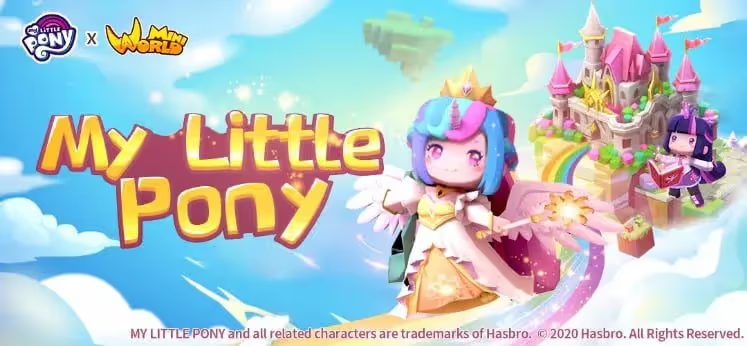
On the other hand, The My Little Pony IP has proven to be an excellent example of a brand injection for the sandbox game Mini World. Through Yodo1’s Hasbro partnership, developer Miniwan Technology injected the brand into the game and saw excellent results. There was a boost in sales with 180,000 skins of Twilight Sparkle and Princess Celestia sold within the first week and exceptionally high engagement over the two weeks from launch, with 10 million views and 750,000 comments on My Little Pony topics in online communities.
See trailer
The Brand Should Enhance the Game
Once the appropriate brand is selected, a developer will also need to consider how the IP can showcase the game, drive engagement and bring joy to fans through its gameplay. If they don’t, they won’t win over the audience.
For example, the Tom and Jerry game created by NetEase was designed to be fun and quirky, much like the characters, as the IP caters to a casual audience. It wouldn't have made sense to implement hardcore-game mechanics, as that would only have put off the show's biggest fans.
An alternative example would be an RPG like Marvel Future Fight (by NetMarble). RPG games often center around character growth, specialized weapons, and rich backstories Therefore an IP such as this would enhance the player’s gaming experience as it features well-loved heroes and notorious villains whose personal histories and characteristics can be immersed into the game to enhance the plot.
See trailer
With IP holders keen on opportunities to collaborate, large game publishers and developers who take the above advice into account can easily find the right IP to give their titles even more traction.
Over the years, third-party IP licensing has yielded notable results, which are growing rapidly in the mobile game market. So if large publishers and developers can find the right IP to best fit their game's characteristics, approach IP rights holders, and integrate the brand into their game (theme, products, and gameplay mechanisms) they may be on the win-win path.
So whether you are a developer or an IP holder looking to take advantage of IP licensing, contact Yodo1 to get started. Through their Brands in Games team (BiG), years of experience, and expertise, they are able to help acquire the right IP for the right game, helping you on the path to a true win-win.
This article first appeared on Pocket Gamer.
Latest Blog Posts
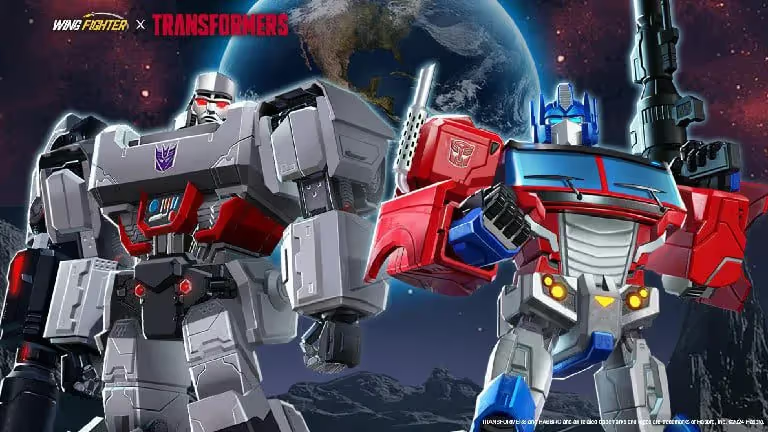

Wing Fighter x TRANSFORMERS – A Battle for the Ages!

Dragonheir: Silent Gods x Dungeons & Dragons – Enter the Third Phase of Epic Collaboration!

TRANSFORMERS bots and Puzzles & Survival Game Unite to Combat a Massive Invasion!

Yodo1 Gathers China’s Top Mobile Gaming Leaders to Explore Global Brand Partnerships in 2025
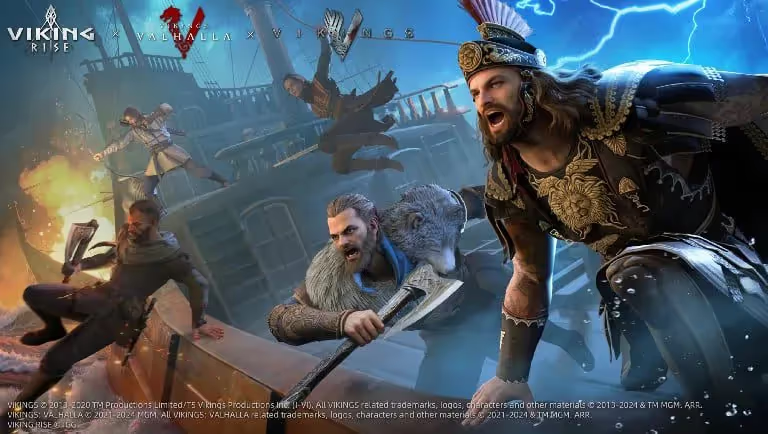
Viking Legends Unite in Viking Rise A Once-in-a-Lifetime Crossover!
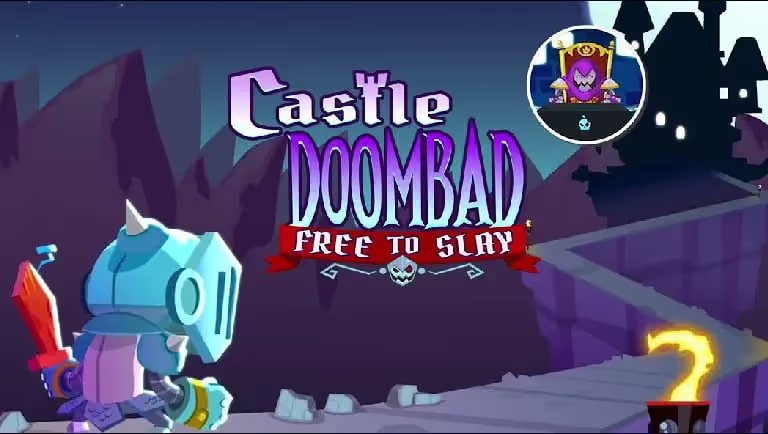
Grumpyface Studios announces Castle Doombad: Free to Slay is available now on iOS and Android devices
Culture

Yodo1’s Automated English Training Program is Changing the Game and Getting Results!
06.02.2021
•
5 mins read

Yodo1’s Automated English Training Program is Changing the Game and Getting Results!
International work-from-anywhere (WFA) companies were an alien concept to many before Covid-19 hit. Not so at Yodo1. After years of growing different business lines from our origins in China, we grew into a global company, and then made transition to becoming fully WFA in December, 2020.
As with any sea change, there have been challenges and hurdles to find solutions to. A big one is that many core staff members from China lacked sufficient English skills to engage with new international teammates. Being able to communicate well is a company mantra, and most of the staff were accustomed to doing so primarily or fully in Chinese before the WFA transition made English the lingua franca.
We knew immediately that we needed a way to bring employees, who work across 33 countries, together. With the goal of everyone communicating successfully in one common language, Yodo1’s English Training Program was born.
What is the English Training Program?
The English Training Program is an internal program to help Chinese-speaking staff improve their English communication skills so that they can interact effectively with their colleagues. Launched in March and running through the rest of 2021, it uses a combination of lessons, assignments, activities, events and evaluations.
Assignments are sent out twice a week, along with buddy feedback submissions, and there are two live English events per week. The program is run by Luke Priddy, Yodo1’s Head of Education, who has years of experience teaching and creating English language learning material, including via his own YouTube channel.
What makes it different?
“We use an automated system for sending assignments and feedback submissions, along with reminders, to ensure that participants are keeping with the program. There is also a cash prize for those who participate in the video pitching challenges,” explained Luke.
"Ultimately, Yodo1 is an international company. We have employees working across projects from many different countries. Simple fact: English is the language of international business. That creates an immediate problem for those staff used to operating completely in Chinese, which was the case before the move to WFA and a more international workforce.”
In light of this, helping Chinese staff who didn’t speak English well become acquainted with an English environment was a top priority. As luck would have it, James LaLonde (Yodo1 Co-CEO), Terry Wang (Product Head at Yodo1), and Luke had just spent the last five years running a language learning platform, which built a community of nearly 5,000 online tutors, more than 100,000 active students, and close to two million subscribers worldwide. The core curriculum included 320 time-tested lessons. It was an obvious choice to use that curriculum for our training program.
“The next challenge was running Yodo1’s English training at scale, since hiring teachers and doing individual lessons wasn’t feasible for the nearly 120 staff enrolled in the program. So we built an automated system for sending assignments to participants,” explained Luke.
“The key thing is that participants are required to speak, to actually use the language. Their assignment then goes to a buddy, who watches it and gives them feedback. This approximates the demands of an international, English-speaking work environment, establishes accountability, and gets participants used to using the language.”
What do participants think?
Even the best program in the world is only as effective as those who take part in it, and Yodo1 employees have been whole-heartedly embracing the challenge. “We’ve seen solid results so far, with high completion rates and more people joining the weekly live events. We are creating an English ethos step-by-step," says Luke.
Huizi, the Recruiter and Hiring Success Manager who’s been with Yodo1 for a year now, says of the program: “I think it’s a good way to enrich our thinking. We talk to the team and others about work every day, and almost no other topics are involved, but the program allows us to talk more outside of work. After submission, my partner will give me some feedback; on what I’m doing well and what I can do better. I’ve been learning a lot from them.”
UA Creative Designer Liu Jing is also an active participant, going the extra mile and really putting in the time. “Learning English is not a simple matter; you need to be persistent and brave, and you will gain a lot. Recording and reviewing are helpful to me: I take time to do my homework seriously, and to record the words and sentences that I find difficult in it, and read them every day.”
Yodo1 is committed to personal development
The English Training Program continues to go from strength to strength. Yodo1 is committed to investing in the ongoing personal growth of its staff. Helping them improve their working English skills is just one way we do that.
If this work environment sounds like a place where you’d thrive, check out the openings on our Careers Page.
About Yodo1
Yodo1 is a game platform company that helps developers better market, manage, and monetize their games. Our AI-powered tools and global expertise in areas such as mobile advertising, community management, and digital IP licensing enable partners to increase playtime, revenue, and retention. Our vision is to open the world of gaming success to anyone with the talent to develop. To learn more, visit stg-wwwyodo1com-newtheme.kinsta.cloud and follow us on LinkedIn.
Latest Blog Posts
Wing Fighter x TRANSFORMERS – A Battle for the Ages!
Dragonheir: Silent Gods x Dungeons & Dragons – Enter the Third Phase of Epic Collaboration!
TRANSFORMERS bots and Puzzles & Survival Game Unite to Combat a Massive Invasion!
Yodo1 Gathers China’s Top Mobile Gaming Leaders to Explore Global Brand Partnerships in 2025
Viking Legends Unite in Viking Rise A Once-in-a-Lifetime Crossover!
Grumpyface Studios announces Castle Doombad: Free to Slay is available now on iOS and Android devices
Get Updates From Yodo 1




Simplifying game growth
京ICP备12010993号-2 · 京ICP证120652号 · 京网文(2015)2029-371号 · 京公网安备11010502036836号
© Yodo1 Ltd. 2025 | All rights reserved.