Welcome to the Yodo1 Blog
Bringing you the latest news and updates from Yodo1, the mobile gaming industry, and work-from-anywhere culture
IP Licensing
Detective Conan, Demon Slayer; IP Trends You Can’t Miss - August IP Licensing Roundup
05.09.2025
•
5 mins read
Level Up Your Game: August IP Licensing Roundup
Detective Conan, Demon Slayer & IP Trends You Can’t Miss
At Yodo1, we track the latest IP collaborations and market shifts through our DreamData platform to uncover insights that help developers grow smarter. August kicked off with a wave of anime-powered crossovers, bold console launches, and a clear reminder that IP continues to be one of gaming’s strongest growth engines.
Here are the highlights.
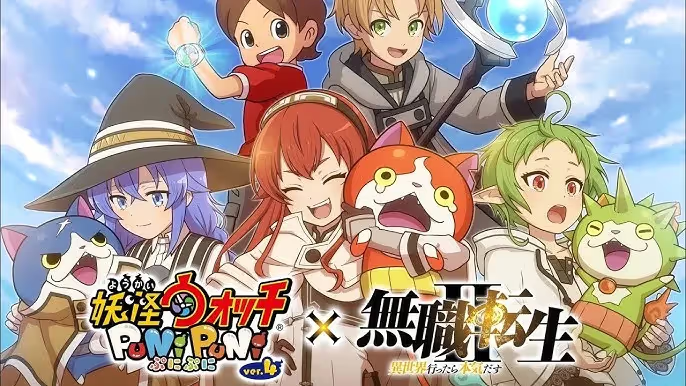
Yo-kai Watch: Wibble Wobble x Mushoku Tensei: Jobless Reincarnation
This crossover brings 15 characters, themed stages, hidden challenges, and limited-time mechanics to the Yo-kai Watch universe.
Global | August 1–16, 2025
Yodo1’s Take: This collaboration showcases the continued strength of anime-driven events in Japan and Asia. By offering depth through multiple characters and mechanics, the collab boosts retention while attracting new audiences—a strong example of IPs driving long-term engagement.

Honor of Kings x Detective Conan (Phase 1)
The world’s top MOBA introduces Conan Edogawa and Kaito Kid skins, detective-themed missions, and special rewards.
Global | August 1–31, 2025
Yodo1’s Take: Detective Conan’s global appeal makes this a perfect fit for Honor of Kings. The narrative-driven missions elevate the collab beyond cosmetics, blending storytelling with monetization to strengthen both engagement and revenue.
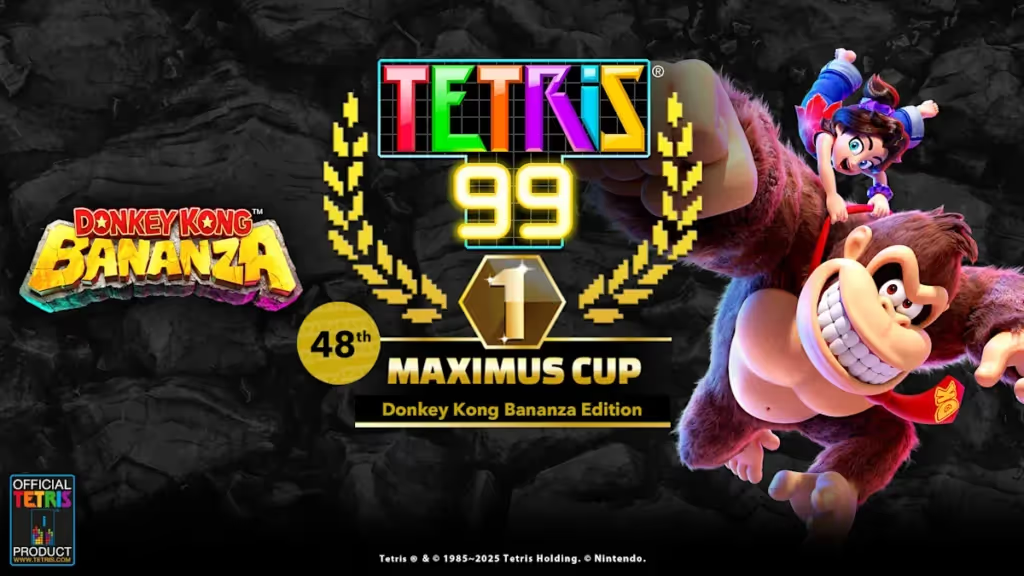
Tetris 99 x Donkey Kong Bananza
A special Donkey Kong theme is available during the 48th MAXIMUS CUP by earning event points.
Global | August 1–5, 2025
Yodo1’s Take: Nintendo shows how even short, limited-time collabs can drive results. By tying IP to event-based gameplay, they create urgency that reactivates lapsed players and excites existing fans—a simple but effective retention strategy.
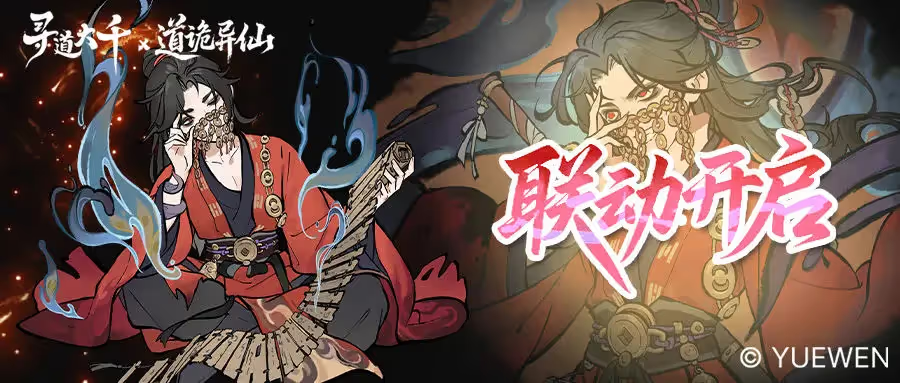
Path of Cultivation x Dao of the Bizarre Immortal
This collab introduces character skins, themed rewards, treasure hunts, and new companions like Bai Lingshao.
August 1, 2025
Yodo1’s Take: A great example of “local-first” collaborations. By weaving in fantasy elements that resonate with regional players, the event deepens immersion while adding monetization opportunities, proving that localized IPs can perform just as strongly as global brands.

Isekai: Slow Life x Is It Wrong to Try to Pick Up Girls in a Dungeon?
An original story merges two beloved worlds after a goddess’s mistake.
Japan | August 1–21, 2025
Yodo1’s Take: Japan-exclusive collabs like this highlight the importance of tailoring IP strategies to market. By offering fresh storytelling and exclusivity, the collab creates a strong pull for fans—especially in niche, high-value regions.
Market Insights
- IP collaborations are surging. Crossovers are up, especially on mobile, underlining their value as a user acquisition strategy.
- Anime dominates Asia. Deep anime collabs continue to draw huge fan bases, proving the genre’s staying power in gaming.
- Blockchain experiments continue. More games are testing NFTs and Web3 as business models, though long-term adoption is still unclear.
Yodo1’s Take: The data confirms that IP isn’t just a trend—it’s now a core growth lever for game developers. Anime remains a powerhouse, while blockchain experiments show that studios are still searching for innovative revenue streams. The key is balancing what excites fans with what scales sustainably.
Final Word
From Detective Conan to Demon Slayer, August proved that IP collaborations continue to captivate players and drive growth across genres and markets.
Whether you’re aiming to monetize more effectively, keep your app lean, or launch your own IP collab, Yodo1 is here to help.
👉 Ready to grow with IP?
Game Growth
Why Ad Mediation Matters for Indie Devs
03.09.2025
•
5 mins read
Why Ad Mediation Matters for Indie Devs
In the mobile games industry, every click counts, especially when you’re running a lean studio, balancing development with monetisation, marketing, and everything in between. If your game is live and earning through in-app ads, chances are you’ve heard of “ad mediation.” But what exactly is it, and why should indie developers care?
Let’s break it down.
What Is Ad Mediation?
Ad mediation is the tech that connects your game to multiple ad networks—like AdMob, Unity Ads, AppLovin, or IronSource. Instead of relying on a single network to fill your ad placements, a mediation platform acts like a smart traffic controller, choosing the best-paying ad in real time from a pool of partners.
In theory, this setup should maximise your ad revenue. In practice, many indie teams struggle with the complexity of integrating and managing multiple networks effectively.
That’s where Yodo1’s MAS (Managed Ad Services) comes in. MAS simplifies the entire process—handling integration, optimisation, and performance monitoring—so you can focus on building your game while we handle the monetisation.
Why It Matters More Than You Think
If you’re only starting to earn from in-app ads (IAA)—or looking to add IAA to your in-app purchase (IAP) strategy—ad mediation can be a powerful way to boost your revenue. Here’s why it matters:
1. More Networks = Better Yield
Connecting to more ad networks means more competition for your impressions, which usually results in higher eCPMs and more consistent fill rates. With the right mediation stack, many developers see a revenue uplift without making changes to their game content.
2. Smart Monetisation: Beyond Just Bidding
Whether you’re using real-time bidding or a hybrid setup with waterfall, MAS handles the complexity for you. It prioritises networks, sets dynamic floors, fine-tunes formats, and runs A/B tests — all automatically. So you can save time, cut costs, and focus on building your next hit.
3. More Than an SDK: Expert Support On Top
While mediation SDKs simplify integration by centralising ad network management, developers still need to add and maintain individual adapters for each network. These adapters can introduce risks like app crashes, ANRs, and bloated builds — especially without close monitoring. That’s where MAS stands out: Yodo1’s dedicated team handles these technical challenges for you, ensuring stability and providing top-tier support.
4. Time Is Money
You didn’t become a game dev to spend your nights tweaking waterfall logic or emailing support teams. Good mediation should remove that load from your plate so you can focus on building the next big feature, not fixing your ad stack.
But Here’s the Problem…
Mediation can be a headache to manage. Integrating multiple networks, managing requests and payments across different ad networks, dealing with conflicting SDK versions, ensuring store compliance, and maintaining platform stability — these are real challenges, especially if you don’t have a monetization expert on your team.
And that’s exactly why MAS exists.

MAS: Monetisation Without the Stress
At Yodo1, we built MAS (Managed Ad Services) to give indie developers a plug-and-play monetisation engine that just works.
One SDK. 15+ Networks. No headaches managing waterfalls or juggling SDKs.
Up to 50 Percent Revenue Uplift. Real-time bidding ensures better fill rates and eCPMs.
Protection Against Market Fluctuations. MAS leverages ad network diversity to keep your revenue steady — if one CPM drops, another fills the gap.
Quick pay: Payments from all ad networks combined and payment made in advance on net10 basis.
Done-for-You Setup. From integration to optimisation, our team handles it all, minimizing your tech debt.
ANR-Safe by Design. We know how fragile organic growth can be, and MAS is built to protect it.
Whether you’re a solo dev or a small team trying to optimise your first hit, MAS takes the complexity out of monetisation so you can focus on what matters: making great games.
Final Thought: If You’re Not Using Mediation, You’re Leaving Money on the Table
Ad mediation isn’t a “nice to have.” It’s essential instrument for monetising mobile games effectively in today’s market. But you shouldn’t have to become an ad tech expert to benefit from it.
Let us take care of the setup, the networks, the bidding, the optimisation, so you can do what you do best: build, launch, and grow.
Ready to simplify your monetisation?
IP Licensing
How to Tell If Your Studio Is Ready for an IP Collab
03.09.2025
•
5 mins read
Curious about IP collaborations but unsure if the time is right? Here’s how to know when your game and team are ready, and how to set yourself up for success.
Bringing a well-known brand, character, or universe into your game can do more than drive attention. A strong IP collab can unlock new markets, deepen player engagement, and supercharge your monetisation strategy. But IP isn’t a one-size-fits-all solution, and the best results come when your game and studio are set up for success.
So, how do you know if you're ready?
1. Your Game Has Momentum and a Community
Games that perform best in IP partnerships are already delivering value to players. If your title is live and stable, ideally for 6 months or more, and generating consistent revenue, you’ve already cleared a major hurdle. What we typically look for:
- $300K+ in monthly revenue
- A steady or growing user base
- Live ops cadence that supports events or seasonal updates
If you’re seeing solid traction and looking for your next growth lever, IP might be it.
2. You’ve Found the Right IP Before Launch
Still pre-launch but found an IP that could boost your post-launch metrics? We can help integrate the IP before release and schedule its roll-out after launch. In this case, we anticipate:
- Strong IP fit for your title
- A clear roll-out plan in place for the post-launch period
3. You’re Actively Seeking Growth Opportunities
IP works best as a growth multiplier. If you’re exploring ways to attract new audiences, re-engage lapsed users, or increase lifetime value, a well-matched IP can provide the narrative hook or brand recognition to make that happen.
Collabs can take many forms, such as limited-time events, character integrations, crossovers, or co-branded content. They can help you:
- Stand out in crowded UA channels
- Strengthen retention through meaningful content
- Increase monetisation with exclusive items or cosmetics
4. Your Team’s Ready for a Campaign, But Needs Support
You don’t need a 200-person studio to launch a successful IP campaign, but internal alignment is important. Teams that get the most out of IP are those that can dedicate a point person, coordinate across product and marketing, and adapt timelines to fit campaign needs.
Even lean teams can succeed with the right support. We provide flexible onboarding, asset kits, and campaign guidance to make IP as plug-and-play as possible.
5. You’re Creatively Open but Strategic
You know your players better than anyone, and that matters. The best IP partnerships strike a balance between player expectations and brand requirements. Studios that thrive in this space:
- Are open to co-creating with IP holders
- Want to add value to their player experience
- Understand the power of narrative or cultural fit
- Have ideal IPs in mind but lack the right connections to licensors
Whether you’re targeting nostalgia, seasonal appeal, or cross-market expansion, a strategic approach to creative integration makes all the difference.
6. Your Game Matches the Moment
Not every game is right for IP, and that’s okay. A good fit often includes:
- Genres like casual, simulation, RPG, or adventure
- Strong worldbuilding or character-driven gameplay
- Opportunities for skins, events, or crossover mechanics
- A consistent content update rhythm
We’re always happy to assess IP fit with you, and if this title isn’t ready, we’ll help you plan for the next one.
All the boxes ticked? Time for an IP collab!
If this checklist sounds familiar, you’re probably closer to a successful IP collab than you think.
At Yodo1, we’ve helped game studios of all sizes integrate globally recognised IPs in ways that drive real results without overwhelming their teams.
Book a discovery call to explore your options, get honest feedback, and see if an IP collaboration could help you level up your game.
IP Licensing
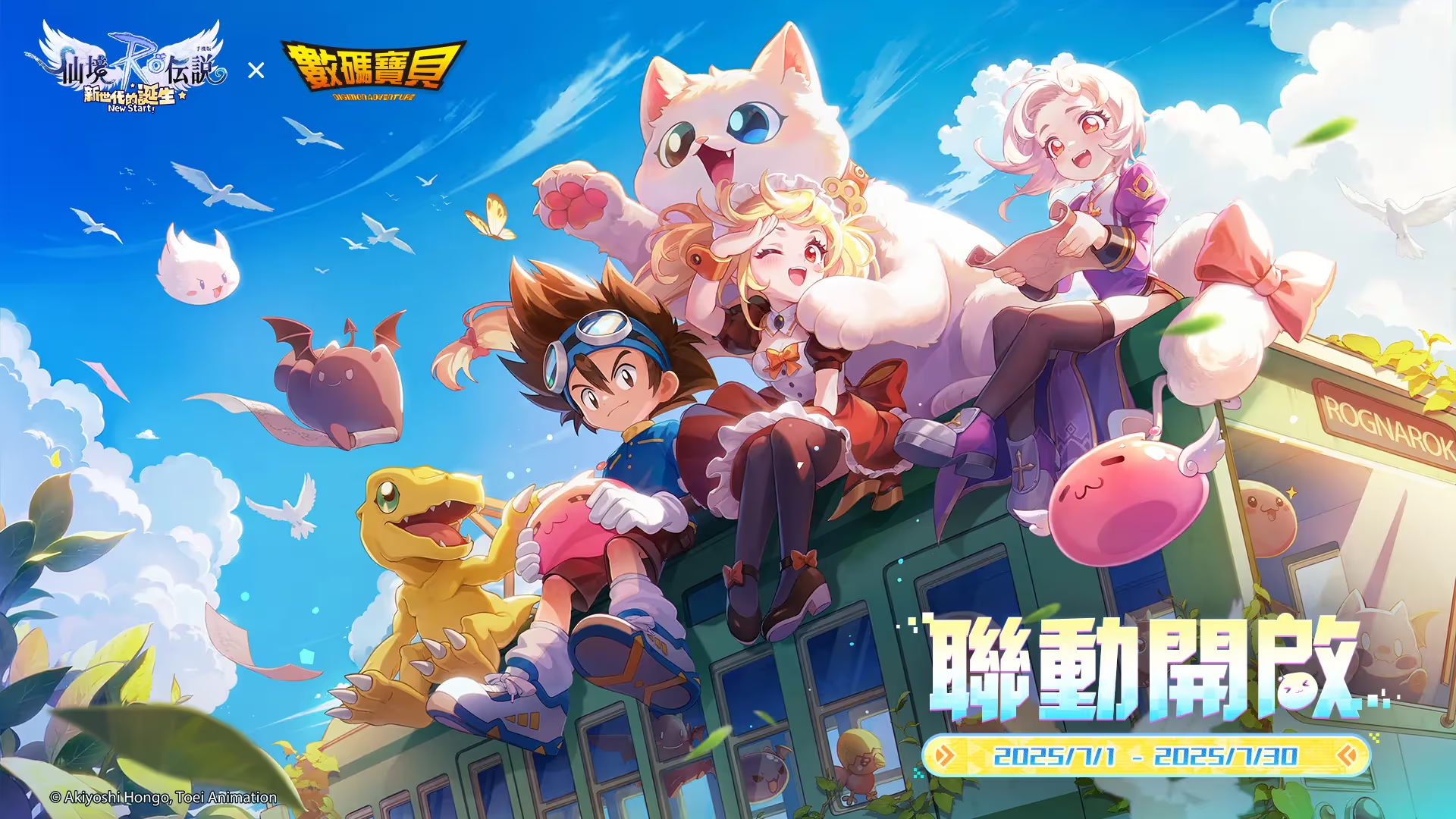
The July 2025 Lineup: Crossovers, Cultures and Character-Led IP
03.09.2025
•
5 mins read
The July 2025 Lineup: Crossovers, Culture and Character-Led IP
From nostalgic returns to regional mascots making global moves, July’s IP collaborations brought variety, creativity and commercial impact to the mobile gaming space. Powered by insights from IPVerse, Yodo1’s proprietary platform, we’re highlighting the standouts that made waves this month — including one of our very own.
Let’s dive into the month’s biggest moments in IP.
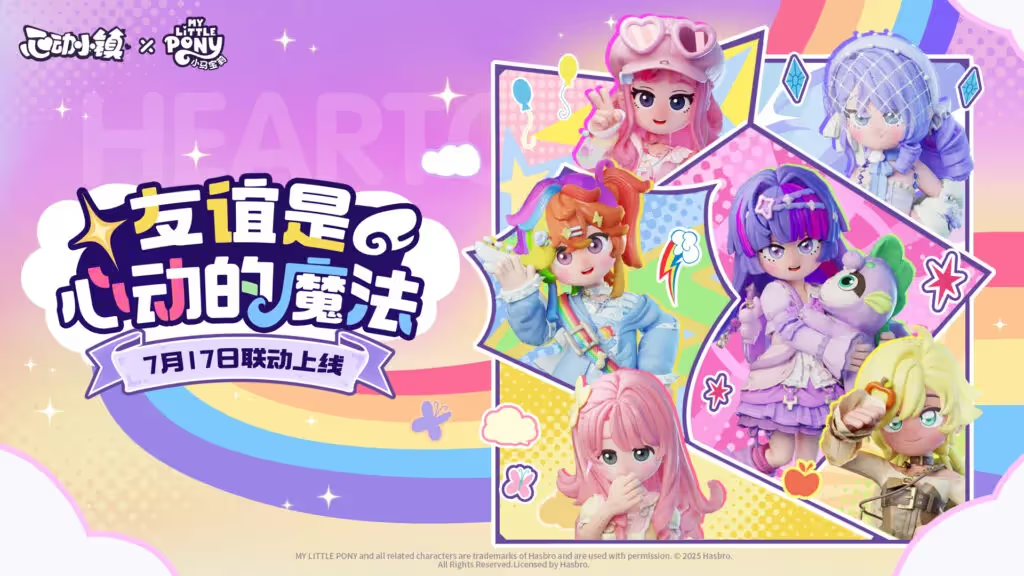
My Little Pony × Heartopia
China | July 17 – August 24, 2025
XD Games’ sandbox title Heartopia partnered with the globally loved My Little Pony franchise in a colourful collaboration that allowed players to explore Equestria-themed content, interact with characters like Twilight Sparkle and Rainbow Dash, and decorate their virtual homes with Ponyville flair.
Yodo1’s Take:
This is character-led IP done right. It appeals to younger audiences while also tapping into nostalgia, particularly among millennial parents. The event also shows how IP can be woven into live service games for extended engagement, a growing trend in the sandbox and simulation genres.

Ragnarok X: Next Generation × Digimon – Phase 1
Southeast Asia | July 1 – 30, 2025
Players took on Devimon in the new Darkness Purge instance, earned free Agumon pets, and dressed their characters in Taichi and Mimi outfits from the original Digimon Adventure. This is the first phase, with more content expected in future updates.
Yodo1’s Take:
This crossover hits the sweet spot of emotional nostalgia and playable content. Ragnarok X has consistently shown how episodic IP events can extend shelf life and re-engage lapsed players. Smart staging in “phases” builds momentum and gives the audience something to look forward to.

Aura Kingdom × Lan Lan Cat
Global | July 2 to 30, 2025
This quirky crossover brought the popular Taiwanese mascot Lan Lan Cat into Aura Kingdom with themed quests, outfits and home decorations. Daily login gifts offered extra incentives to keep players returning throughout the campaign.
Yodo1’s Take:
Regional IPs are increasingly breaking into global markets, and this collaboration proves it can work. The light-hearted tone and strong merchandise potential of Lan Lan Cat made this event a natural fit for an anime-styled MMORPG with broad appeal.

YY Hot Blood Season × Delta Force: Operation
China | July 10 to August 31, 2025
As part of YY Platform’s summer event series, this collab introduced team-up challenges, sign-in bonuses and prize draws linked to Delta Force: Operation, including physical rewards for top players.
Yodo1’s Take:
This is a great example of integrating IP into seasonal campaigns, extending their relevance with tangible incentives. The combination of FPS gameplay with real-world prizes also speaks to the growing convergence of gaming, streaming and influencer ecosystems in China.

YuYu Hakusho: Slugfest
Mobile | July 16, 2025
Zenifun Technology’s anime RPG brings the world of YuYu Hakusho to life with cel-shaded visuals, original Japanese voice actors and a mix of story missions, team building and PvP content.
Yodo1’s Take:
Anime IPs remain among the most consistent performers across mobile genres, and Slugfest delivers a strong mix of authenticity and gameplay depth. Its focus on voice acting and narrative-driven missions makes it ideal for long-form engagement and community-building.

The First Descendant × NieR: Automata
PC | August 7, 2025 (Revealed in July)
Nexon’s upcoming crossover with NieR: Automata introduces character skins for 2B and A2, complete with signature animations, as part of the Season 3 “Breakthrough” update.
Yodo1’s Take:
This crossover blends two stylised, fan-driven IPs in a way that feels organic. Revealing it in July before the August drop created strong buzz. These kinds of high-design collaborations are increasingly key for premium F2P shooters looking to attract wider audiences.
What July Revealed About the IP Landscape
As we wrap July, a few clear trends are emerging:
Character-led IPs are still leading the charge, with My Little Pony, Digimon and YuYu Hakusho showing how beloved universes can drive deep engagement across age groups and regions.
Regional IPs are scaling up globally, with campaigns like Lan Lan Cat reaching wider audiences by leaning into humour and visual appeal.
IP-based content is evolving beyond cosmetics, blending storylines, gameplay modes and phased rollouts to boost lifetime value and create sustained interest.
At Yodo1, we use IPVerse to track these shifts in real time, from brand engagement metrics to revenue performance and player sentiment. Whether you’re looking to run your first crossover or scale your next franchise partnership, we’re here to help you do it right.
Never miss an IP update
Join our monthly IP newsletter to get the latest insights, trend analysis, and standout collaborations delivered straight to your inbox.
Game Growth
The Monetisation Showdown: Waterfall Mediation vs. In-App Bidding
03.09.2025
•
5 mins read
If you're a small mobile game studio earning steady revenue from in-app ads, you've probably heard of two big monetisation models: waterfall mediation and in-app bidding. These terms pop up in every monetisation guide and ad tech forum — but what do they really mean for lean teams trying to grow?
Let’s break it down and settle the score.
What Is Waterfall Mediation?
Waterfall mediation is the traditional approach to ad monetisation. You rank ad networks in order of how much they typically pay, and when a player triggers an ad, your game goes down the list — checking each network one by one until it finds a bidder.
Sounds logical, right? But here’s the catch:
- You’re relying on historic averages, not real-time prices.
- You may miss out on higher-paying ads if they’re lower in the order.
- You need to manually optimise your waterfall in the effective way to avoid store penalties leading to revenue losses.
For developers without dedicated ad ops teams, it’s a slow, error-prone process.
What Is In-App Bidding?
In-app bidding flips the model on its head.
Instead of following a ranked list, bidding lets all ad networks compete at the same time in real time. The highest bid wins — automatically, instantly, and without needing constant adjustments.
The result?
- Higher eCPMs from true competition
- Faster load times from fewer calls
- Less manual work — no more waterfall tweaks
This model is quickly becoming the industry standard for a reason.
So Which Is Better?
Let’s compare the two:
Feature
Waterfall Mediation
In-App Bidding
Setup Complexity
High (manual setup needed)
Low (automated via SDK)
Optimisation
Manual & ongoing
Real-time & automatic
Revenue Potential
Moderate
Higher with true competition
Dev Time Required
High
Low
Stability
Prone to inefficiency
Consistent, real-time pricing
Best for...
Teams with ad ops expertise
Lean teams needing simplicity
Why This Matters for Indie Studios
When you're a small studio managing everything from development to monetisation, time is your most valuable resource. Waterfall mediation might offer some control, but it also demands deep expertise and constant upkeep.
In-app bidding, on the other hand, lets you focus on your game while the system works behind the scenes to maximise every impression.
This is exactly why we built MAS (Managed Ad Services).
MAS: Monetisation That Works While You Build
MAS gives you access to 15+ ad networks through a single, bidding-enabled SDK — no waterfall setup required. We handle the mediation, bidding, optimisation, and support so you don’t have to.
- Real-time bidding from day one
- Revenue uplift of up to 20%
- ANR-safe SDK, designed with stability in mind
- Ongoing support from integration through to scale
Whether you’re earning $5K or $30K a month from ads, MAS helps you unlock more value with less effort.
Final Word: Ditch the Waterfall, Embrace the Bidding
Waterfall mediation might still work — but it’s slow, outdated, and hands-on. If you want to grow your ad revenue without scaling your workload, in-app bidding is the smarter choice.
And with MAS, switching is simple.
Ready to take the leap?
Start your MAS upgrade today
Culture
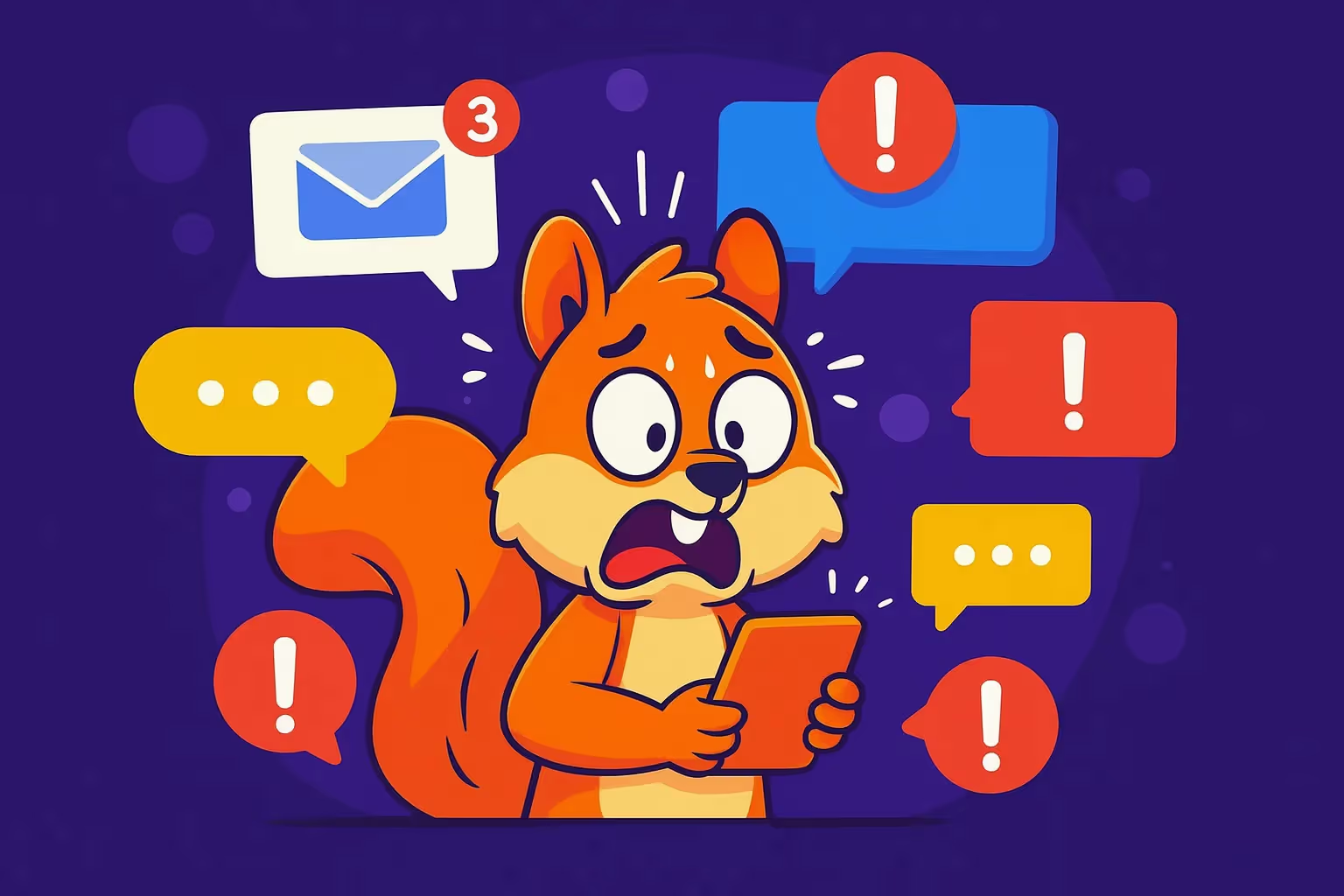
Taming the Squirrel: Why We Chose JOMO Over FOMO
22.07.2025
•
5 mins read
Taming the Squirrel: Why We Chose JOMO Over FOMO
Author
FOMO is a trap.
That twitchy impulse to check Slack, skim updates, respond instantly—“just in case”? That’s not awareness. It’s anxiety. And it’s almost never worth it.
It’s the digital-age squirrel brain—constantly darting, hoarding every notification, tail flicking at every ping. We mistake motion for meaning, presence for participation.
At Yodo1, we’ve tamed that squirrel.
We’ve replaced FOMO with something quieter, sharper—and far more powerful.
Her name is MIA.
Meet MIA
MIA is our homegrown AI assistant. She doesn’t just monitor the noise—she understands it. She reads context, detects commitments, tracks follow-through, and surfaces only what matters.
You can disappear for hours. Days. Weeks.
Then return and simply ask:
- “What do I need to catch up on?”
- “Did customer X’s onboarding go smoothly?”
- “Am I still holding the baton on anything?”
MIA answers like someone who’s been paying attention—not just collecting data, but listening with intention.
She filters the chaos. Flags the signal. Skips the rest.
We call it JOMO: the Joy of Missing Out—but not in the yoga-on-a-beach kind of way.
This is strategic JOMO.
JOMO with scaffolding.
JOMO that trusts the system you’ve built to hold what matters while you step away.
Because productivity isn’t about being always-on. It’s about knowing when—and what—to ignore.
We don’t miss out. We opt out—intentionally.
And that’s how we get the right things done.
JOMO over FOMO. Every single time.
At Yodo1, we’re not just building better tools—we’re building a better way to work.
A way that values focus over frenzy. Depth over distraction.
And yes, JOMO over FOMO.
If that sounds like your kind of environment, we’re always looking for curious minds and calm problem-solvers to join the ride.
Explore open roles at Yodo1 and help us tame the squirrel.
IP Licensing

The June 2025 Lineup: IP at Its Best
27.06.2025
•
5 mins read
The June 2025 Lineup: IP at Its Best
Welcome to the first edition of the Yodo1 Licensing Blast, our new newsletter spotlighting the biggest moves in the world of game x IP collaborations.
Each month, we’ll highlight standout trends, live events, launches, and licensing strategies that are shaping the future of gaming - across mobile, PC, console, and UGC platforms. Whether you’re a game developer, publisher, or IP owner, this is your go-to for what’s working, what’s next, and how to be part of it.
This month, six bold new activations are proving one thing: the right IP collaboration can make or break your launch.
From console to mobile to UGC platforms, we’re seeing a fresh wave of cross-media innovation -and it's not just about slapping on a skin or two. These integrations are foundational, building deeper narratives, community involvement, and monetization strategies right into the core of the game.
Whether you're a developer, publisher, or IP holder, these examples offer a front-row seat to what works - and why it matters. And us at Yodo1 can help you in you brand licensing journey.
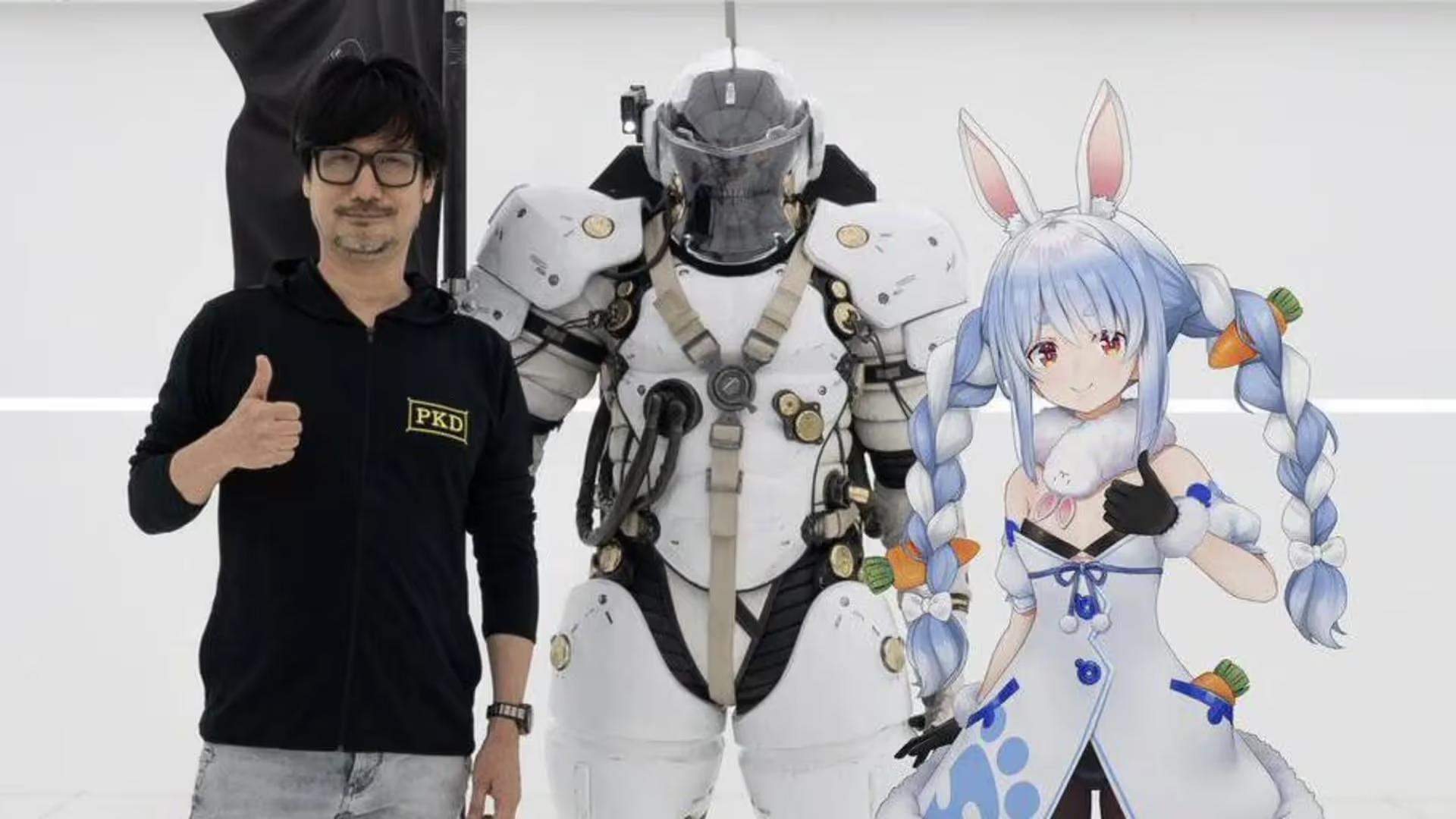
1. Death Stranding 2 x Usada Pekora (Kojima Productions)
PS5 | June 26
When Hideo Kojima brings a Hololive VTuber into his cinematic universe as a permanent NPC, it’s not a gimmick - it’s a message. Usada Pekora’s fully voiced character adds quests and lore, blending streaming culture with deep, narrative-driven gameplay.
Yodo1’s Take: Expect more VTubers and digital creators to appear in-game, not just in promo reels. This is the next phase of influencer engagement.
2. Fortnite x Squid Game (Epic Games)
UEFN | June 27–30
Squid Game joins Fortnite’s UEFN ecosystem, delivering survival-style gameplay and creator tools to build your own Squid-inspired maps. It’s IP meets UGC at scale.
Yodo1’s Take: This is the future of branded gaming—where the fans aren’t just playing the content, they’re creating it.
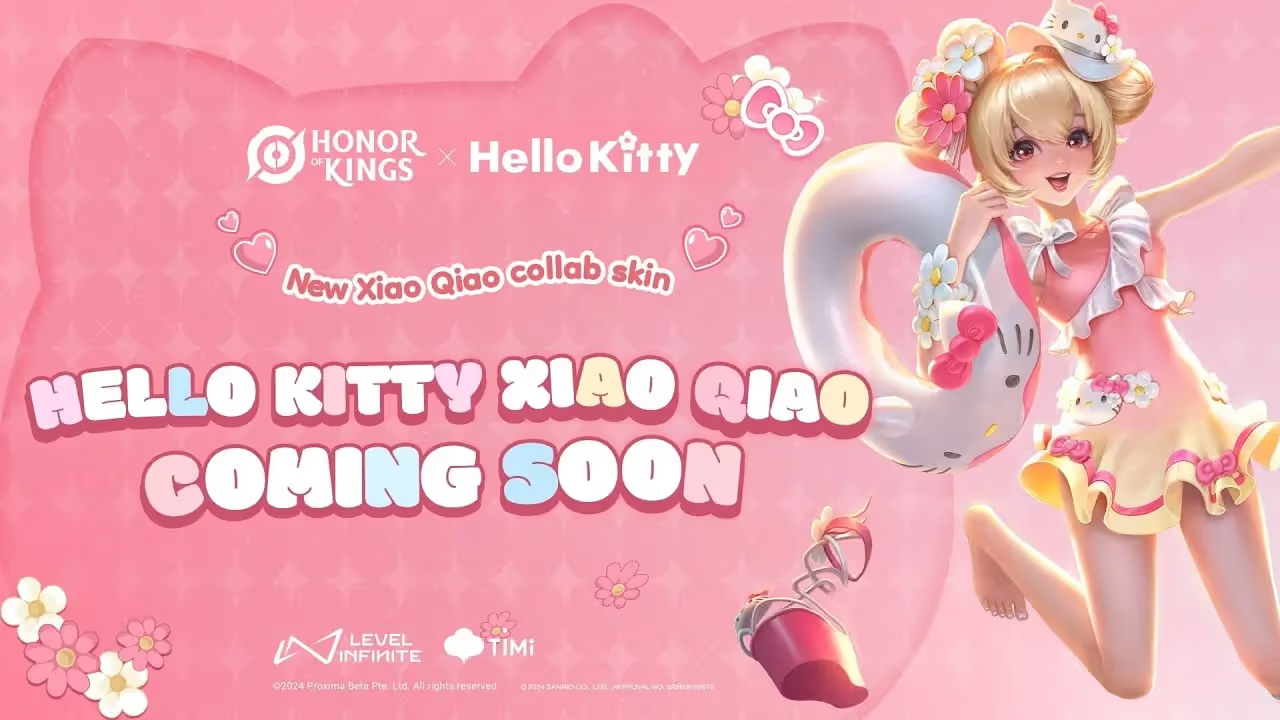
4. Honor of Kings x Hello Kitty – Phase 2 (Tencent)
Mobile | June 28
Five new skins and a 10-day sign-in event bring Sanrio charm back to the MOBA giant. The phased rollout strategy is textbook IP lifecycle management.
Yodo1’s Take: Cute doesn’t mean casual. Lifestyle IPs like Hello Kitty can massively expand your audience—especially in competitive games.
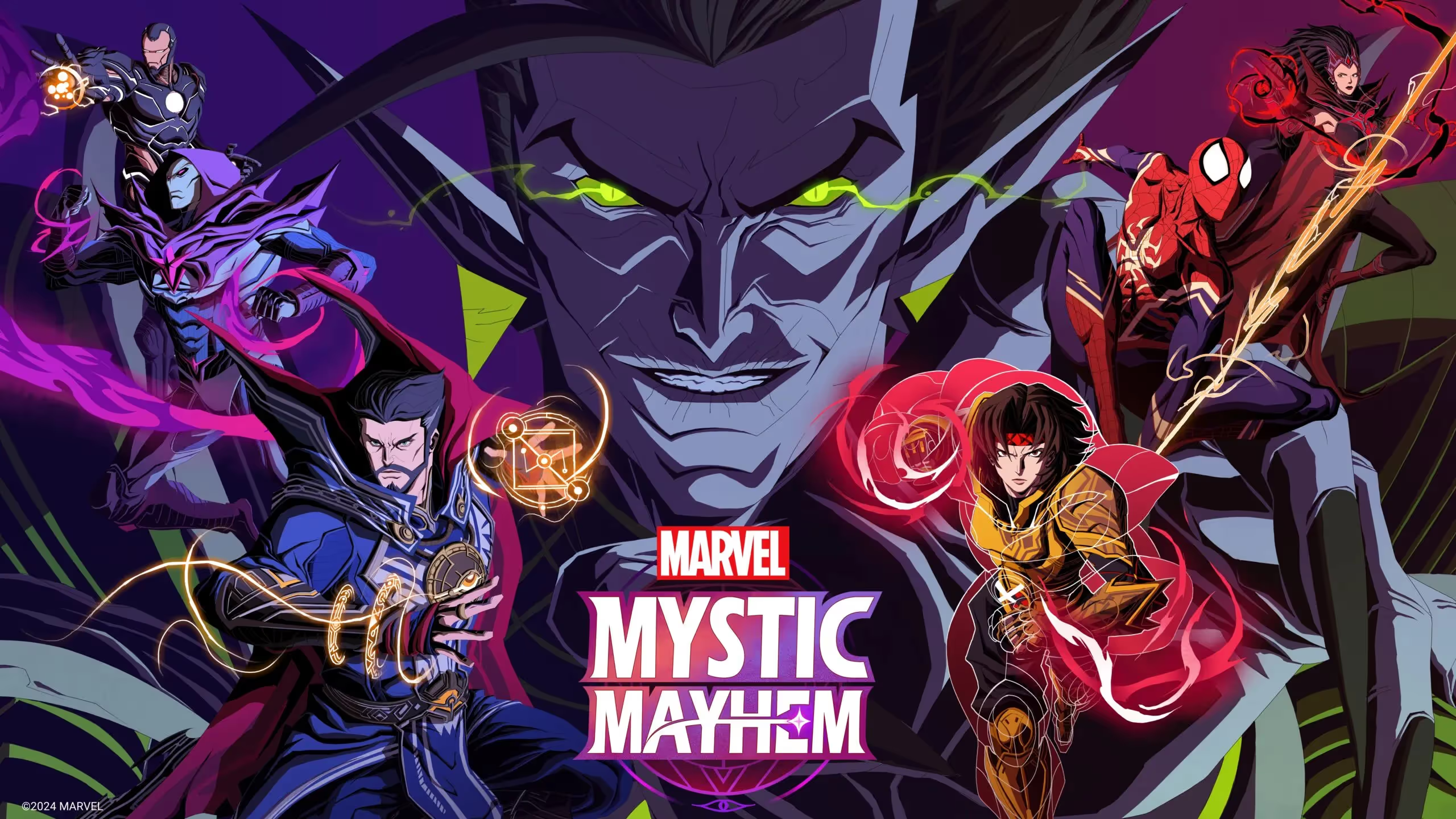
5. MARVEL Mystic Mayhem (NetEase Games)
Mobile | June 25
A tactical RPG that drops players into a multiversal showdown with Doctor Strange and Scarlet Witch. This isn’t Marvel’s first mobile move—but it might be their smartest yet.
Yodo1’s Take: Marvel understands how to localize global IP for mobile-first markets. If you’re launching in APAC, take notes.
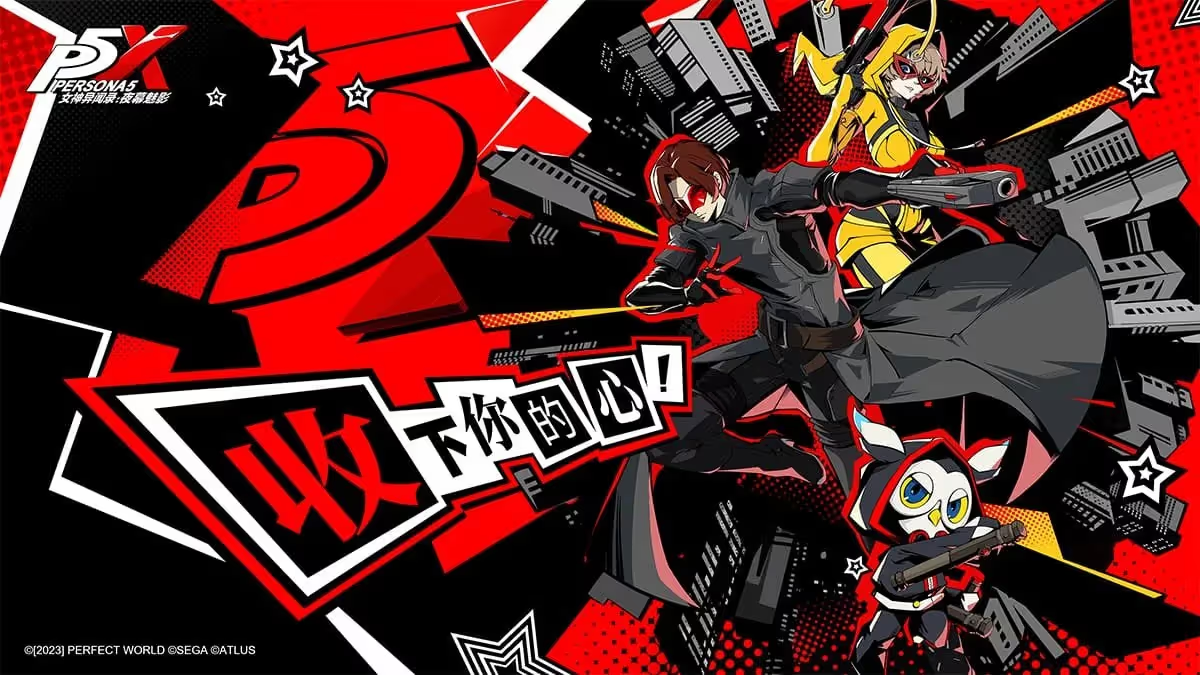
6. Persona 5: The Phantom X (Perfect World / SEGA-Atlus)
PC & Mobile | June 26
The Phantom Thieves return with a fully localized, cross-platform spinoff. With synced progression and global support, it’s the most accessible Persona title yet.
Yodo1’s Take: Cross-platform = cross-border. If you want your franchise to scale, eliminate barriers between players.
Activation Type Strategic Advantage UGC + Cinematic IP Empowers community creation and virality Lifestyle Brand Crossover Expands into new audience demographics Anime & VTuber Integration Taps into fandoms with high retention and spending patterns Narrative Franchise Scaling Lowers entry barriers for new markets and player types
Each of these partnerships goes beyond cosmetic. They represent a maturing of the industry, where gameplay, brand, and fan culture intersect in deeper, more monetizable ways.
This is just the beginning.
Every month, we’ll bring you a curated look at the most innovative and impactful brand x game integrations - plus expert insight from Yodo1’s global licensing team.
Want to stay in the loop?
Subscribe to the Yodo1 Licensing Monthly and get the next issue delivered straight to your inbox.
IP Licensing

Bridging cultural gaps and earning more with IP collaborations
12.05.2025
•
5 mins read
Bridging cultural gaps and earning more with IP collaborations
An interview with Yodo1 CEO Henry Fong
Would you play a game just because it contained an IP you loved? Would that IP make you more or less likely to not only play the game, but spend money on it?
Integrating recognized IPs into games - or building entirely new games around an IP - has been a trendy topics in gaming for years, with brand collaborations becoming standard practice for many of the biggest games in the world.
Last month, the influential tech investor Jiyuan Capital invited our CEO Henry Fong to talk about how the union of games and IPs from other media can help game makers breach cultural barriers to find new players and maximize revenues.
Check out this adaptation of Henry’s interview, or read the original piece in Chinese.
IP collaborations are a go-to strategy for mobile game developers and IP holders
Game and IP partnerships are now a common play because not only do they unlock new ways to experience media outside of their original sources, but they’re also cost efficient.
Game development involves long, expensive production cycles. It’s practically unavoidable. Developing a large-scale mobile game can take over a year, and AAA games on PC and console can take four to five years to complete. It took a massive team eight whole years to release Red Dead Redemption 2.
While crossover events between two game IPs or a game and an IP from outside the gaming world don’t carry the same cultural significance or novelty, they are far easier to create.
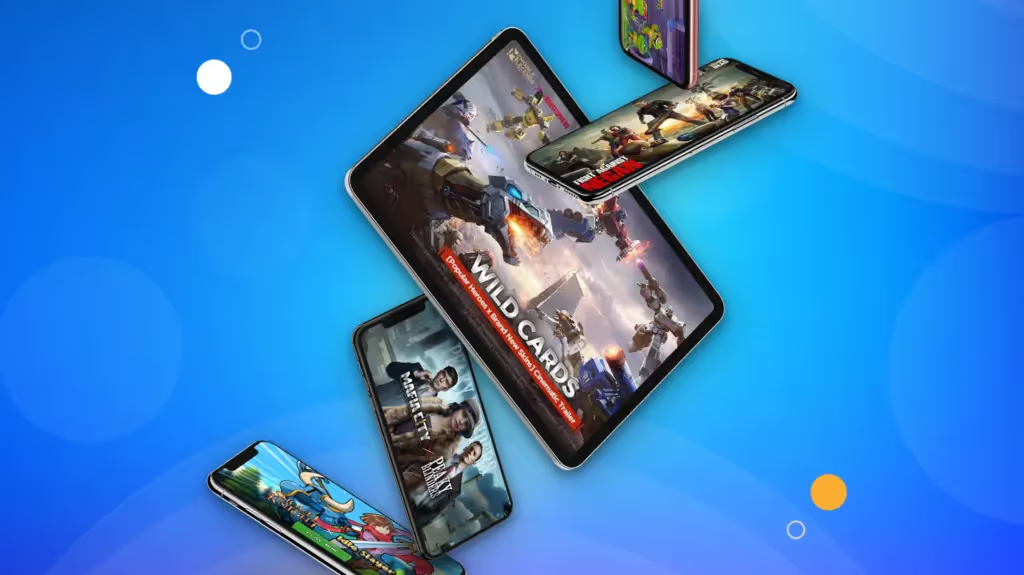
You can integrate an IP into a game via skins, characters, and game modes, giving players something new without reinventing the wheel. It’s a lighter and faster strategy that can take under half of a year from conception to implementation. In fewer than six months, an old game can find new players from more expansive markets.
How to bring together games and IPs successfully
According to Henry, game and IP collaborations are essentially all about marketing.
Game developers and publishers who turn to IP holders for partnership opportunities to break into new audiences they otherwise may not be able to access. The game mechanics and loops will often stay the same, so as to not alienate existing players, but characters and stories get interwoven to give new customers a way into the world of the game.
In other words, the right IP elements integrate seamlessly into gameplay to activate users through emotional resonance.
The strategy stands to win big among game developers in China. Henry says that IP collaboration is a key tool to open new markets for Chinese developers wishing to expand beyond their home market. NetEase’s Identity V is a great example of this. In 2019, the game partnered with an iconic RPG from Japan, Persona 5. This helped NetEase expand its survival title into the Japanese market, while also bringing more discoverability to Persona 5 in China.
IP collaboration is also a hugely important strategy for mobile game developers in Japan. In 2013, Mixi’s Monster Strike collaborated with more than 25 IPs, which contributed to the game generating $10.8 billion in Japan alone.
What IP holders get out of the deal
The benefits for mobile games are super clear, but what about the IP holders integrating their narratives, characters, and other iconic elements?
Over the past couple of years, Hasbro has brought the Transformers brand into the Chinese gaming market, partnering with multiple developers and publishers. For Hasbro, this was an effective way to grow in Greater China, reaching an already engaged audience.
For Henry, though, one of the issues is that game developers and publishers and big IP holders don’t always find each other organically. Most of the time, there needs to be bridge to show both players the benefits of the strategy and how to put it all together.
One of major factors that hold IP holders back from partnering with game companies is the complicated nature of such a collaboration. Both sides want to retain creative control and have oversight of the process.
What’s more, IP holders don’t always have experience integrating their stories and characters into games. Watching a cartoon is a very different way to consume Transformers content than playing Optimus Prime or Bumblebee in a mobile game. IP holders want the game experience to stay true to the universe they’ve established over so many touch points.
Having a mediator in the center of the partnership ensures that all of these concerns are addressed and both parties get the most out of the collaboration and all crossover events.
How game developers should choose the right IP for collaborations and crossovers
According to Henry, the key is finding an IP that your target users already love and connect to on an emotional level. That IP may have a wealth of potential players who otherwise wouldn’t have discovered your game without this type of activation.
Once you’ve identified the IP to bring into your game, the job is to propose new narratives that naturally continue on from the IP’s core stories, and figure out which characters to bring in as playable or non-playable characters.
The most vital element is to keep the IP’s core worldview in mind. Stunning visuals and mechanics are no substitute for the emotional connection, and getting that wrong can lose you existing and potential players.
At Yodo1, we believe content is king. You must create products that are responsive to players.
Your game should strive to become an IP other games want to partner with
The match-3 game Candy Crush Saga launched in 2012 and has lasted for 13 years. For a long time, it has contributed roughly 30% of Activision Blizzard’s revenue. In fact, 70-80% of top-selling games today are not new titles, but long-lasting, constantly updated games. Mario evolved from “Jumpman” in Donkey Kong, and kept jumping upward to eventually reach the pinnacle of gaming IPs.
From 1893’s Super Mario Bros. to Odyssey, Mario-based games have sold over 300 million copies. It’s the best-selling video game IP ever.
If we try to measure how much a game IP like Mario is worth, it’s value is beyond just money.
About Jiyuan Capital
Jiyuan Capital is a venture capital firm that focuses on technology and consumer sectors. They primarily invest in early and growth-stage startups, especially in fields such as the internet, software, healthcare, and consumer goods. The team at Jiyuan Capital consists of experienced investment professionals who not only provide financial support but also offer valuable industry resources and strategic guidance to help entrepreneurial teams grow rapidly. Overall, Jiyuan Capital holds significant influence within the tech industry and is an important partner for many outstanding startups!
Start licensing with Yodo1
Every game faces the same trials of losing players to other games (and media) or simply running out of stories to tell. IP licensing is a way to keep players engaged, expand into new markets, delight potential players who may not have found your game otherwise, and monetize more creatively.
Over the past decade, Yodo1 has helped leading mobile games and top IP holders come together for crossover events and strategic partnerships. So, we’ve learned a thing or two about partnering smarter and more effectively.
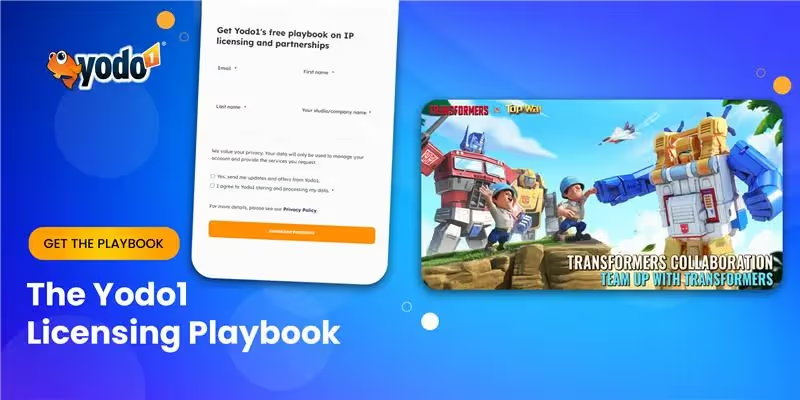
Our new IP licensing playbook gives you some of that insight, and shows what you can achieve with Yodo1.
IP Licensing
How To Get Started With IP Partnerships And Why Crossover Events Will Triumph In 2025
08.04.2025
•
5 mins read
How To Get Started With IP Partnerships And Why Crossover Events Will Triumph In 2025
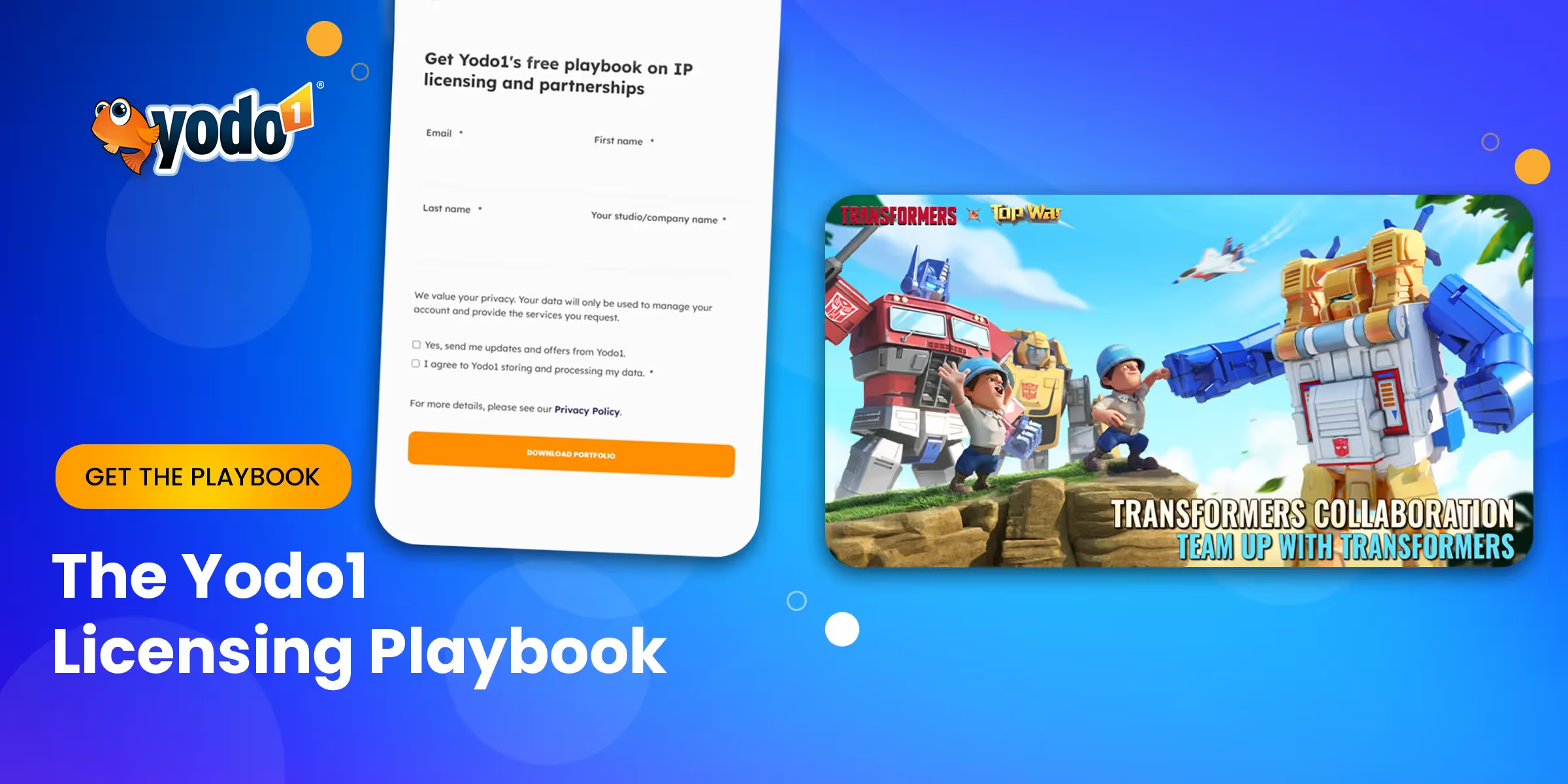
Mobile games and brands stand at a collaborative inflection point. Mobile games have emerged over the past years as a key stage for brands and IP holders, while developers and publishers look to licensing IPs as a way to expand audiences and retain players.
And the intersection between games and brands is only getting stronger. In 2024, nearly half of the top 200 mobile games in the United States integrated licensed IPs, with this figure exceeding 60% in China and Japan.
Over the course of Yodo1 Licensing’s work with games and brands, we’ve seen staggering success. Including Pacific Rim characters and skins boosted Top War’s DAU’s by 1.5 million in 2020. Game for Peace integrated costumes, vehicles, and other elements from TRANSFORMERS: RISE OF THE BEASTS and saw its revenue increase over 50% over two weeks.
Going beyond the game is an essential strategy for securing a sustainable, scalable legacy in 2025, and will likely remain through the coming years. Game developers and IP licensors should heed the opportunity, but also recognize that there are challenges to overcome.
Connecting iconic IPs, stories, and characters with the best mobile game studios for crossover events is a powerful way to secure every party's legacy. Henry Fong, Co-Founder & CEO
Why mobile game studios and IP brands should partner up
Mobile games are prime real estate for brands to bring characters and stories to a wider, more engaged audience. At the same time, studios with recognized IP of their own have a lot to gain by mixing their narratives with the gameplay of peer developers and publishers.
Gamified experiences increase engagement and retention, especially when compared to more traditional marketing methods. Familiar IPs can also sway players to stay engaged for longer sessions.
Globally, 64% of players recall a brand featured in a game they’ve played, highlighting how gaming experiences can positively impact brand recognition. Gamification strategies also see customer loyalty rise 22% on average.
At the same time, more than half of players make in-game purchases in IP-based titles, between 10% and 20% more than non-IP-based games. Special events are especially significant, as IP collaborations have the potential to 10% to 30% during these isolated periods.
Based on Yodo1 Licensing’s current collaborations and how they’re received by players worldwide, these trends are likely here to stay through 2025 and the years to come.
One example of how well partnerships can serve games and brands is the event Yodo1 facilitated between the game Top War and the Pacific Rim franchise. By integrating the franchise's recognizable giant mechs and monsters into the game via a limited-time event, Yodo1 helped boost its daily active users (+5%) and downloads (+12%), also increasing the game's revenue ranking in the US and China.

What causes friction in IP partnerships?
Strategic partnerships open new marketing channels for games and brands, and unlock promotional opportunities that meet people where they’re most engaged. But they’re by no means simple.
One of the key challenges for strategic partnerships between game studios and IP holders is finding the right match. Developers need to select IPs that match their gaming experiences and play to their audiences, without risking significant player disruption and churn.
Game companies also need to communicate effectively with IP holders, especially if the brands in question aren’t used to placing their stories and characters into games.
On the flip side, IP holders are rightly protective of their creative properties. Merging two gaming IPs, or games with IPs outside the gaming world, can be incredibly complex, underscoring the importance of a collaborative relationship and an intermediary that understands every element of an IP partnership.
Yodo1 facilitates this dialogue, ensuring that developers understand the IP’s unique characteristics while addressing licensors’ concerns.
See our success stories and find out how we can help write yours
Since its founding in 2011, Yodo1 has united its licensing efforts into a business unit to becoming a leader in digital IP licensing in 2017. We’ve launched a vast number of game and IP collaborations over the past six years, partnering with major global brands like Hasbro’s TRANSFORMERS.
Our new playbook highlights Yodo1’s proactive approach in supporting developers who may be new to licensed games, equipping them with the expertise needed to navigate this space effectively.
By analyzing data from past collaborations, Yodo1 can guide licensors in selecting studios and crafting successful gaming experiences. The book also contains several case studies to show how IP collaborations can swiftly and effectively drive player engagement and revenue growth.
Looking ahead, Yodo1 Licensing is developing innovative solutions to improve data-driven decision-making in IP licensing. This upcoming tool will provide critical insights into brand performance and return on investment, further strengthening the connection between gaming and licensing.
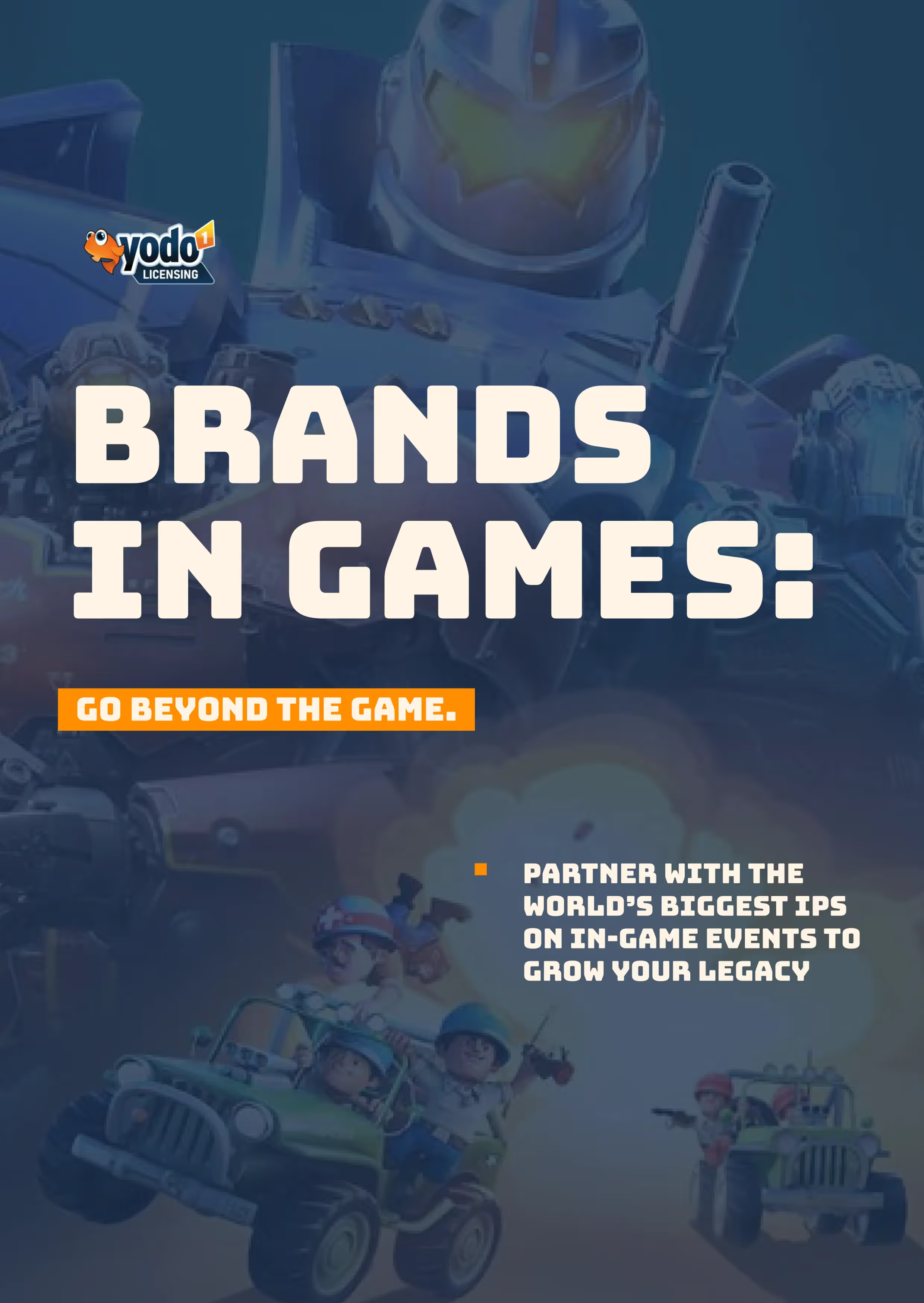
Start your journey with Yodo1 Licensing
Every IP partnership may be unique, but one thing they all have in common is their potential to elevate engagement and revenue for all parties. See Yodo1’s full portfolio of IP partnerships for insight into the success of our collaborations and events.
Latest Blog Posts

How To Get Started With IP Partnerships And Why Crossover Events Will Triumph In 2025
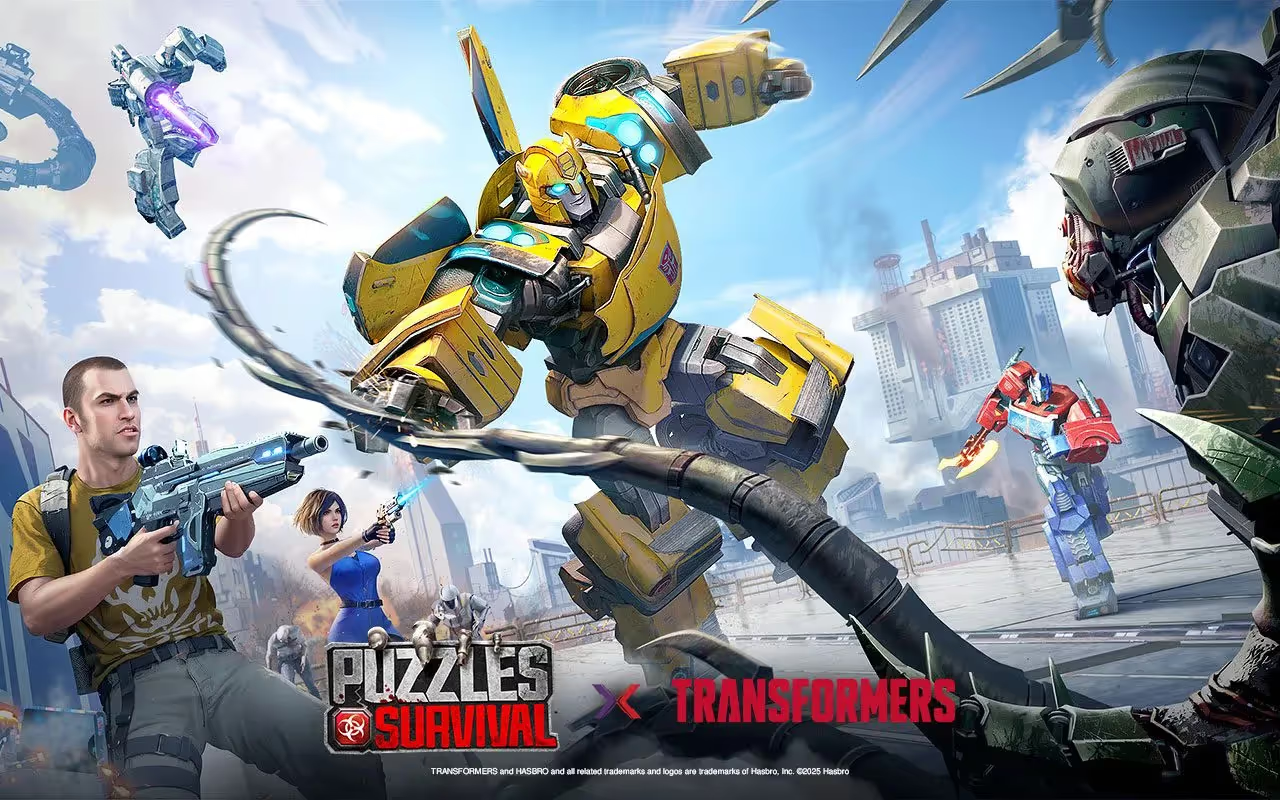
Bumblebee joins the battle for a second Puzzles & Survival x Transformers event
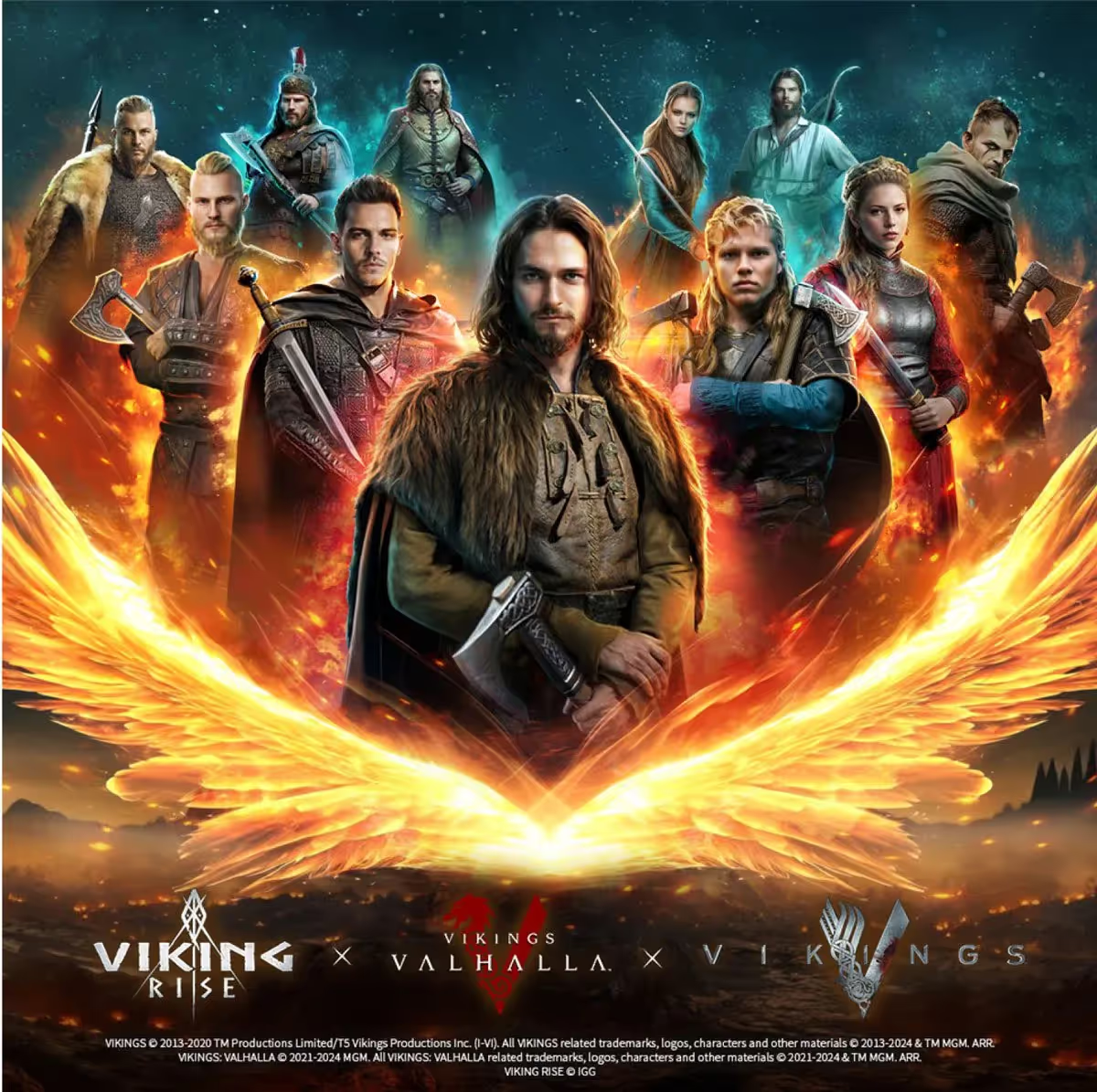
Viking Rise x Vikings: Valhalla Event 4 – The Grand Finale of an Epic IP Saga
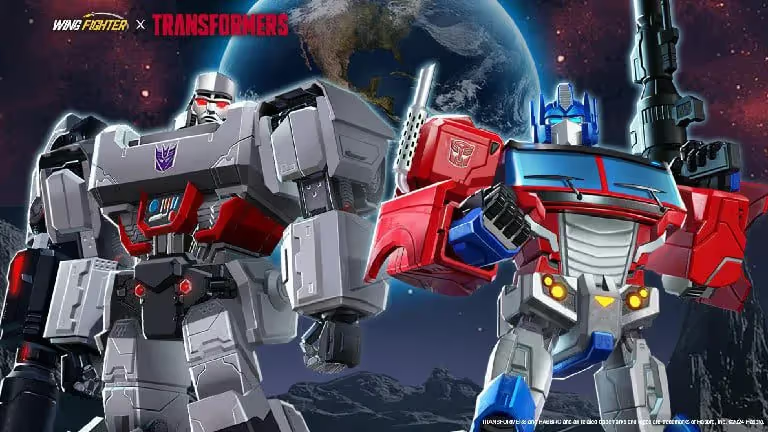
Wing Fighter x TRANSFORMERS – A Battle for the Ages!

Dragonheir: Silent Gods x Dungeons & Dragons – Enter the Third Phase of Epic Collaboration!

TRANSFORMERS bots and Puzzles & Survival Game Unite to Combat a Massive Invasion!
Get Updates From Yodo 1




Simplifying game growth
京ICP备12010993号-2 · 京ICP证120652号 · 京网文(2015)2029-371号 · 京公网安备11010502036836号
© Yodo1 Ltd. 2025 | All rights reserved.