IP Licensing

01.03.2023
•
5 mins read

When it comes to integrating major brands into games, it’s hard to find a better example than Fortnite. The team over at Epic are experts at working with well-known IPs, and integrating those brands into the game in exciting ways that attract new players, engages the existing community, and keeps those retention levels up! But what is it exactly that makes them so successful at this, and what are some of the key lessons you can learn and apply to grow your game?
Let’s dive in and find out.
Brand events within games are a unique way to experience original collaborations between some of the biggest names in the entertainment industry. Musical artists, characters from a hit TV show or blockbuster movie: everyone’s getting in on the action. And it’s easy to see why these events are a perfect opportunity to bring together different fan bases and expand the reach of the IPs and the games involved.
Exclusive collaborations like these have proven a hit with gamers. The integration of recognizable brands, actors, or characters not only enhances the overall gaming experience, but also creates a limited-time opportunity where players collect exclusive items that are only available for a short period.
As mobile gaming continues to evolve, the way in which games integrate content has become increasingly important. And there's no better example of this than Epic Games’ epic game, Fortnite. Over half of their players are between the ages of 18-24, and they’ve figured out how to keep their audience engaged with a variety of integrations that go beyond the typical skins.
So, how does Fortnite do it? Let's take a closer look:
They know their player base well, and not just what they like but the sheer volume, how vast their reach is, and the key differences between players in various parts of the world. A majority of these players are young, used to digesting media and content quickly and constantly—Fortnite understands this and packages their collaborations to appeal to them.
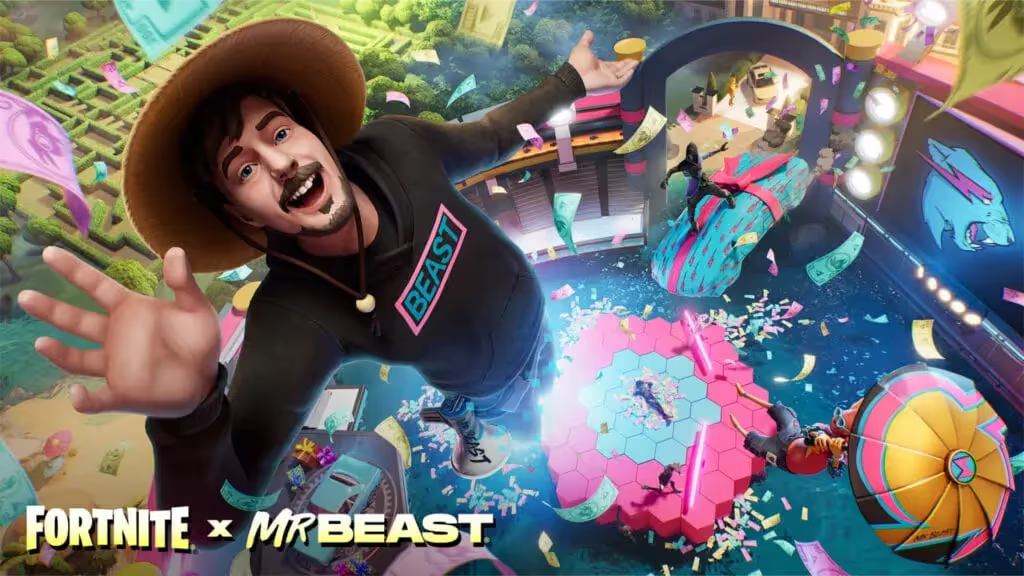
For instance, the trailer for Fortnite Chapter 4 Season 1 featuring Mr. Beast zipping through outer space created a storm of hype among Mr. Beast's 100 million+ fans, creating a huge amount of anticipation around the new chapter.
Insight: Think of potential players and strategic IP integrations like a Venn diagram. The large intersection between "gamers" and "Mr. Beast fans" made that collaboration a brilliant move. In order to find the perfect fit for your brand integrations, it's important to understand your player base and what appeals to them.
Fortnite engages its audience by regularly dropping hints about upcoming content, adding to the anticipation and keeping players curious and coming back. Some events have been announced just a day before launch, following the trend in music over the past two years where artists don't announce their new songs/albums far in advance, but instead drop a tweet just a day or two before the launch. This feeling of immediacy and excitement is part and parcel of the whole experience.
Going back to our earlier example, that trailer for Chapter 4 featuring Mr. Beast dropped on December 3, 2022, only a day before the start of the new season.
Insight: The volume of content young gamers can consume verges on incomprehensible. That means a week is an eternity. Keep that in mind as you build hype around fresh content releases.
Fortnite’s collaborations span a broad range of genres and brands, ensuring they appeal to as wide an audience as possible. They might team up with key figures in fashion, influencers, anime, film, TV or sports, in addition to collaborations with IPs from the likes of Marvel, Star Wars, and DC. These integrations are so numerous and come at such speed that even if a particular one is not of interest to a player, they’ll still check in again soon because they know there’s always something new on the horizon that they won’t want to miss.
Insight: It’s not possible for a given IP collaboration to resonate with all players. While quality is important, quantity shouldn’t be disregarded. If the goal is to appeal to more players, skins and events may make a bigger splash than a deep storyline integration.
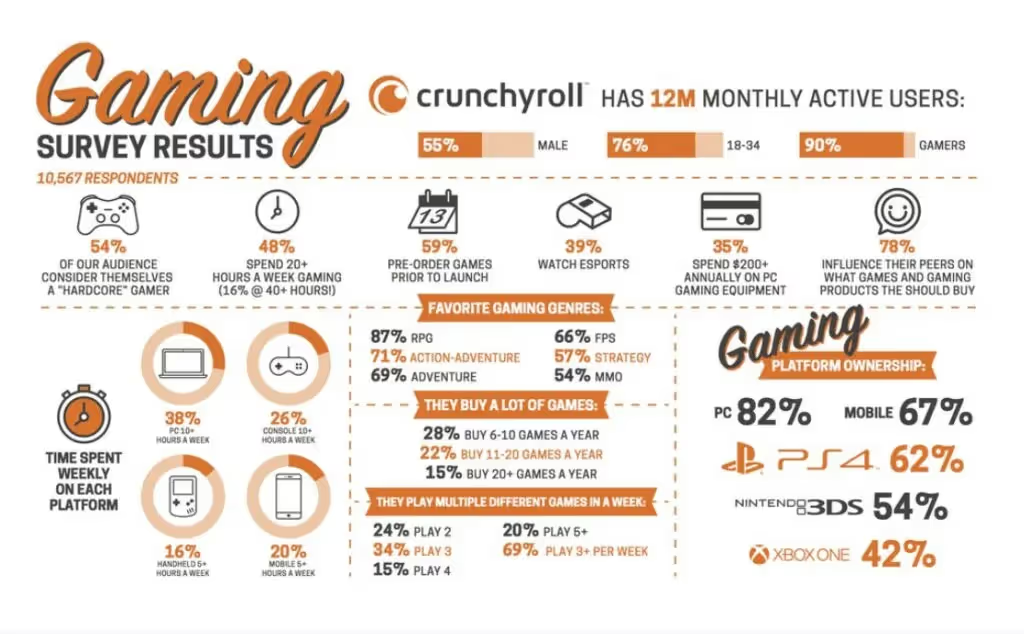
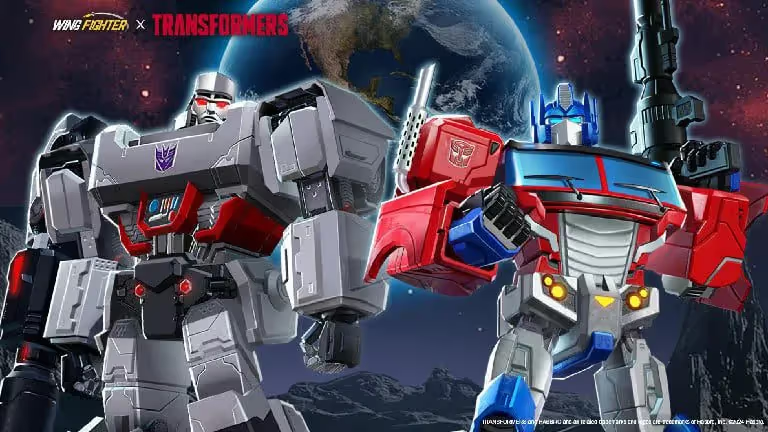
One of Fortnite’s many integration hits was their recent collaboration with Dragon Ball Z. With the overlap between the anime and gaming audiences, putting the two together via an IP integration was a match made in heaven. A study conducted by media distribution service Crunchyroll showed that 90% of anime consumers also play games, and as a result the integration of anime brands in games is becoming more mainstream.
Dragon Ball Z fits in with Fortnite’s demographic perfectly: the mega-successful anime series has both a strong nostalgia factor for people in their 20s to 40s, and, as the franchise is still ongoing with new movies and manga series being released, it continues to attract new fans.
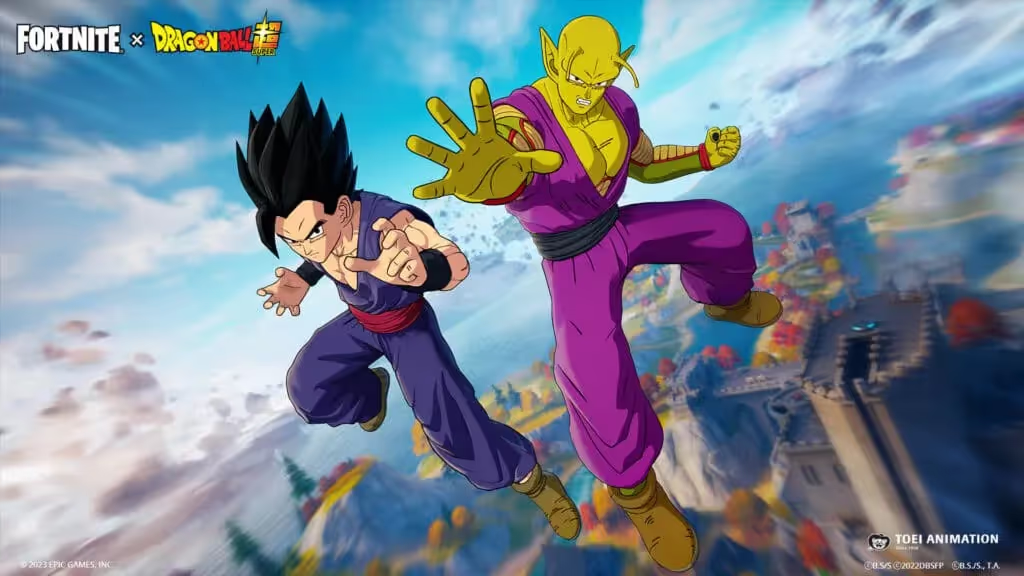
The integration between Fortnite and Dragon Ball Z had two distinct events: the first, launched on August 16, 2022, was tied with the US film release of Dragon Ball Super: Super Hero. You could watch the movie’s trailer in the event, and even discover some new episodes as a part of a chest. The characters skins Goku, Vegeta, Bulma, and Beerus featured as well.
The second event dropped on January 31, 2023, after being announced only the day before. This time, players could acquire skins of the movie’s main characters, Piccolo and Gohan.
The Dragon Ball Z example above is only one example—in November 2022, Fortnite held a collaboration with Naruto, the most popular anime in the US, followed by the August 2022 Dragon Ball Z event outlined above. They followed that up in December with My Hero Academia in December, for a staggering total of three anime integrations alone in the space of just one year.
So, what can we learn from this approach? What’s the secret to successful brand integration? Identify the sweet spot where your game's audience intersects with fans of a particular IP. Create exclusive, buzz-worthy events that tap into the FOMO of players and offer something new (ideally driven by a deep emotion, like nostalgia). Get creative and strike a balance that benefits both parties, bringing in fresh players to your game and giving the IP a boost—a true win-win. Rinse and repeat.
From a brand perspective, this is an exciting new landscape for game studios and developers, offering an opportunity for not just the big hitters like Fortnite, but established, proven studios of all sizes.
IP holders want to reach players of all ages and engage with them, and despite what you might think, many are open to a variety of collaborations. Some might be looking to reinvigorate their brand or test a new IP across a variety of markets, and that’s an opportunity.
What level does a studio need to be at to consider IP integrations? First of all, you should have a solid and profitable game with active LiveOps that allow for this sort of crossover. There needs to be a natural path to welcome the IP into your game so it can smoothly fit into your game's roadmap.That ultimately means planning everything far in advance (including deal negotiations), so that you can take full advantage of the integration.
With the rise of mobile gaming, games are now coming from a place of more strength and negotiation power; they can even become their own IPs and license them out once they reach a certain level of success. This can bring exciting new possibilities for both game developers, players, and the IPs, a win-win-win.
For both IP holders and game developers/publishers, IP integration offers a chance to bring new and exciting content to a game, promoting the IP while engaging loyal players and bringing in new ones. It’s simple–but there’s a lot involved: the key to successful IP integration in the gaming world is understanding the needs and wants of both parties involved and then creating an event that stands out—unique, risk-taking, and hopefully gets people talking—resulting in all sides not just recouping their investment but increasing their bottom line overall.
In a recent conversation, the Yodo1 Brands team discussed just this topic, and shared some insights about Fortnite brand integrations, including the big picture landscape of IP in mobile gaming.
Check out the conversation here:
https://www.youtube.com/watch?v=D8Ibu9RE4hc
“We can make the process easier and less intimidating for developers. With experience of working with IP holders from anime to Hollywood—and as game publishers ourselves, we know the ins and outs of developing and understand both sides of the coin.”
- Fil Robinson (Yodo1 IP Licensing Manager)
“We are in touch with licensors on a number of deals all the time, so we’re familiar with the people, terms and processes: working with Yodo1 can give a developer access to all those IP holders. Many are open to collaborations, but don’t have the time to go looking for games, and instead respond more reactively to opportunities, so they don’t always find their perfect match. We have a huge network of studios all over the world and we know which IPs they’re interested in and their budget, as well as what kind of games the IPs are looking for, saving you time and effort.”
- Marina Espin (Yodo1 Head of Strategic partnerships)
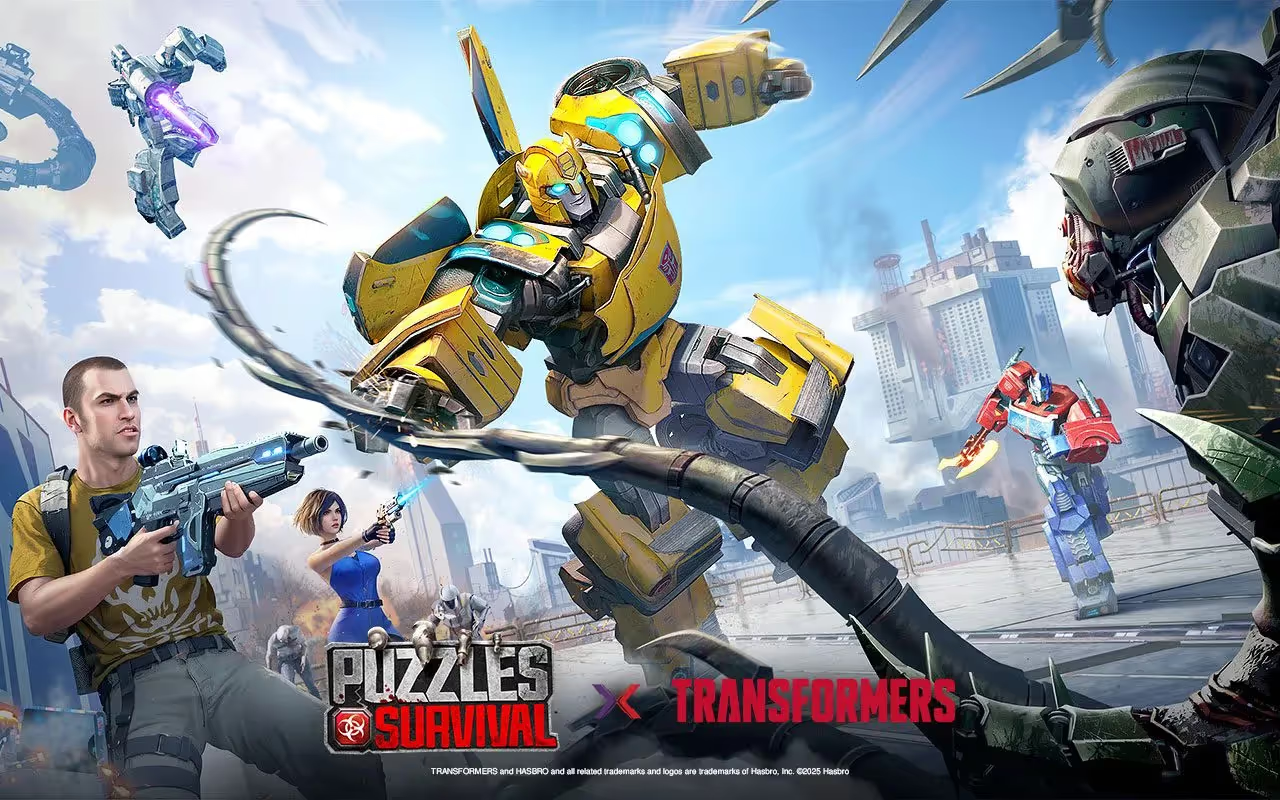
If you’re curious, but don’t know where to begin, happily, at Yodo1, we have a wealth of experience in positioning and integrating IPs to maximize their impact on a game. We know the ins and outs, and we're here to help. In just one example, we recently worked with game studio 37Games to organize and set up their popular Puzzles and Survival x The Walking Dead collaboration.
Don't miss out on the opportunity to take your game to the next level—get in touch to learn more about Brands in Games from Yodo1 and what it could mean for you.





Game Growth

01.03.2023
•
5 mins read

Are you looking for ways to boost your mobile game's growth and success? With so much pressure in today's competitive gaming scene, it can be hard to decide how best to invest all of the resources at your disposal. But don't worry, you're not alone!
We've worked with hundreds of successful mobile game studios, indie developers, and creators over the last decade-plus who have achieved amazing results by making smart investments in their games that enabled them to grow their projects exponentially, and much faster than they ever could have dreamed.
In today's blog post, we'll explore a few insider tips and tricks to help you make similar savvy decisions with whatever resources you have and jumpstart your mobile game's growth!
When investing in your mobile game, it's crucial to prioritize the fun factor above all else. A game's success is highly dependent on its ability to engage players with enjoyable gameplay. Neglecting this factor can result in a lack of player interest, regardless of marketing efforts. So... what do we mean by focusing on the fun factor when investing in your game? It means allocating time, money, and people, into the planning and market research phase to ensure that unique and entertaining gameplay elements are identified and included in the game. In other words, investing in the fun factor from the outset will lead to long-term success.
GROWTH TIP: Don't forget to regularly release new content and experiment while preserving the core gameplay that your players love.
https://www.youtube.com/watch?v=mP51adcK4Mc
Many developers stretch themselves (and their teams) too thin by wearing too many hats. The true key to success is understanding your limits, embracing a growth mindset, and learning to delegate to others with specialized expertise.
When budgeting and allocating resources, experiment with different options to see what works and, regardless of the outcome, see them as opportunities to learn and grow as an entrepreneur. Constant testing and iteration can be a tremendous wellspring of insights about your players and strategies for growing your game.
On the other side of the coin, it’s also important to avoid falling into the dreaded sunk cost fallacy. With limited resources and time, no developer should be spinning their wheels on stuff that simply isn’t working or generating insights. To avoid this, always identify what you’re trying to learn or gain from any experiments you run. Measure results against those goals continuously and be brave enough to pull the plug on an idea or activity that isn’t generating fruit.
GROWTH TIP: Don't be afraid to collaborate with other developers or outsource tasks like asset creation, user acquisition, and monetization.
With a fun game and a growth mindset, it's time to take action. Create a roadmap of exciting content that your core player base will love, and make sure to include new things you want to test. Look outside your team for opportunities to help you scale and reach new heights.
Have you heard of Nordicandia? They're a perfect example.
This 2D dungeon explorer inspired by Diablo has a simple, straightforward design that naturally brings players together. The game saw tremendous growth by investing time and effort in creating the right channels for player engagement and connection, but they were looking for help with their monetization strategy. By integrating their game with MAS, Yodo1’s AI monetization platform, the developer was able to grow their revenue, freeing them up to focus on bringing out fresh content for their players. Today, the game has a thriving community and player base with a clearly defined path for growth.


Don't underestimate the power of networking with other developers, investors, and publishers. They may have valuable insights and feedback that can help you reach new heights.
Each game is on a unique journey, and we're here to support you every step of the way. Want to learn more about investing in your game to achieve growth? Book a discovery call with a Yodo1 Game Growth Expert to learn more about how we can help simplify your mobile game growth strategy.
Game Growth

14.12.2022
•
5 mins read
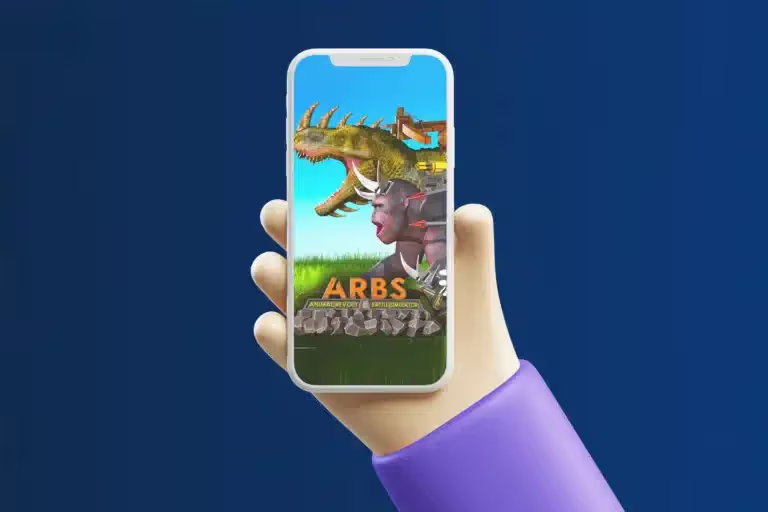
This is the final installment of our four-part feature on the multi-platform crossover hit, Animal Revolt Battle Simulator. In part three, discover how VDimension Studios increased ARBS' player base by 50x—and learn more in part one and part two!
If you’re reading this, you probably know that User Acquisition (or UA) is a data-driven approach to marketing, specifically designed to attract and engage more users for your game or app. Today, we’ll take a deeper dive to explore some of the things you can do right now to help you get the most out of your next UA campaign.
So… you've launched a game, and now you’re starting to get some traction and solid revenue is rolling in. This is where the next critical stage of growth comes into play: maximizing your revenue and finding creative ways you attract more users!
A new game can benefit from UA right from the jump. If you believe your game has a unique selling point compared to its peers you can prove it with data and a basic UA test. Start with a week or two of ads on Google, Facebook or whichever channel best fits your game. Acquire enough users so you can get a 3-5000 DAU to really get the metrics you need.
What are you looking to learn from this test? How do you get a perspective on what you should aim for? How do you know what a realistic yet ambitious goal is for your game? Research the market—Appmagic is a great tool for this—to see what developers and publishers big and small are doing: screenshots, icons, subtitles, those small things can show you easy and immediate angles for potential areas for improvement in your game.
If you have in-game ads, your focus should be on impressions per DAU and your eCPM. The key is finding a way to balance these with retention to ensure a satisfying game experience that will keep your players coming back and increase your LTV.
If your game uses mostly in-app purchases, you should focus on the new user pay rate and average revenue for paying users and monitor your ANR and crash rate daily. Have a list of metrics and facts you’re looking for—you want to extract as much value as possible from your investment.
Once you’ve reached/hit a few thousand DAU from ASO and other organic marketing, that might be the time to invest in a two week ad series and see how that impacts your LTV.
Your users’ lifetime value (LTV)—or how much revenue you will receive from a user during the whole time they play your game, is based on your average revenue per active user and your retention. These are important figures to track and analyze so you know what your overall investment per user is worth.
Do your research and find the eCPI for your game genre–this can show you what to invest money in and where to experiment. Have benchmarks, a hypothesis you’re looking to prove or disprove.
MMP, or mobile measurement platforms, are your first step, and only a few allow you to configure your own metrics, though you won’t have full access to all of your data. But an MMP will allow you to see the actual facts.
So the first and arguably the most important step is choosing an MMP to partner with, integrate their UA, start testing, and then you can begin with ad networks.
“The most important UA metrics are your retention rates and ARPDAU,” says Nadiia Marchynska, Head of Game Marketing & UA at Yodo1. “If you have in-app purchases, what is the pay rate? And for each paying user, what are you earning?”
And don’t forget, these figures can be very different depending on if you have a hyper casual game with much higher churn as opposed to a game with fewer users who play for much longer—that’s why you need to have researched the standard for your game genre to set accurate goal expectations. Your game genre determines your monetization strategy
Getting started on all this can be one of the biggest bottlenecks for gaming studios, who often lack both time and specific skills.
You need good, solid creatives to run a successful campaign, followed up by a very solid testing plan to see which ones work. It’s an iterative process of creating, testing, judging the results, and repeating to get the best possible results—continuing ongoing results will require new content, if you stick with the same old stuff, your growth will plateau.
Sure, you could get a freelancer or someone in-house who’s already got too much on their plate to do the creatives for you, but without specific experience, it’s not going to be as impactful as it could be, and will ultimately not be the best use of your resources. The market changes and fluctuates, so you have to monitor your ROI constantly, you can’t just set it and forget it.
“Performance benchmarks for the ad creatives in your genre are also crucial to follow up on–that’s how you can judge your game’s marketability,” continues Nadiia. “It’s evolving so much that now you can even give players a chance to interact with your game via playable ads and try it out before they even install it. It’s a good tool to beta test future ideas, too.”
“So glad I found Yodo1! It’s such a relief having them take care of user acquisition, so I can focus on what's most important: making Animal Revolt Battle Simulator a successful multi-platform gaming experience.” Lam Trinh Hoang,
Founder, VDimension Studios
If you find the scale and logistics of all this challenging, you’re not alone. Even with the best of intentions, the deck is often stacked against flying solo. For example, a newly set up UA account with no history will find it nearly impossible to get support when they need it, and some ad networks don’t even unlock all their features for new advertisers, unless and until they’ve reached a certain spending level, making it nearly impossible to run optimal, successful campaigns.
Even something as simple as paying for their services can require jumping through many hoops, with different payment methods and restrictions from country to country, and so on, meaning that when something is successful, the window may have passed before you are able to scale it up. All these factors combine to make it a real challenge for those who want to dive in.
These are trends we began seeing with many of our ad monetization partners using our MAS service, leading us to begin helping them with our own in-house team and accounts, developing into the full-fledged UA service that we are now offering to mobile game developers worldwide.
This quality of full-service UA is unique in the market: from setting up the MMP, integration, QA/QC, access to all add networks, detailed testing, planning and projections, ROI, and budget planning. From technical to top-level planning, creative production and testing, and optimization, all the way through, Yodo1’s comprehensive UA service gives you the benefit of our longstanding accounts, as well as our years of experience, automated for optimal results.
The result is data-driven optimization and smart UA campaigns taken off your shoulders, allowing you to try this out without building an additional team in-house.
How has this worked in the real world?
In Animal Revolt Battle Simulator (ARBS), we went from starting with no UA, to, by the fifth month, increasing the game’s revenue sevenfold, and we are continuing to scale it up.
At Yodo1, we’ve spent more than a decade helping mobile game studios simplify their growth. We've run thousands of ROI-positive UA campaigns for iconic titles—like Crossy Road, Rodeo Stampede, Transformers: Earth Wars, and more—amassing more than 1.5 billion players around the world. And now we’re making it easy for you to grow your games into chart-topping hits, too
We want you to be able to focus on doing what you love: making cool games, instead of having to invest your precious time and resources becoming a UA expert. If you’re already using MAS, you can choose to reinvest your ad income directly from that into your UA campaigns, and you’re already set up in a way that optimizes the effects of running a UA campaign.
If you’re interested in learning more about our full-stack UA service, set up a call today with a member of our team—we’re all over the world, so there’s no need to worry about time zones. We can set up testing and validation, and from there give you a detailed projection on what to expect from the service.
Culture

11.08.2022
•
5 mins read

When Yodo1 transitioned to a fully work-from-anywhere (WFA) company in December 2020 it became immediately clear we needed to up our collaboration game by finding and using the best tools to promote long-distance co-working.
A year and a half on, here’s a quick look at ten tools that enable us to collaborate and be more productive than ever in 2022. All are free to try out or for light use, with premium options for heavy users.
Released: 2018
Why we love it: It’s Evernote meets Trello meets mini-WordPress. There’s seemingly no end to the ways you can adapt this tool to make your work life easier. It’s excellent both for personal organization and project management. We love to use it as a space where every team can work “in the sunshine” thus ensuring transparency and accountability.
Released: 2012
Why we love it: Airtable is a powerful database tool that can be thought of as spreadsheets meets Trello with automation capabilities. It’s easy to see where you are across multiple projects at a glance, keeping all the balls rolling and the statuses up-to-date.
Released: 2016
Why we love it: Great way to quickly design, build, and export files for prototyping websites and mobile apps. As a bonus, check out Figjam, a fast and whimsical online whiteboard for sticky notes and ideas to supercharge your team brainstorming sessions.
Released: 2002
Why we love it: Jira is still the go-to platform for project management, making it a popular tool across a wide range of companies. While the younger Airtable and Notion platforms do have some similar project management features, our tech leaders still swear by Jira.
Released: 2017
Why we love it: Recently, Yodo1 transitioned from having chats, calls, email, and scheduling spread across a myriad of platforms to using Microsoft Outlook and Teams.
We’re still exploring various add-ons and best practices but so far what we like best is having everything in one place and being able to easily see who’s available when.
Bonus: We love the GIFs in Teams chat as well as “Together Mode” in calls.
Released: 2016
Why we love it: Quick and easy way to record and share videos of yourself or your screen. It’s particularly useful for helping those in different time zones to get rid of endless PowerPoint slide decks and communicate ideas more effectively. The free version allows videos up to five minutes long.
Released: 2013
Why we love it: Make it easy for others–both in or out of your organization–to book time on your calendar based on your availability. Calendly now also includes meeting polls, where multiple participants can vote on the best time for a call.
Released: 2020
Why we love it: This relatively new tool is a simple, interactive, and powerful alternative to Canva, Google Slides, or PowerPoint.
Released: 2013
Why we love it: Great for editing and creating visual content. It’s the go-to platform many of our staff use to design slides, posters and many more projects–get your work done in just minutes with the thousands of ready-made templates and fun graphics that are available. It’s also collaborative and easy to learn.
Released: 2013
Why we love it: Access to thousands of high-quality images available for free use.
And did you know...you can even access Unsplash's photo library from directly within Notion—sweet tip, right?!
What tools do you use for remote work? Tell us about it on LinkedIn–and if you’re interested to join the ranks of Yodies working remotely from over 30 countries check out our open positions today!
Culture

12.07.2022
•
5 mins read

Snorkeling with sea turtles in Indonesia one month, catching NBA games the next. A stint living and DJing in the Caribbean. Home in South East Asia one day, Canada the next. Hanging out with people of 30+ nationalities. Visiting eight countries and four continents in three years.
These are not the stories of students on a gap year; this is the WFA life of some of our global team.
When Yodo1 switched to a fully flexible work-from-anywhere (WFA) policy in December 2020, doors opened for nomads to live their dream lives and take their job with them. The policy is simple: As long as you are excelling at your work, you can do it from any country in the world.
For many Yodies, this has meant taking advantage of the flexible work hours to spend more time with family and friends, and several brave souls have fully embraced the nomadic and adventurous lifestyle that working from anywhere makes possible.
These are their stories.

Home Country: Spain,
Currently Found In: Lombok, Indonesia
I have been with Yodo1 for 13 months now; I started on a commission basis as part of the Games Growth team and then graduated to full-time employment; I work to help developers to grow a sustainable economy with their free-to-play games. Before joining Yodo1 I worked in four different countries: I would move somewhere and start a new life, find a job there, etc, and live there for a while.
When I joined Yodo1 the WFA policies were certainly a great plus but I was also attracted by the opportunities this company gives you to grow. And thanks to the freedom provided by WFA I have worked from 14 cities across four countries over the last year, even meeting up with other Yodies like Felipe (see below) several times around the world!
From snorkeling with sea turtles off the spectacular island of Gili Meno in Indonesia to indulging my love of the NBA by attending not one but 11 live games–including a playoff!–when I was in the US a few months ago, it has been one adventure after another!
I’m glad that I can travel and still progress professionally without having to find a new job each time.

Home Country: Chile
Currently Found In: Back home in Chile
I have been with Yodo1 for about a year. I started as a Business Developer for MAS and in January this year I joined the publishing team. My job is to find Indie developers with great games and see if we can establish new partnerships with them in order to help them scale their games globally.
About five years ago I quit my corporate job in Chile and started traveling, first moving to Kaohsiung, Taiwan, to study Mandarin. After Taiwan, I moved to Barcelona and started working at a startup before moving to Zurich where I spent 2 years. I started looking for remote jobs because I wanted to be able to move forward with my career without having to be bound to any country. This is when I found out about Yodo1. I was looking for a job with this sort of freedom, and also one of my dreams was to join the gaming industry, which made the decision to join the company a no-brainer.
I am not really a big city person and I love that I can work while living in places like the Caribbean–it feels like living two completely different lives: I can be fully focused on a high performing job during the morning and next thing I know, I will be playing at a DJ gig in the middle of the jungle in the evening!
Home Country: Ukraine
Currently Found In: Vancouver, Canada
I’m the Head of Game Marketing and have been with Yodo1 since September last year. I was always a nomad at heart, but my previous jobs didn’t give me the opportunity to fully embrace my nomadic self. Yodo1’s WFA policy was definitely a game changer for me and helped me make the decision to give up on my settled-down office lifestyle.
I was in Vietnam when I joined Yodo1. Thanks to the flexibility WFA gave me, I was able to visit my hometown in Ukraine and see my family for the first time in three years. When the war started in Ukraine and my city started getting bombed I was actually luckily pulled out on a company trip to Thailand, which was destined to save my life. Despite this un-peaceful time in my life, thanks to WFA I was able to peacefully keep my job no matter where I was.
And thanks to WFA, I have once again relocated—this time to Canada, and I plan to travel more soon!

Currently Found In: Back home in Kyrgyz Republic
I’ve been at Yodo1 for over two years now, starting as an Business Development Manager and now leading and training our Games Growth sales team. I love traveling and with Yodo1 I can work and travel around the whole world, there are no limits. I have been to around 20 countries already, four since joining Yodo1. I love our WFA policy: I have family and friends all over the world and I can visit them while I work.
Also, I love learning about different cultures and absorbing their way of living, their wisdom and knowledge. The things travel has taught me have helped me build and lead our international team of 20 Yodies representing 15 different countries from varied backgrounds–we are honestly one big family.
These two years with Yodo1 have helped me to grow and become a better version of myself both professionally and individually. I love the intercultural atmosphere, it really expands your horizons when you are learning from people who are anywhere from Japan to Venezuela!

Currently Found In: The Netherlands
I recently celebrated my three year anniversary with Yodo1, and it's been quite a journey—literally and figuratively. Back when I was based in the Philippines, I wanted to go spend a few months in Australia but my then-employer wouldn't let me. So I quit and started looking for online freelance work.
That's how I started at Yodo1. A lot has changed since then—I'm now the Head of HR—but one thing that hasn't changed is that I can go anywhere, anytime, and still do my job. All I need is my laptop. It’s been great for my partner and daughter, allowing us to go on all kinds of adventures together as well as making it possible for me to take her to visit family in the US.
Plus, I love to travel! In the past three years with Yodo1, I've worked from Australia, Taiwan, Malaysia, the USA, Germany, Ireland, and—most recently—Thailand. Most of the time, my partner and daughter come along. Since Covid we've established our home base here in the Netherlands but we still love traveling together as a family whenever we can. My dream is for us to be world-schooling nomads in a few years’ time. I’m also looking forward to meeting more colleagues from around the world!
Ready to Start your WFA Journey?
If you would you like to travel the world while growing your career in a cutting-edge industry, and working from anywhere with no limits appeals to you, then don’t just sit there dreaming about it— check out our WFA career opportunities today!
IP Licensing
02.05.2022
•
5 mins read

Thinking up new and exciting ways to help grow our partners is a top priority for Yodo1 and our recent cross-promotion events speak to this focus.
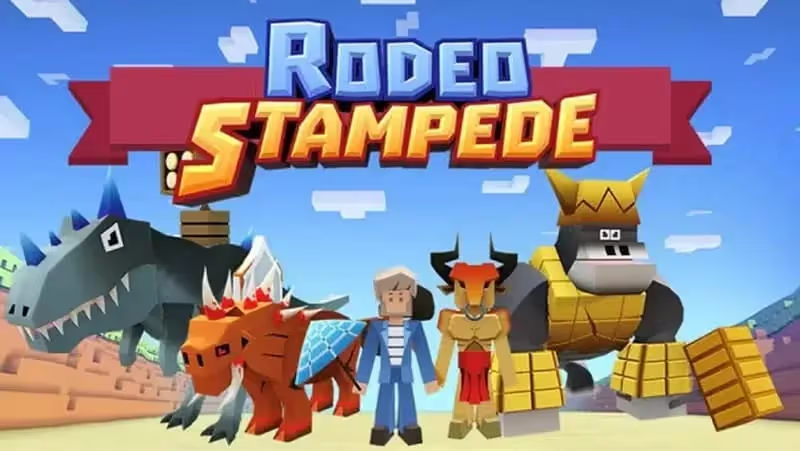
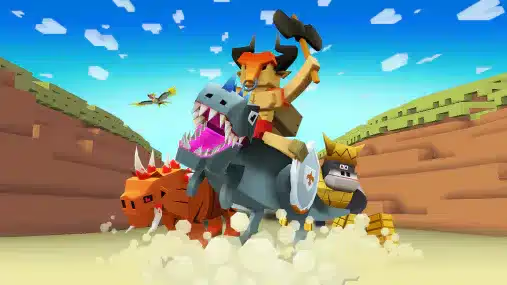
Animal Revolt Battle Simulator (ARBS) and Rodeo Stampede, both games published by Yodo1, joined up for a crossover event in March. In this instance, Rodeo Stampede players could unlock up-to five ARBS animals which had been integrated into the game.
T-rex, Hellhound and Minotaur were only some of the beloved ARBS animals that gamers could choose to use in Rodeo Stampede, and the response was phenomenal. These crossover animal skins were free to use for three days, and if players completed a certain number of missions during that time, the skins were theirs to keep.
And if utilizing new characters in an already incredibly fun title wasn’t enough, interstitial messages using KTPlay, our community management tool, encouraged players to head to the source and check out the original game, in this case ARBS.
This was the second time Yodo1 organized a game crossover event of this kind in the last six months. Keplerians, one of our monetization partners since 2019, also participated in a cross-promo event with Rodeo Stampede. Organized in October 2021 for Halloween, it lasted 4 weeks. Rod, Ice Scream's signature character, the crocodile, Rod's pet, and the iconic Ice Scream Van were integrated into Rodeo Stampede, so players could choose to run as Rod instead of with the usual Rodeo rider, and unlock the crocodile once they reached the higher levels.
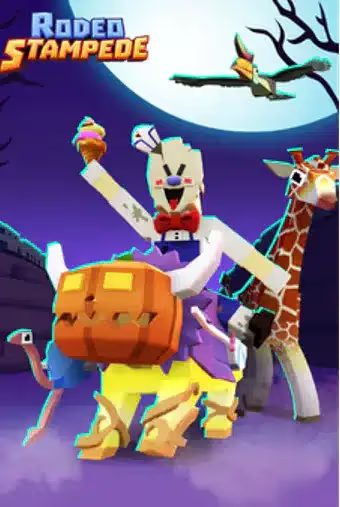
The game was enhanced by Halloween-themed visuals and lasted one month. Thanks to the interstitial messages, you could access and download Ice Scream 4 directly from Rodeo Stampede.
“Once we shared the assets, the Yodo1 team took care of all integration and design details,” said Pablo, Co-Founder of Keplerians. “With all the logistics and details taken care of, it could only be a win-win for us.”
How does Yodo1 make this happen? With these games in our partner pool, we’re able to communicate promptly, leading to successful matches and deals. Once the events are approved from both sides, our team handles all the crossover logistics, from designing the visual elements, to planning the event promotion, to analyzing the results.
This Keplerians-Rodeo Stampede event was the first crossover either game had participated in, and successfully generated a huge buzz across social media, ultimately increasing traffic for the respective games.
“It was exciting for our game’s community! We promoted it on Discord and encouraged players to post screenshots and videos, offering rewards. Bringing new content to our existing player base and seeing their enthusiastic reaction was definitely a highlight of this collaboration,” Pablo further explained.
Over three million gamers play thousands of games that use Yodo1’s MAS platform. This provides a rich ecosystem of players and content for creating fun and high-impact cross-overs. Yodo1's expertise in designing fun and engaging cross-over campaigns helps to create marketing buzz for the games involved, providing a free cross-promotion network that partner games can participate in and benefit from.
Out-of-the-box events like these are just some of the many ways Yodo1 works to help its partners, bring people together and increase revenue creatively.
In summary, how can crossover events like these benefit you?
If you want to work with us on monetization or game publishing and participate in these cross-promotion events between Yodo1 partners, reach out and contact us today.
Game Growth
29.03.2022
•
5 mins read
Gaming is now firmly established as the most popular form of entertainment worldwide, and mobile gaming is its golden child.
Last year alone, mobile games generated US$93.2 billion in revenue. For context, global cinema box office and music revenues combined totaled “only” $42 billion.
Considering these figures, you would think that small game developers prioritize the business side as they do the creating side. However, that has not been the case for most, and the primary reason is a lack of access to educational resources to empower them.
When they do exist, these resources are also usually scattered, presenting a challenge for time-crunched indie developers to locate.
And this is where Yodo1 and Game Creator Academy (GCA) come in.
Having helped thousands of studios worldwide market, manage, and monetize their games, Yodo1 intends to help thousands of game creators expand and diversify their global knowledge of mobile gaming.
While many game development programs prioritize programming, GCA's focus is educational content to help indie developers navigate the business aspect of the industry.
“It is important to emphasize that once a developer builds a game and publishes it on the app store, they operate a business. That game is now competing with other games for eyeballs, downloads, revenue, etc.,” explained Luke Priddy, Yodo1’s head of education.
Hence, having a solid marketing and monetization framework is critical for mobile gaming success.
“With GCA, we’re taking everything we’ve learned from publishing games that have gained over 1.5 billion players and putting those methods and strategies into accessible content in one convenient location,” added Luke.
Yodo1-produced education courses have been widely acclaimed, with over 100,000 students enrolled to date. GCA will diversify and add to that already established student base by making available new learning resources in courses, interviews, PDFs, and more on a weekly basis.
One recent example is a series on game design best practices, which teaches the fundamentals of mobile game design and takes you through the phases of game development from pre-production through post-production. This resource is a relevant roadmap for building more interesting and exciting titles.
Also included in GCA is the 5-star rated Business of Mobile Gaming (BoMG) course taught by Yodo1 co-founder and gaming guru Henry Fong. The popular App Store Optimization Course (ASO), which covers tips and tricks to increase downloads and conversions, is also included.
At Yodo1, we believe gaming success is achievable for all indie developers. Mobile gaming revenue is projected to grow to $116 billion by 2024, and we want to provide you with the knowledge to unlock your earning potential. And right now, the best way to do that is for you to sign up for your free GCA membership. Visit game Creator Academy today to learn more.
Game Growth

14.03.2022
•
5 mins read

Turning a passion into a business can be a challenge, and it’s a particularly real one for indie game developers. If you’ve faced this, you’re not alone. Imagination and creation are the first steps, but what comes next?
When most developers start out in game creation, they are—understandably—focused on how to create the best game they can in terms of design, gameplay, and so on; often it is only after the game is nearly complete that they begin to think about its monetization and try to slot in ads and in app-purchases.
“This then becomes an additional unnecessary challenge,” says Riccardo Russo, Yodo1’s Head of Growth Marketing, explaining that monetization is a consideration developers should take while they are creating their game—or even earlier, when it’s still in the idea stage. “It’s key to remember that your monetization is as important as any of the game’s other core elements, like the music, design, and gameplay.
“It’s vital to keep this in mind from the very start, because if you're not building monetization into your game design it has the potential to be disruptive to the game if inserted later, not to mention much more ineffective,” Russo further explained.
Another misconception is that developers believe they must acquire a large number of users before they can make any money. And while acquiring users is indeed important, having a solid monetization system in place from the start is equally important, to ensure that however many players you have, you can begin earning income right away.
Waiting to get a large user base before implementing a solid monetization strategy is a common rookie mistake. But it doesn’t have to be that way.
There is so much opportunity out there—the gaming industry is broad and expanding daily, but many first-time developers believe that making one game will be enough to set them on the path to success. The reality is that you need to hone your skills and put a lot of games on the market, especially in the beginning. Experimentation is key–don’t worry so much about whether it’s perfect or not. Try lots of things, and see what sticks. If you do this, you’ll soon get the feel of the market, learn what is successful, which players are loving your game, and why.
This experience will put you in a much better position to put what you have learned into a game that has the potential to become a big hit and discover the path that will turn your game development from a hobby into a business.
How can you avoid these pitfalls and set yourself up for success? As a developer it’s vital that you look into the options and research the right monetization solution for your games. You put so much time and effort into making all the other angles—gameplay, graphics, music and so on—just right, and you have to do the same with the financial side.
Failing to prioritize monetization from the start is a mistake that can have long-term consequences for a game developer. If your game has been produced on a shoestring budget, you might quickly break even and be initially happy with that. But you can go so much farther.
If you simply choose to go with ad networks, without implementing mediation into your game from the start or early on, you’re losing a significant amount of revenue that, especially in the early days, you could be reinvesting in other areas like marketing, creating games, and more.
How can you best meet these challenges, so you can focus on producing new and better games? MAS is the perfect monetization solution for indie developers who want to make sure they are not leaving any money on the table.
It’s not only the easiest solution on the market, it’s also a great equalizer, giving every developer access to personalized, specialized ad solutions that are tailored to your game’s audience.
MAS is the easiest solution all around: integration is simple and you will be assigned a dedicated Customer Success Manager from our top-notch global team who will focus on your specific game needs. MAS is the most effective solution because it ensures you have the widest coverage in terms of ad networks and ad mediators in your network. You can then feel at ease that we will find the best and most profitable ads for your game w, making sure that any users you have—whether many or few—are well monetized from the start.
Have you been looking for a simpler, more effective, and more profitable monetization solution? Partner with the best today by registering on our MAS Portal. You can set up MAS in just three easy steps, or contact a Games Growth Specialist today to learn more. Together we'll ensure your game reaches its full potential!
Culture
04.03.2022
•
5 mins read

Hiring top talents from across the world is a quick win for organizations like Yodo1, embracing work-from-anywhere (WFA). Top-performing employees equal top-performing businesses. It’s simple math, at least on the surface.
However, onboarding individual high performers from around the world are just one part of the equation. Another essential element is bringing those talents together, discovering the chemistry, and molding them into a productive team with the bigger picture in mind. And the secret to achieving this?
Team building.
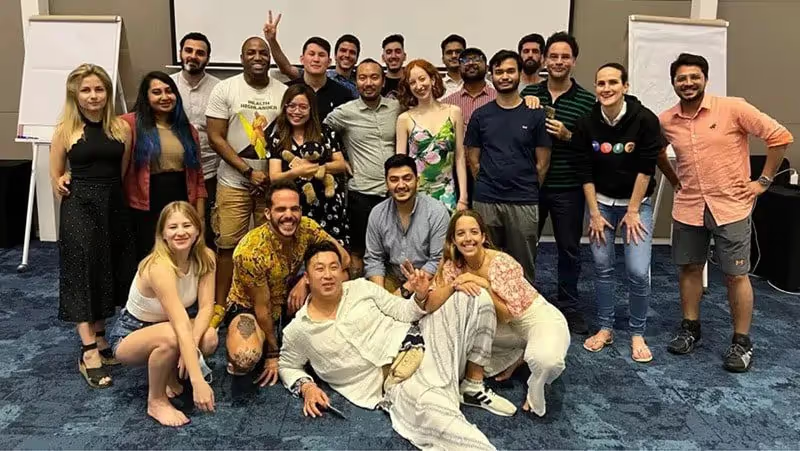
Having been at WFA since January 2020 and seen the workforce grow from spanning two countries to now 28 across six continents, the desire for Yodo1 colleagues to connect in person and match faces to height, build, and humor grew stronger.
With this in mind, the leadership decided the time was ripe for an off-site team-building exercise to align 2022 priorities but, more importantly, connect as people.
Phuket, Thailand, it was. And fittingly, for an off-site taking place on either side of Valentine’s Day - there was no shortage of fondness and friendships. From team dinners at Baan Rim Pa to exploring and partying it up at Ko Pha Ngan, the vibe was more high school reunion-Esque than introductory.
A feeling was palpable as parting messages poured in with time winding down.
Ukrainian-born, U.S.-based Customer Success Team Lead Polina Ozhylevska was among the first to chime in: “We all met for the first time, but it felt like we knew each other forever. There was no awkwardness at all, more than team chemistry; there was just an authentic, warm vibe that resonated across the spaces we occupied. I love how masterfully we take advantage of our team’s diversity, learning from each other’s cultures and applying new communication styles. I can’t wait to do this again with more team members.”
HR Head Flo Alcasas, who traveled from her native Netherlands and played a critical organizing role, expressed: “Meeting our team has made me crazy proud to be part of Yodo1. It was amazing to discover how hard-working and passionate our people are and fun, interesting, and supportive of each other. It’s beautiful and an honor to be their HR: fourteen countries, 10+ languages, five+ religions, three business units, and one team. I’m very thankful to Yodo1 for making this happen. You’re amazing, despite all the organizational challenges. My call to action from this event is for teams and leaders to bring your people together this year. Even when things don’t go as planned, it’s worth it.”
U.K.-based IP Licensing, BD Fieldman Robinson’s message was: “I've never been in a company that has so many great people with such different backgrounds, expertise, and experience, which is backed up by all of you being even more fantastic in person than over a video call. A big shout out to the organizers, and I can't wait to meet more of you in person, learn about you and what you do, and how we can support each other on this Yodo1 journey.”
Meanwhile, India-based Engineer Nitesh Oswal’s message to the team was: “I honestly don’t want to leave, but it looks like I have to (for now). This trip has pushed me to make several changes and roam around a bit more. Apart from the fun, meeting all the motivated people beyond their Zoom windows was lovely. It was fun to drop at everyone’s table; pair with them; find problems; new ideas, and solutions. Thank you for accepting my manic laugh, quirky humor, and random rants. I want to invite you to India and be your host.”
Lead organizer for the exercise and head of strategic partnerships Marina Espin said: “I have been at Yodo1 for three years, and this is undoubtedly the best and most rewarding experience I have had. This trip has made us stronger as a team, has allowed us to align and commit to our 2022 goals, and has helped us connect with our peers at different levels. Investing time and resources in organizing off-sites with your team is worth it.”
Elsewhere in the Caribbean, some 17,000 km on the other side of the world, a proud #yodie closes this article and marks his calendar for the next link-up.
Does our diversity and way of working intrigue you? If so, visit our career page to explore opportunities to join our growing, global family of #yodies.

京ICP备12010993号-2 · 京ICP证120652号 · 京网文(2015)2029-371号 · 京公网安备11010502036836号
© Yodo1 Ltd. 2025 | All rights reserved.