Welcome to the Yodo1 Blog
Bringing you the latest news and updates from Yodo1, the mobile gaming industry, and work-from-anywhere culture
IP Licensing

How the Hollywood Strikes Affect IP Licensing for Games
19.09.2023
•
5 mins read
How the Hollywood Strikes Affect IP Licensing for Games
Fil Robinson, BD Manager IP Licensing | Yodo1
Hollywood, California stands as the global epicenter of entertainment, primarily for the film and TV industries. Here, numerous movies, TV shows, and characters gain life and achieve household-name status.
As you are probably aware, Hollywood currently faces an unprecedented situation not seen in six decades: simultaneous strikes by key actors’ and writers’ unions. This labor action impacts not only film and television but also the gaming industry. In this article, I’ll explore the implications of the strikes, focusing specifically on IP licensing for video games. One note before we dive in—my aim is to objectively shed light on the implications without taking sides on the strikes.
Important context
The WGA (Writers Guild of America) and SAG-AFTRA (Screen Actors Guild and the American Federation of Television and Radio Artists) initiated strikes in early May and mid-July, respectively. These actions stem from failed contract negotiations with AMPTP (Alliance of Motion Picture and Television Producers) and significantly impact the movie industry, now and over the long term.

Via Vulture
Essentially this means that union-affiliated writers and actors can't generate new scripts or partake in current or future projects, effectively freezing industry operations. For instance, ongoing productions like Gladiator 2 and Beetlejuice 2 have halted. Actors are also unable to promote upcoming releases; stars of Oppenheimer, for example, exited its UK premiere early due to the strikes.
A ripple effect on video games
In a previous article, 'Hollywood and Video Games: The Perfect Partnership to Engage Audiences,' I talked about how actors and writers from movies and TV often work in video games too. Actors lend their voices, give motion-capture performances, and allow their likenesses to be used in games. Writers who create stories for movies and TV often do the same for games. Because these actors and writers are part of the unions that are currently on strike, this is causing problems in the game industry just like it is for movies and TV.

Via Gamerant
This situation complicates planned gaming collaborations, particularly those reliant on an actor's likeness or a specific writer's style. For example, a hypothetical Mr. Bean game tied to a new Mr. Bean film would cease production if Rowan Atkinson were a union member.
The latest is that negotiations between unions and game companies like Activision, EA, and Insomniac, will resume on September 26th, aiming to avert a strike set for November 7, 2023. For context, the previous strike, in October 2016, lasted 11 months. No matter what happens, it puts plans for certain IP collaborations in an uncomfortable limbo. Developers and IP holders who wish to use specific writers or actors for their projects have had to put projects on pause and look for other options. But what are those other options?
Alternatives and future prospects for IP licensing
The million-dollar question then, for developers and IP holders keen to leverage the massive potential of IP collaborations, is where is this all heading and what are the alternatives?
Fortunately, there is still plenty to be positive about for IP licensing in games with many options available to developers who still want to work with very cool IPs. At Yodo1, we work with a range of global IP and brand rights holders (including major movie and TV studios) who have access to fantastic IPs and brands that are not reliant on a specific likeness.
These range from anime, cartoons, and comics to games of all kinds. Recent examples of collaborations we’ve worked on include Teenage Mutant Ninja Turtles for the game MatchMasters, and Legendary Pictures' Pacific Rim for the game Top War.

It’s also worth noting that quite a few IPs have several versions. For example, there is a TV version of The Walking Dead and a comic book version. Both versions have been integrated into different games in the past.
The key takeaway here, in my view, is that game studios and developers must respond to the conditions as they are in order to remain nimble and stay ahead of the curve. No matter how the strikes resolve, the silver lining is that there are still many ways to leverage IPs in games so long as you do your diligence. This is something Yodo1 can help facilitate—even with the current situation in Hollywood. And once the situation has been resolved, there will be even more opportunities for amazing collaborations. Get in touch with us today to learn how to make them work for you!
Latest Blog Posts

Wing Fighter x TRANSFORMERS – A Battle for the Ages!

Dragonheir: Silent Gods x Dungeons & Dragons – Enter the Third Phase of Epic Collaboration!

TRANSFORMERS bots and Puzzles & Survival Game Unite to Combat a Massive Invasion!

Yodo1 Gathers China’s Top Mobile Gaming Leaders to Explore Global Brand Partnerships in 2025
Viking Legends Unite in Viking Rise A Once-in-a-Lifetime Crossover!
Grumpyface Studios announces Castle Doombad: Free to Slay is available now on iOS and Android devices
Game Growth

App Store Optimization 101 | A Simple Guide for Mobile Games
31.08.2023
•
5 mins read
App Store Optimization 101 | A Simple Guide for Mobile Games
How to make your game stand out from the crowd
As a mobile game studio, you know the drill: creating a game is one thing, getting it into players’ hands is another entirely. On average in 2023, nearly 3,000 new apps are added to the Google Play Store and over 1,000 to the App Store–every single day–so getting noticed is an understandable challenge.
But it’s also vital, because outside of China, Google and Apple combined hold a 95% app store market share, meaning everyone looking to get a piece of the pie puts their games on one or both of them, while often not giving due consideration to a powerful, essential, and free way to get noticed–which is, of course, ASO.
So buckle up as we share insights on how to make simple changes that can dramatically impact visibility, downloads, and ultimately, revenue.
The power of ASO and why it works
So, what’s the big deal about ASO? Well, ASO is about helping your game get discovered in an ocean of apps. It’s about optimizing your game’s app store listing so that when a potential player searches for something, your game shows up in the results. In fact, almost 60% of app downloads come from app store searches.
It’s a crucial tool for any developer, and it’s one that we at Yodo1 have used with great success (with over 3.5 billion players to show for it).
Let’s take our game, Rodeo Stampede, as an example. When we first published it, we knew we had a fun, unique game on our hands, but we also knew that wasn’t enough. We needed to make sure players could find it. So, among other things, we worked very hard on ASO
The result? Rodeo Stampede soared up the app store charts (over 50 million downloads on Google Play). And while it wasn’t the only factor, ASO was a vital part of our strategy. It didn’t require a big budget, just a deep understanding of our audience and a willingness to learn, adjust, and optimize continually.
That’s the power of ASO. It’s not a magic wand, but it’s a crucial tool that can help your game reach the right audience. And the best part? It’s a level playing field. That means the biggest studio on the planet isn’t able to do much more than anyone else can when it comes to the game icon, the description, the creatives, or anything else in your game listing. That’s good news for developers and studios of any size!
https://youtu.be/YlG4pPeWDl8?si=-q8RdNg92dIsD4gg
Get started with these three ASO tips
You might be wondering where to begin with ASO. The key is to focus on a few core areas that can significantly impact your app’s visibility and attractiveness to potential players. Let’s break these down into three actionable ASO tips:
1. Keywords are the backbone of ASO
The use of keywords in ASO is akin to using the right bait when fishing. You need to attract the right players — the ones who are already interested in what your game offers. Finding unique but relevant keywords is pivotal to this process. A good starting point is to consider the genre, main features, themes, and mechanics of your game.
For instance, if your game involves puzzle-solving in a medieval setting, words like “puzzle,” “medieval,” “strategy,” and “adventure” could be good picks. But don’t just stop there. Try to think about less obvious but still relevant keywords. Maybe there’s a dragon in your game — there’s another keyword for you.
Tools like App Radar can significantly help with this process; they analyze app store data and suggest keywords that have a good balance of search volume and competitiveness. A tool like this can be an extremely useful aid but don’t neglect the human touch—being in tune with your game and audience can make all the difference.
Once you have your keyword list, the next step is to incorporate these into your game’s title, subtitle, and description. But remember, this isn’t about keyword stuffing. It’s about integrating keywords in a way that makes sense and delivers a clear, compelling message to potential players.
2. Your game’s visual identity matters
“Creatives” are the visual elements that represent your game in the app stores, including your game’s icon, videos, and images. These elements must be visually appealing and also convey—clearly and easily—what your game is about.
Your game’s icon serves as the first visual touchpoint for potential players. It should be unique and eye-catching, immediately conveying the essence of your game. Look at your successful competitors for inspiration — what makes their icons effective? How can you apply similar principles while ensuring your icon stands out?
Similarly, when a potential player clicks on your listing, the images and the videos should tell a dynamic story that pulls them in. These elements provide a sneak peek into your game’s world, showcasing the best features and hinting at advanced parts of the game to show progression. Remember, your creatives can be the deciding factor between a user downloading your game or scrolling past it.
3. Player-focused language
Reviews are a treasure trove of insights directly from your players. They not only tell you what’s working and what’s not, but they can also significantly inform your ASO strategy.
Start by identifying common keywords, features, and phrases that players mention in their reviews. What do they love about your game? What unique features keep them coming back? Use these insights to your advantage, integrated into your game description—perhaps worded as actions to give potential players a sense of immersion before they even play the game. Opening sentences with verbs is a great way to do this.
For example, we’ve used descriptions starting with verbs (imperative sentences) to create that dynamic feeling that makes players want to get in on the action in Rodeo Stampede’s App Store listing:
- Ride through the wild stampede on the backs of buffalo, elephants, and all types of exotic animals
- Dodge and avoid obstacles in your chase for high scores
- Travel across the savannah and jungle, with more exciting landscapes to come!
- Catch and befriend animals of all shapes and sizes to show off in your Sky Zoo
- Travel back in time to explore the Jurassic Age and catch dinosaurs
In short, work to incorporate feedback from reviews into your ASO strategy. Use the keywords, features, and phrases that resonate with your players in your app store listing. This shows that you’re not just listening — you’re acting on their feedback.
ASO is an ongoing process
Remember, ASO is a continuous process. Stay tuned to your reviews, adapt your strategy based on your players’ feedback, and keep your ear to the ground when it comes to trending best practices, and you’ll be well on your way to enhancing your game’s visibility and success in the app store.
We know how much of a challenge it can be for a game studio to find the time needed to hone a solid ASO strategy. You have so much on your plate already, but that’s where Yodo1 can help.
With our roots in game development and a strong history of publishing successful games, we’ve done it all when it comes to ASO—and emerged with insights and tools that can streamline the process for you. Yodo1 is the one-stop partner to grow your games, from monetization to publishing to IP licensing services. When you need help with that next stage of growth, get in touch.
Latest Blog Posts
Bumblebee joins the battle for a second Puzzles & Survival x Transformers event

Viking Rise x Vikings: Valhalla Event 4 – The Grand Finale of an Epic IP Saga
Wing Fighter x TRANSFORMERS – A Battle for the Ages!
Dragonheir: Silent Gods x Dungeons & Dragons – Enter the Third Phase of Epic Collaboration!
TRANSFORMERS bots and Puzzles & Survival Game Unite to Combat a Massive Invasion!
Yodo1 Gathers China’s Top Mobile Gaming Leaders to Explore Global Brand Partnerships in 2025
Game Growth

Leveraging Ratings To Grow Your Games
22.08.2023
•
5 mins read
Leveraging Ratings To Grow Your Games
Don’t let that feedback go to waste!
With almost 390,000 games available on the Google Play Store, plus over 460,000 on iOS (as of the time of writing), it may not be surprising to find that your game is struggling to stand out. In fact, it’s par for the course in most cases. Even if you have created the game of the year, it won’t matter if new players can’t discover it.So what can you do about it?Well, tackling this is a multifaceted challenge that gets into UA, social media marketing, and ASO (actually, way more than that, but let’s keep things simple). While you can learn more about the keys to successful ASO in our other post on the topic, as well as this video and this course, today’s focus is on an underappreciated aspect that you can start working on today: ratings and reviews. Let’s explore the ins and outs with a focus on how to address negative ones, as well as leveraging feedback to build strategies for optimizing your game’s app store performance across Android and iOS.
An army of playtesters
Every comment, every reaction, and every piece of feedback is a golden nugget that can help you stay deeply connected to the overall player experience. Someone has taken their time to share a reaction to or opinion about your game, directly. It’s a valuable gift.What makes it even more powerful is the sheer diversity in this feedback. You have access to a range of opinions and experiences, from different countries, backgrounds, tastes, and preferences. This kind of diversity is something that even a dedicated, paid team of playtesters might not be able to replicate.

And yes, even the oft-dreaded negative reviews are an invaluable resource. They can highlight issues that need urgent attention and help guide the strategic direction of game updates over the long run. It could be a bug that was missed, a level that’s too difficult, or a character that needs more depth. Addressing these issues promptly not only improves the game but also shows the players that their feedback is impactful.
One need look no further than the classic Battlefront 2 microtransactions debacle, and the tsunami of backlash which led to a much-improved player experience.
https://youtu.be/hVnHugAtFGQ?t=170
On the other side of the spectrum, positive reviews serve as reinforcements for what you are doing right. They highlight the strengths and unique selling points of your game. Capitalizing on these strengths by doubling down on them can often be the key to turning a good game into a great one.
Beyond this, engaging with players through responses and showing appreciation for their input creates a bond between the studio and the player. It builds a sense of community and belonging, where the players feel they are part of the development journey.
Review responses and customer support
Reviews aren’t just an incredible way to get feedback on your game–they’re also a critical element of overall performance.
Good reviews create a positive feedback loop, boosting your game’s discoverability and enticing new players to join the fun, while negative reviews can tarnish the perception of player expectations and can be the difference between a potential new player hitting that download button or scrolling on to another game.
In fact, 90% of app store users say that a rating is an essential part of evaluating their downloads. But now that we’ve established the importance of reviews, how does customer service play a role in this?
A negative review is a call to action for responsive customer service. A well-crafted and timely response to a negative review can work wonders in transforming a disgruntled player into a lifelong fan.
Engaging with your players on a personal level helps in building trust and fostering that sense of community. When addressing concerns, craft personalized messages that demonstrate understanding and commitment to finding a solution. This shows players that their feedback is valued and taken seriously. This cannot be stressed enough!
If the problem warrants it, consider reaching out to your players through more personal channels like email for more in-depth troubleshooting and personalized support. This proactive approach leaves a lasting impression on players, and they are more likely to update their reviews to reflect their improved experience. This may seem like a major time commitment, and it is, but one that is worthwhile over the long run. Think of it as one of the many important investments you’re making in the overall long-term strength of the game.
Here are some examples from Rodeo Stampede that illustrate how working with frustrated players to solve issues and concerns can really pay off.
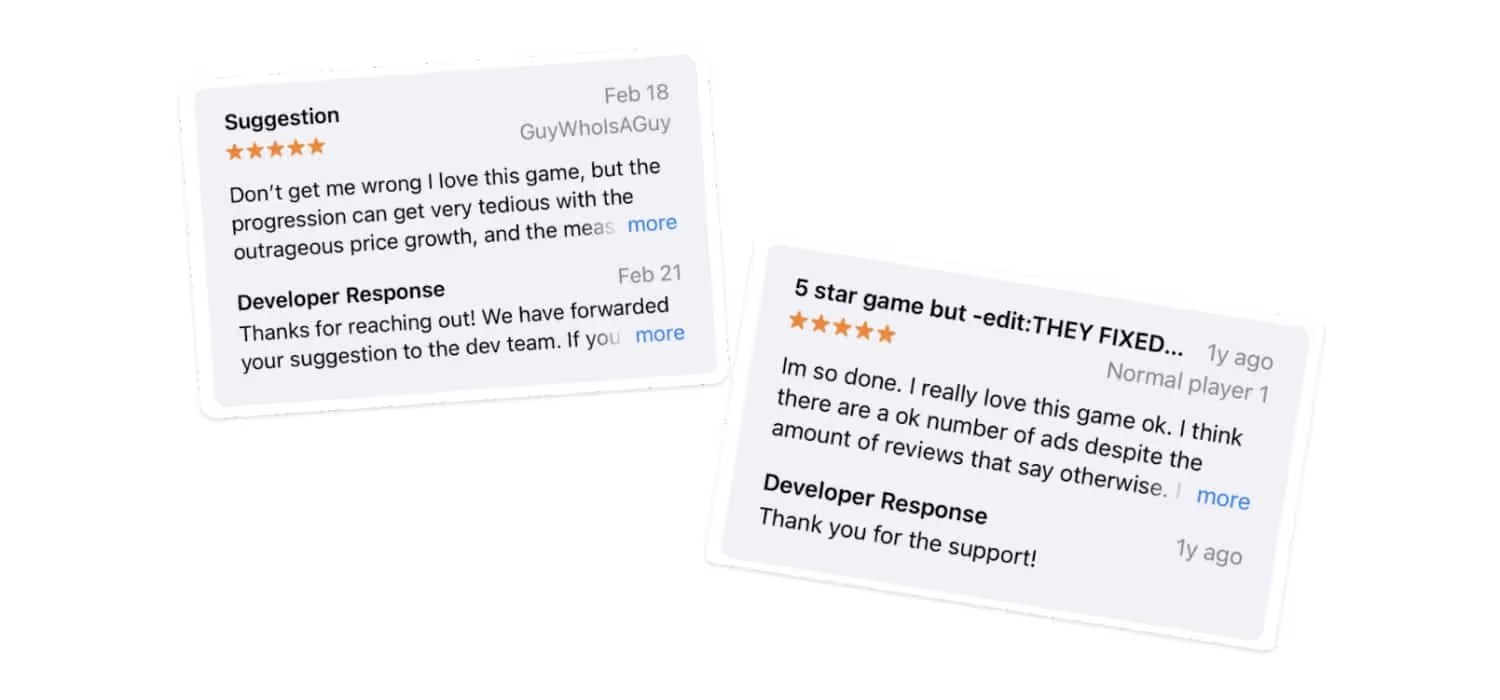
In many cases, it’s a loyal player just trying to resolve an issue or a show of dissatisfaction about a recent and unwelcome change to the gaming experience, as opposed to a condemnation of the whole game. Assume this is the case and, instead of becoming defensive, reach out with the genuine intention to help. While it’s not always possible to turn these reviews around, it works more often than you might expect. At Yodo1, we dedicate serious time and energy to responding to our players and working to solve their concerns. For us, it’s a must.
To illustrate the point, look at this negative review from an Among Us player and ask yourself whether this is a deep problem with the game, or merely a plea from a loyal fan to call attention to an issue.
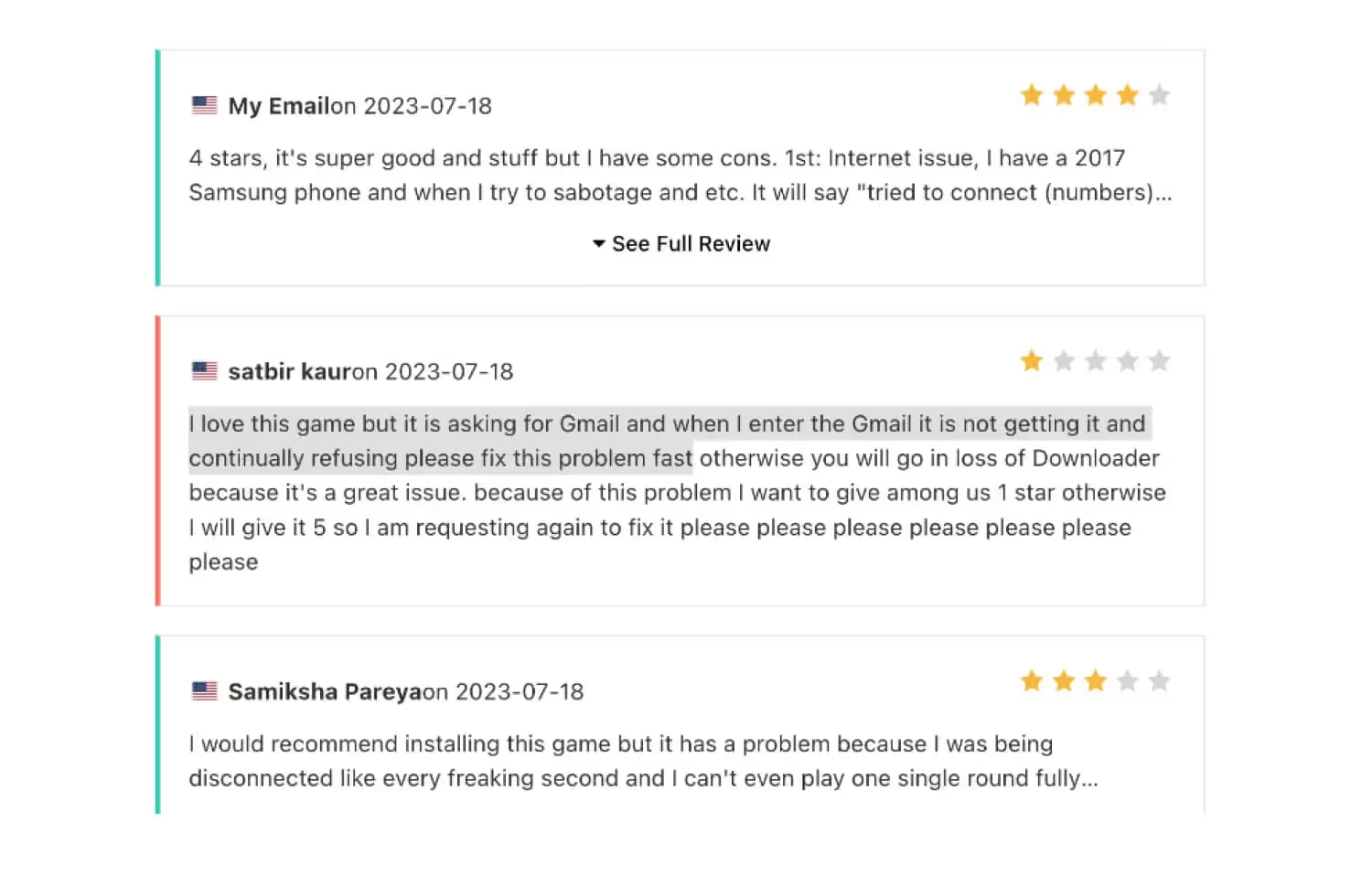
Don’t dismiss the positive
It can be easy to take loyal happy players for granted, but remember that these are the lifeblood of your game over the long run, and longevity depends on doing more of what’s working, not just fixing what isn’t. Show appreciation for your gaming community by responding to them–after all, their support makes your job possible. This simple gesture helps maintain strong relationships with your players and encourages them to continue supporting your game, creating a snowball effect of goodwill that can have a major impact on your game’s success.
Also, as you build out your roadmap, balance fixes with the development of new features and content that fall in line with sentiments you’re seeing among excited players. If you’re seeing a lot of positive reviews about limited-time skins, it may be worth dedicating more resources to that aspect of the game.
Getting featured
Ratings are not just for potential new players to read when choosing a new game: they also are a huge potential boost for potentially getting featured on the Play and App Stores.
Google Play and the Apple App Store consider ratings when deciding which games to feature—a higher rating can lead to your game being selected, which means increased visibility and more downloads. Being featured on the App Store can increase the number of downloads by a median of up to 140% for the duration.
But what, specifically, are the criteria used?
Know these magic numbers for the Google and Apple app stores and aim for them to have the best chance at the featured section:
In certain regions, for example, Google Play requires a minimum rating of 3.8 out of 5,
Major countries with higher user bases require a 4.0 or higher, and
You must maintain these numbers for a certain period of time.
Our team at Yodo1 aims for a game rating of 4.2 and above as a key performance indicator for how healthy the community is and how much they enjoy playing your game. By striving for these magic numbers, you’ll increase your chances of grabbing the app stores’ attention and securing a coveted feature spot.
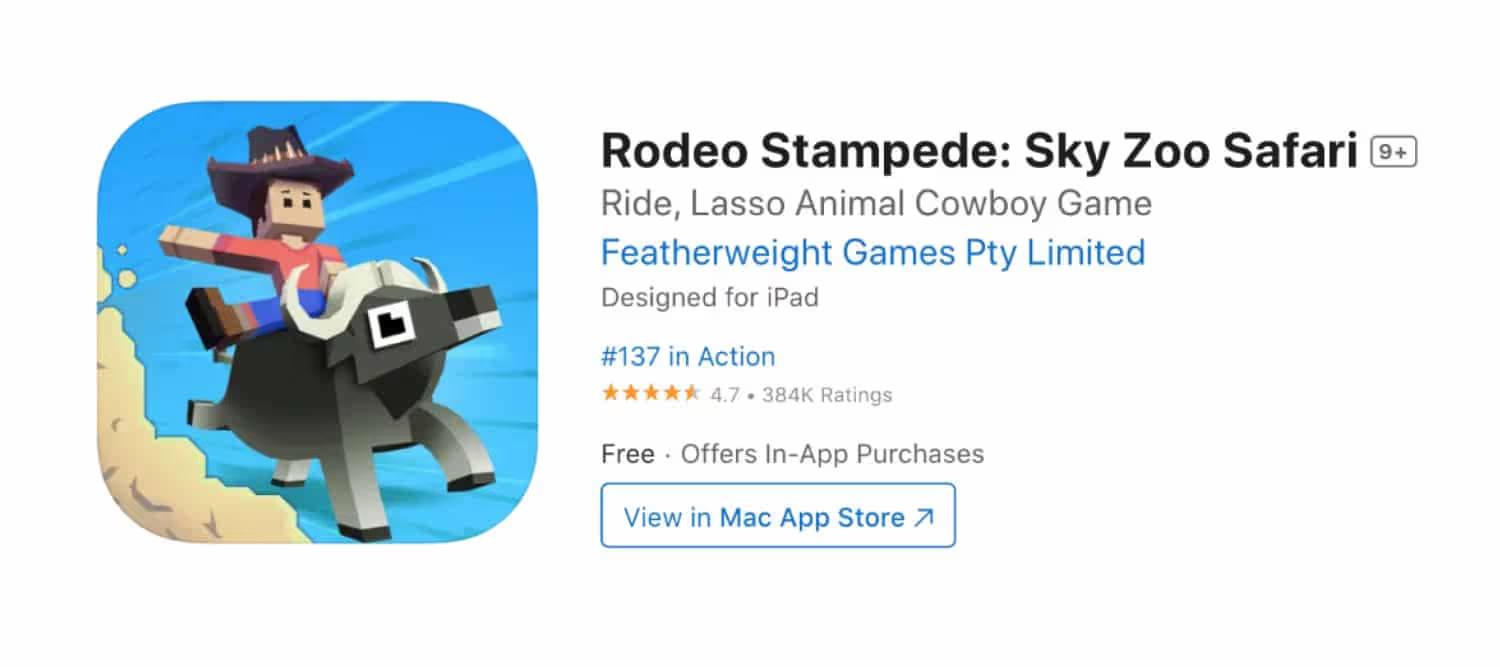
Sometimes, a unique game feature or update can pique the interest of app store curators. For example, a fresh update to Rodeo Stampede grabbed Google Play's attention, creating an opportunity for a spotlight placement on the platform. This demonstrates that it’s not just about ratings but also about creating a dynamic and engaging gaming experience that stands out.
It also helps to build a rapport with the app stores. Apple and Google sometimes reach out to Yodo1 proactively to feature our games, and there is often a clear reason or occasion that prompts it.
So work on new releases, create regular, fresh seasonal content, and update in-game features; backed up by solid ratings, this can stack the odds in your favor.
Game growth with Yodo1
Reviews are a massive part of the gaming industry, especially on mobile. It’s something we see on a daily basis, and hopefully, the tips provided in this article are ones you can start to incorporate into your development cycle.
As a major game publisher with over 1.5 billion players worldwide across our games, we’ve developed a methodology for making the most out of player ratings (even negative ones!), using them as opportunities for growth rather than an ever-present Damocles’ sword of player sentiment.
Changing your perspective to seeing players as insightful playtesters eager to share their experience means gaining a secret weapon that can snowball into runaway successes like our own game Rodeo Stampede, which is still at the top of the charts seven years after its release–thanks in no small part to the optimizations along the way, many made in response to player feedback.
If you are looking for an extra boost to help you achieve that next stage of growth and need a team dedicated to helping you face the challenges and complexities of the mobile gaming industry, look no further than Yodo1.
Our expertise in publishing, user acquisition, monetization, and IP licensing enables us to provide tailored solutions that cater to your unique needs and deliver results while taking work off your plate. Reach out to the team to learn how working together can help your game reach its full potential.
Latest Blog Posts
Bumblebee joins the battle for a second Puzzles & Survival x Transformers event
Viking Rise x Vikings: Valhalla Event 4 – The Grand Finale of an Epic IP Saga
Wing Fighter x TRANSFORMERS – A Battle for the Ages!
Dragonheir: Silent Gods x Dungeons & Dragons – Enter the Third Phase of Epic Collaboration!
TRANSFORMERS bots and Puzzles & Survival Game Unite to Combat a Massive Invasion!
Yodo1 Gathers China’s Top Mobile Gaming Leaders to Explore Global Brand Partnerships in 2025
Game Growth

The Game Changer: Leveraging Data Insights for Mobile Game Success in 2023
08.08.2023
•
5 mins read
The Game Changer: Leveraging Data Insights for Mobile Game Success in 2023
Think back to the last time you had to make a decision for your game based on messy or incomplete data. Remember the frustration, the hours spent sifting through disparate sources, the uncertainty? Now, imagine a different scenario: having all the insights you need, neatly organized and easily accessible, all in one place. No more guesswork, no more expensive consultants, just clear, actionable insights to drive your game's growth.
The challenge: making sense of the data
In the increasingly competitive mobile gaming market, making the right decisions based on accurate data is not just important, it's essential. According to the Unity Gaming Report 2023, 54% of indie developers identify user acquisition as their biggest post-launch challenge. Attracting new users amidst the fierce competition and high marketing costs can be a daunting task. For midsize studios, the challenge shifts to retention, with 49% citing it as their primary concern. Keeping players engaged over time, especially with the constant influx of new games and changing player preferences, is no easy feat.
The power of data analytics
Data analytics is a process that transforms raw data into valuable insights, providing a roadmap for success in mobile gaming. Here's how it can benefit developers:
1. Tailoring the Gaming Experience: Analyzing user behavior ensures game studios understand what aspects of the game players are enjoying the most– as well as which areas need improvement.
2. Optimizing Freemium Games: Data analytics can help identify the right balance between free content and in-app purchases, maximizing the profitability of freemium games.
3. Enhancing UI/UX: Insights from data can guide improvements to the user interface and user experience, leading to higher player retention.
Introducing Yodo1 MAS Performance Score
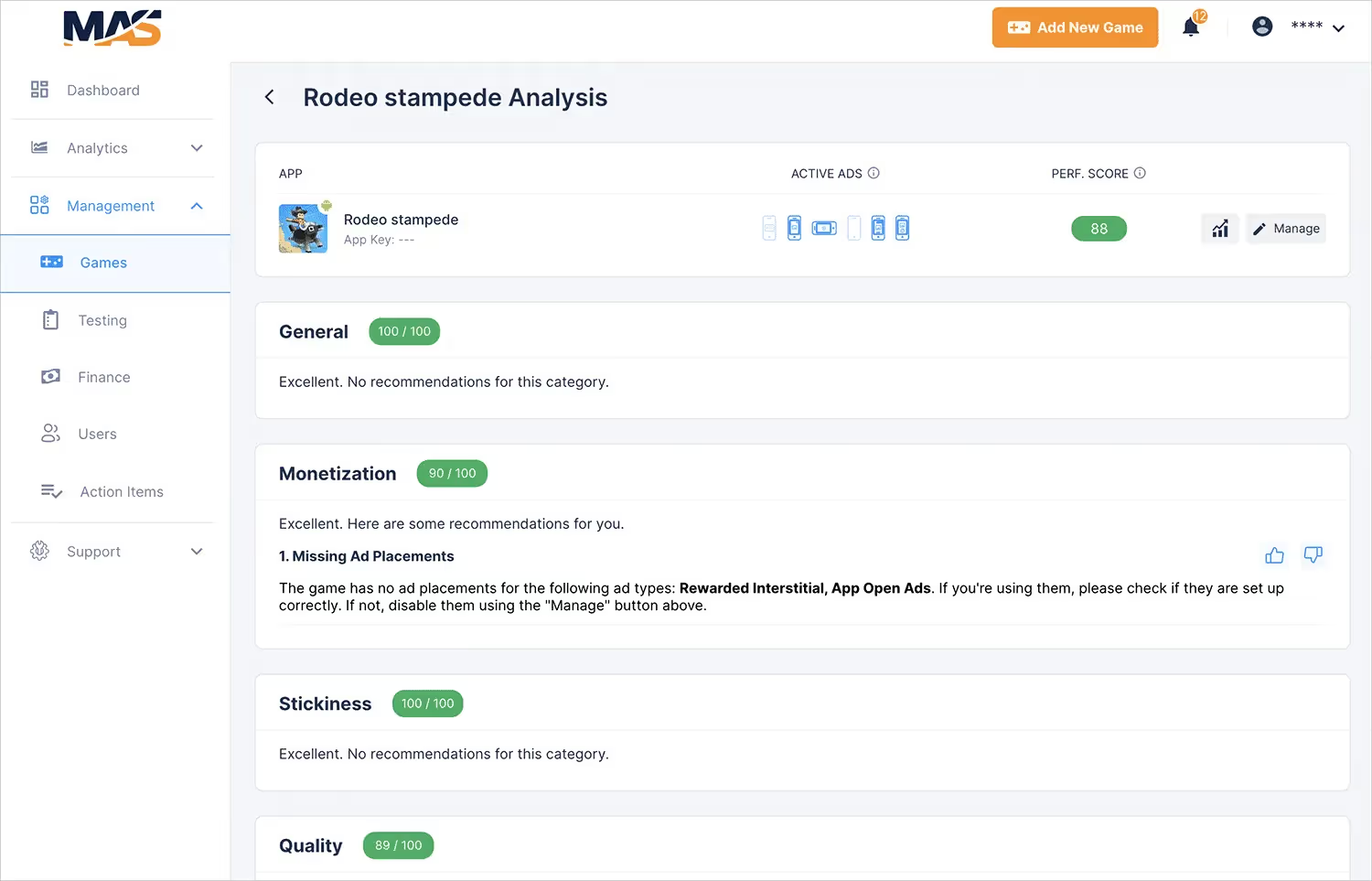
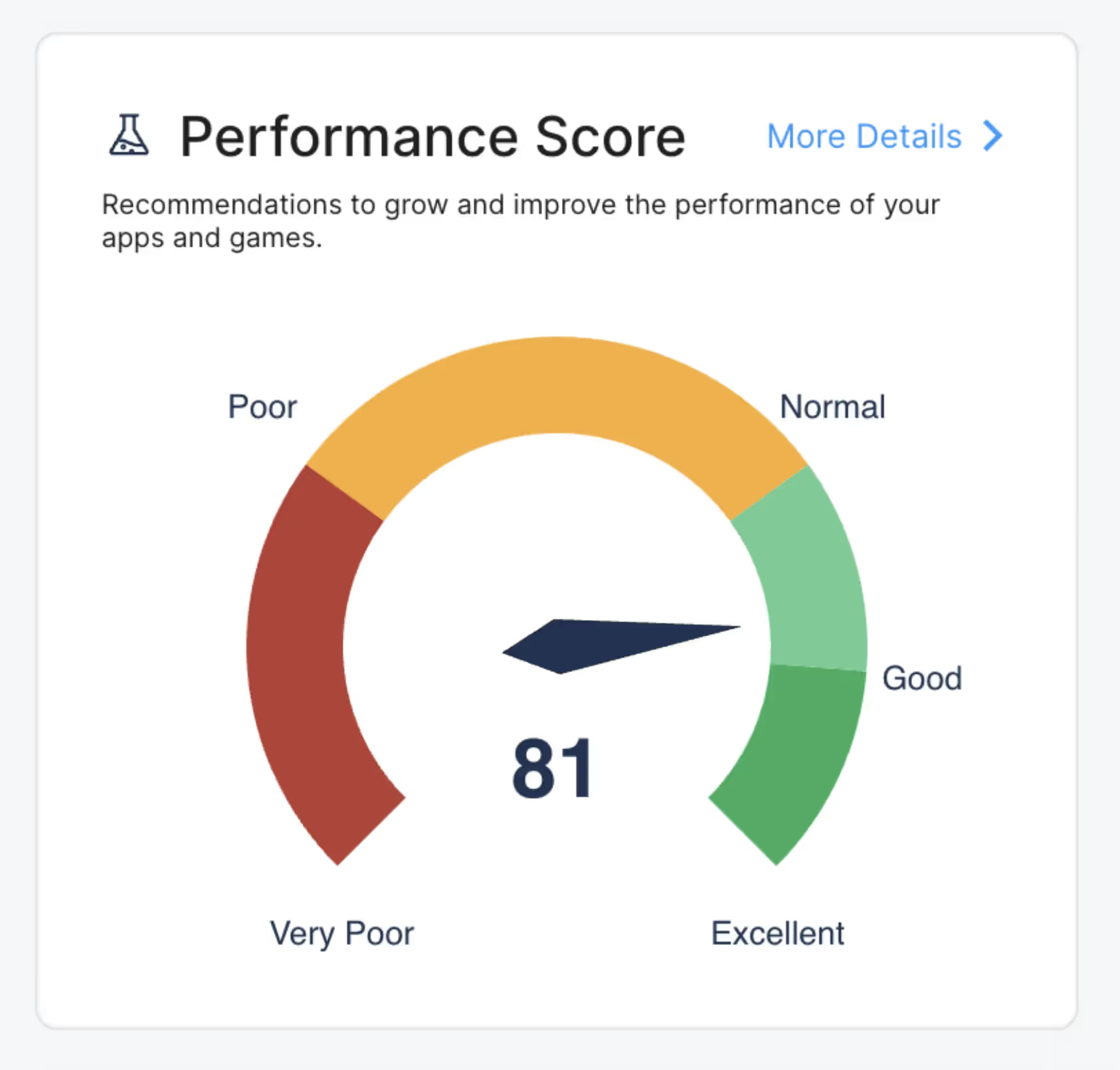
Yodo1’s MAS stands alone as the first and only monetization solution to offer comprehensive, actionable insights all in one place. The Yodo1 MAS Performance Score isn't just a feature—it's a game-changer. It equips developers with specific data insights and recommendations inside their MAS dashboard, covering key areas such as monetization, retention, performance by country, localization, and Google Play reviews.
This innovative tool is designed to save game studios hundreds of hours of data analysis, providing a clear, concise overview of a game's performance. And better yet, it offers a roadmap and insights that, when acted on, have been proven to dramatically increase revenue.
Unlock your game's potential: leverage the power of Performance Score today
Ready to unlock the full potential of your game? Start using the MAS monetization platform today and tap into the power of the Performance Score. Watch as these data insights exponentially grow your revenue in the next 90 days. Don't navigate the landscape of game growth alone. Let Yodo1’s MAS and its groundbreaking Performance Score be your trusted advisors on this exciting journey. Sign up today at: mas.yodo1.com/register.
Latest Blog Posts
Bumblebee joins the battle for a second Puzzles & Survival x Transformers event
Viking Rise x Vikings: Valhalla Event 4 – The Grand Finale of an Epic IP Saga
Wing Fighter x TRANSFORMERS – A Battle for the Ages!
Dragonheir: Silent Gods x Dungeons & Dragons – Enter the Third Phase of Epic Collaboration!
TRANSFORMERS bots and Puzzles & Survival Game Unite to Combat a Massive Invasion!
Yodo1 Gathers China’s Top Mobile Gaming Leaders to Explore Global Brand Partnerships in 2025
Game Growth

Leverage Your Game Economy with Rewarded Ads
26.07.2023
•
5 mins read
Leverage Your Game Economy with Rewarded Ads
As a mobile game developer, you’re tasked with the delicate balancing act of creating an immersive and enjoyable experience for your players while also ensuring your game generates revenue. Ads have long been a staple for monetization, but they often carry a negative connotation among players, sometimes even disrupting the gaming experience.
This perceived conflict between maintaining player engagement and generating revenue is a key challenge. However, it doesn’t have to be a zero-sum game. It’s about finding the right balance, and that’s where rewarded video ads come into play.
Implemented strategically, these ads not only provide a significant boost to revenue but also add value to the player’s experience, creating a win-win situation. Let’s explore how you can harness this ad format for your game.
Setting a foundation
Rewarded video ads are a type of in-game advertising that, as the name suggests, reward players for watching them. Unlike pop-ups or banner ads, these are completely optional. The player has full control over whether to watch these ads or skip them, adding a level of interactivity and choice that contributes to a positive user experience.

Via Google
Plus, they are shown to work. Over 60% of players who were polled from different demographics said they prefer rewarded ads over traditional ones–hardly surprising. How you implement the rewards offered through these ads can vary greatly depending on your game. They might include extra lives, bonus points, special abilities, or even in-game currency. Regardless, a poorly implemented rewarded ad will simply not entice players to opt into watching it. No click. No money.
For this reason, the rewarded ad should be tailored to the game and its audience, with the aim of providing real, tangible value to the player. But there’s more to rewarded video ads than just providing incentives–they should be situated within a robust game economy that acts as a foundational layer upon which incentives are built. In other words, cheap rewards and gimmicks probably won’t work.

Planning Your Monetization Strategy
The journey toward effective monetization begins even before your game hits the app store. As a developer, weaving your monetization strategy into the fabric of your game design from the earliest stages makes this process much simpler.
Adopting this proactive approach helps avert future design issues, while simultaneously ensuring that monetization strategies, like rewarded video ads, enhance rather than disrupt the player experience. This strategy effectively blends monetization with gameplay and reduces potential complications.
Incorporating rewarded video ads effectively means thinking about what will be most compelling to your players. What do they want more of as they play the game? The answers to these questions form the basis for the rewards that you offer through your ads. Remember, if the rewards don’t resonate with the player, they’re less likely to engage with the ads.
So, start with your players’ desires and work backward to your ad rewards, crafting a monetization strategy that aligns with your game design and your players’ interests.
Implementing Rewarded Video Ads: Key Considerations
Here are a few key considerations when implementing rewarded video ads:
Session Length
Consider the average session length for your game. If a player engages with every rewarded ad in a 20-minute session and a quarter of that time is spent watching ads, it may feel disruptive. Always ensure the balance leans more toward gameplay than ad viewing.
Player Metrics
Watch your player metrics closely. If session times start to drop or overturn increases after introducing more rewarded ads, it may be time to reassess your strategy. Player feedback is crucial here; if they feel overwhelmed by ads, they’re likely to disengage.
Ad Overload
Track your eCPM, or effective cost per thousand impressions. If players are bombarded with ads, they may stop paying attention to them, reducing the number of clicks and ultimately your revenue. Avoid pushing players into an “ad-watching zombie” state.
Remember, rewarded video ads should enhance the player experience, not detract from it. Keep these considerations in mind, always validate your iterations with data, and don’t be afraid to adjust your strategy based on player feedback and changing circumstances.
Case in point: Rodeo Stampede
Rodeo Stampede has been going strong for 7 years and is one of the most successful games we have published to date. A major contributor to Rodeo’s success is how seamlessly the game economy is woven across the game. Of course, that’s by design. Here are some things we know about players who love Rodeo Stampede:
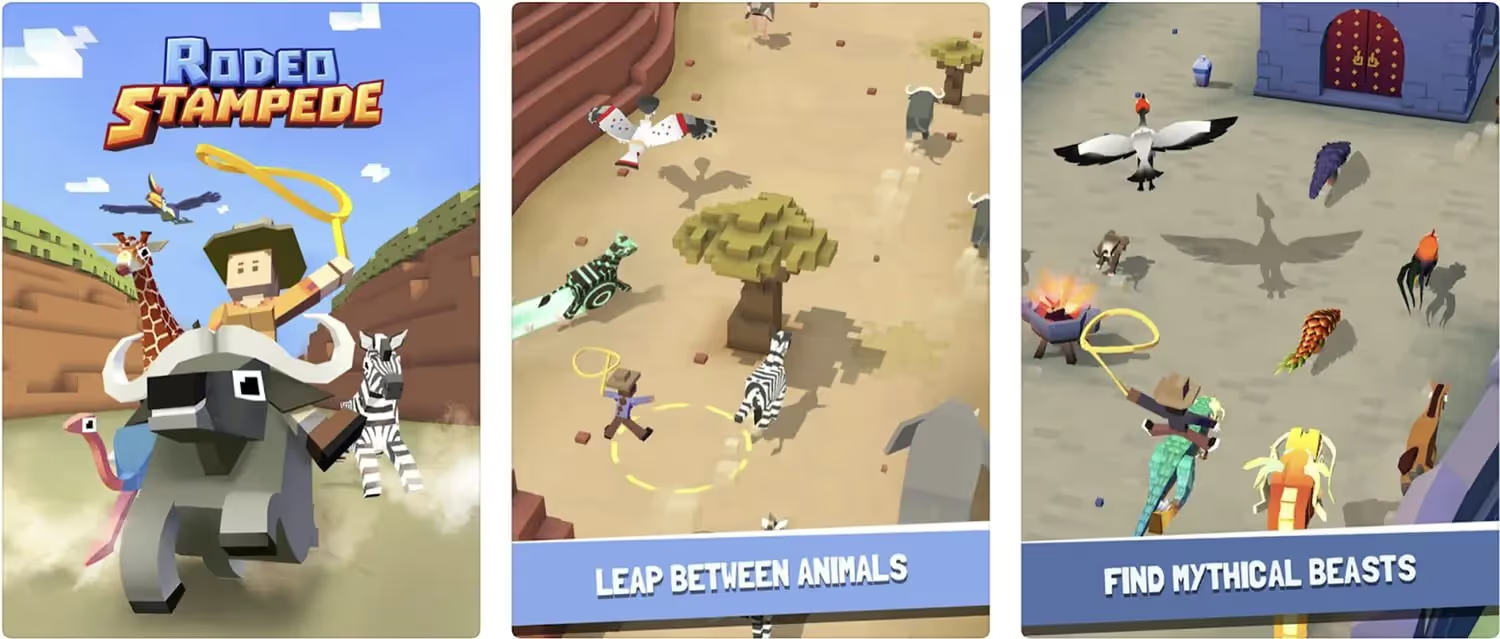
- They want to keep playing after losing a life
- They love customizing their zoo and adding new animals
- They want to collect in-game stuff that can make the game more fun
- They want coins that can be used to buy in-game stuff
Knowing what players want, we can add rewarded videos at key places in the game to offer those things.
Example 1:
A lucky spin can earn all kinds of useful items, including special animals that can be added to the zoo. Many players are more than happy to watch an ad in order to earn a spin.

Example: 2
Losing a life after a long run in an endless runner game can be a welcome break to take a breather and collect yourself before the next run. Why not earn 75 coins as you do so?
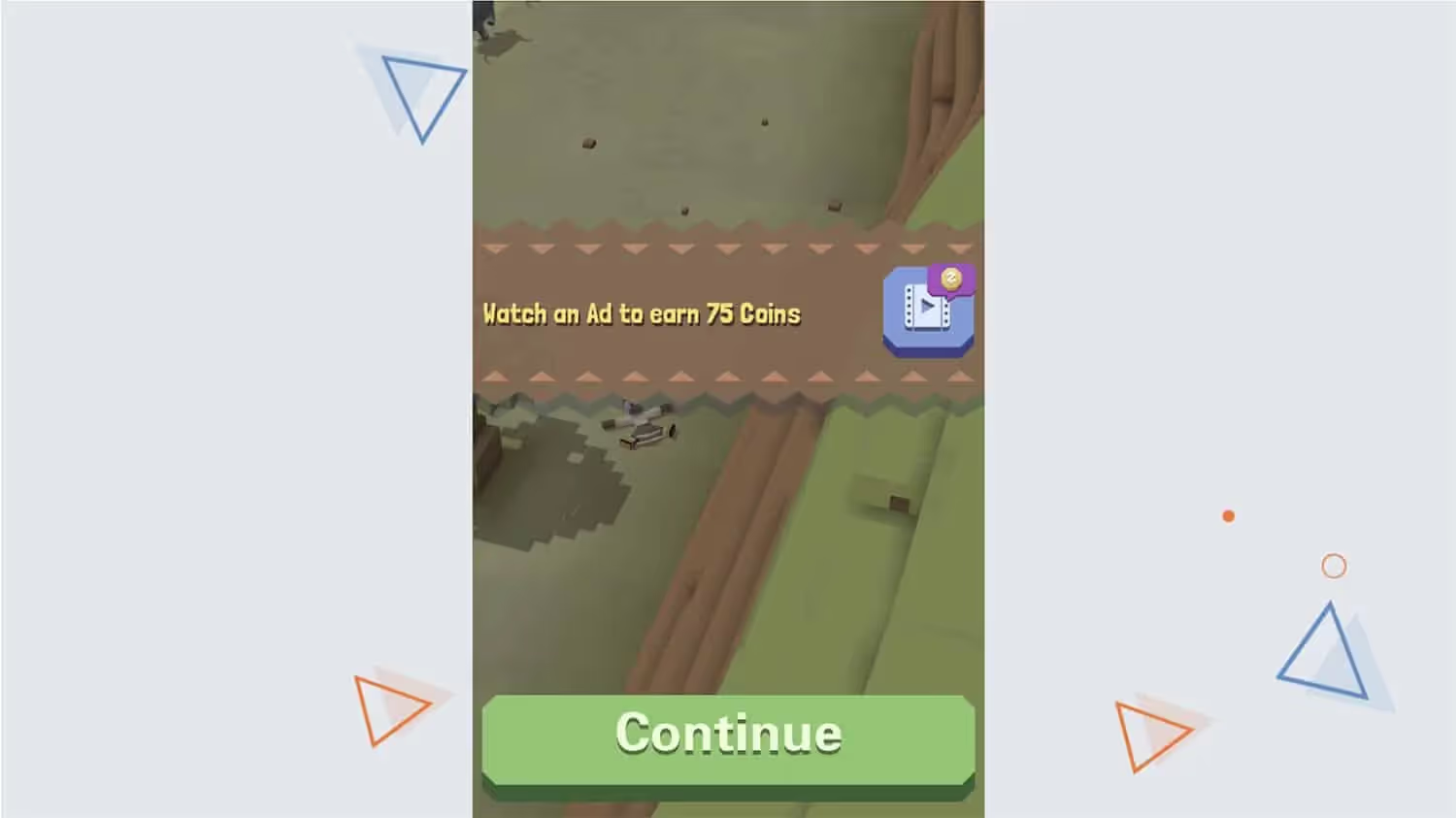
Example 3:
Many players love the zoo mechanic in Rodeo Stampede. They get really into the whole economy and dynamic of the zoo itself. Here, we can offer opportunities to boost the growth of your zoo.
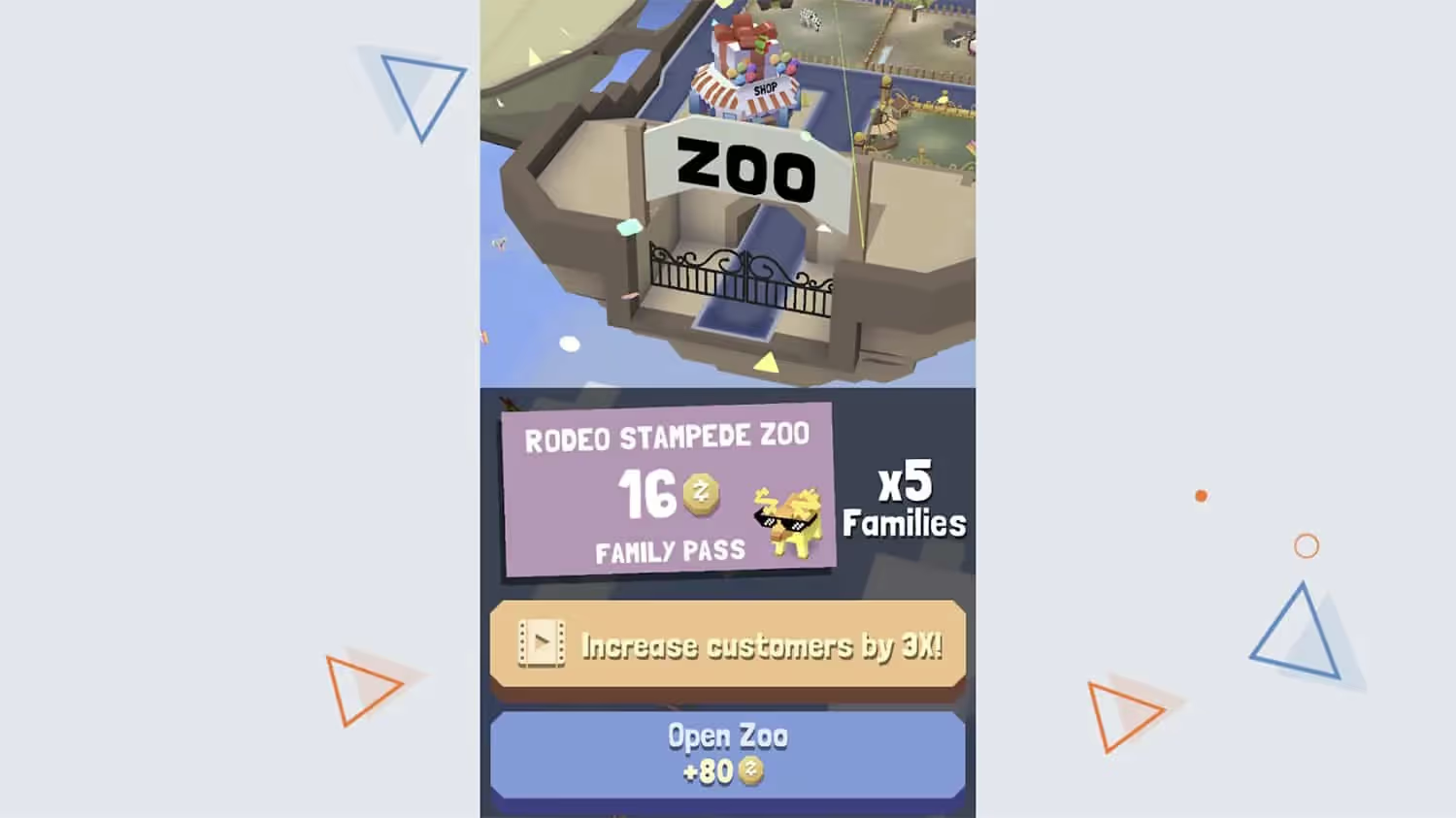
These are just a few of the ways you may consider implementing rewarded video ads into your game. But note for all these examples, careful planning is needed, as well as a deep understanding of what players really want…and thus, what will entice them to watch.
Get the experts on your side
Developing a game is a massive undertaking, and getting it just right can feel like a balancing act. That’s where the experts come in. At Yodo1, we understand the challenges developers face because we’ve faced them ourselves. We work alongside thousands of developers to help them grow their games. The need for the right monetization is a key aspect of ensuring a healthy community and growth potential.
Here's the deal, if your game has potential—let's together take it a step further. With Yodo1, your game's growth isn't just possible, it's inevitable.
Latest Blog Posts
Bumblebee joins the battle for a second Puzzles & Survival x Transformers event
Viking Rise x Vikings: Valhalla Event 4 – The Grand Finale of an Epic IP Saga
Wing Fighter x TRANSFORMERS – A Battle for the Ages!
Dragonheir: Silent Gods x Dungeons & Dragons – Enter the Third Phase of Epic Collaboration!
TRANSFORMERS bots and Puzzles & Survival Game Unite to Combat a Massive Invasion!
Yodo1 Gathers China’s Top Mobile Gaming Leaders to Explore Global Brand Partnerships in 2025
IP Licensing
Assessing the ROI of IP Licensing for Mobile Games
11.07.2023
•
5 mins read
Assessing the ROI of IP Licensing for Mobile Games
IP licensing in mobile is quickly becoming a go-to growth strategy for game studios and IP holders alike. Of the top 100 downloaded mobile games on iOS (excluding hypercasual) released in 2021, only one (Soccer Super Star) was not based on an existing franchise–an unequivocal signal that IP licensing isn’t going anywhere. Without question, it is an incredible strategy for reaching new players and boosting revenue.
And yet, many studios are hesitant to take the plunge simply because…it’s expensive! In this article, let’s shed some light on the nuances of IP licensing from an ROI standpoint. We’ll explore the overall business models, cover key metrics for understanding the impact of a potential collaboration, delve into the upside (perhaps what you’re here for), and then touch on risk mitigation. If your studio has $500,000 or more in monthly revenue and you’re still undecided, this article is for you. Here we go.
Business models for collaborations
Game studios have several business models to choose from when embarking on an IP collaboration, each with its advantages and challenges. The three most popular business models for IP collaborations are royalties only, royalties with a Minimum Guarantee (MG), and flat fee (licensing fee). Let’s go through these quickly, for context.
1. Royalties only (with no Minimum Guarantee)
In this model, the licensee pays the licensor a negotiated percentage of revenue for every product sold that uses the licensor's assets (including IPs or brands). No upfront payment is made for this model.
2. Royalties with a Minimum Guarantee (MG)
This model is like the first, but with an added upfront payment (Minimum Guarantee) that the licensee must pay to the licensor. This amount is negotiable and is based on the value of the intellectual property. The Minimum Guarantee is recoupable (offset) against royalties earned. If sales are high, the licensee recoups the Minimum Guarantee, and the licensor earns additional royalties.
3. Flat fee (licensing fee)
Here, the licensee pays a one-time, negotiable fee for the rights to use the licensor’s assets for a specified period. The licensor does not receive any royalties from sales and the fee is non-recoupable for the licensee. In this case, the outcome of the event is less relevant for the licensor as they are not receiving royalties for any sales related to the IP.
For those who want more details on the overall economics of IP licensing, here’s a deep dive by our very own Fil Robinson from Yodo1's IP licensing team.
Analyzing key metrics
Now that we understand the basic business model, and before we consider some of the risks and how those can be navigated, let's explore how we can measure the impact of an IP collaboration–understanding key metrics is critical to success.
Pre-collaboration analysis is what comes before you even begin: a thorough analysis of your game's current performance metrics. This includes assessing player retention, session length, in-app purchases, and player engagement. Evaluating the potential IP's fan base size and engagement level also indicates how valuable the collaboration might be in terms of user acquisition and future engagement.
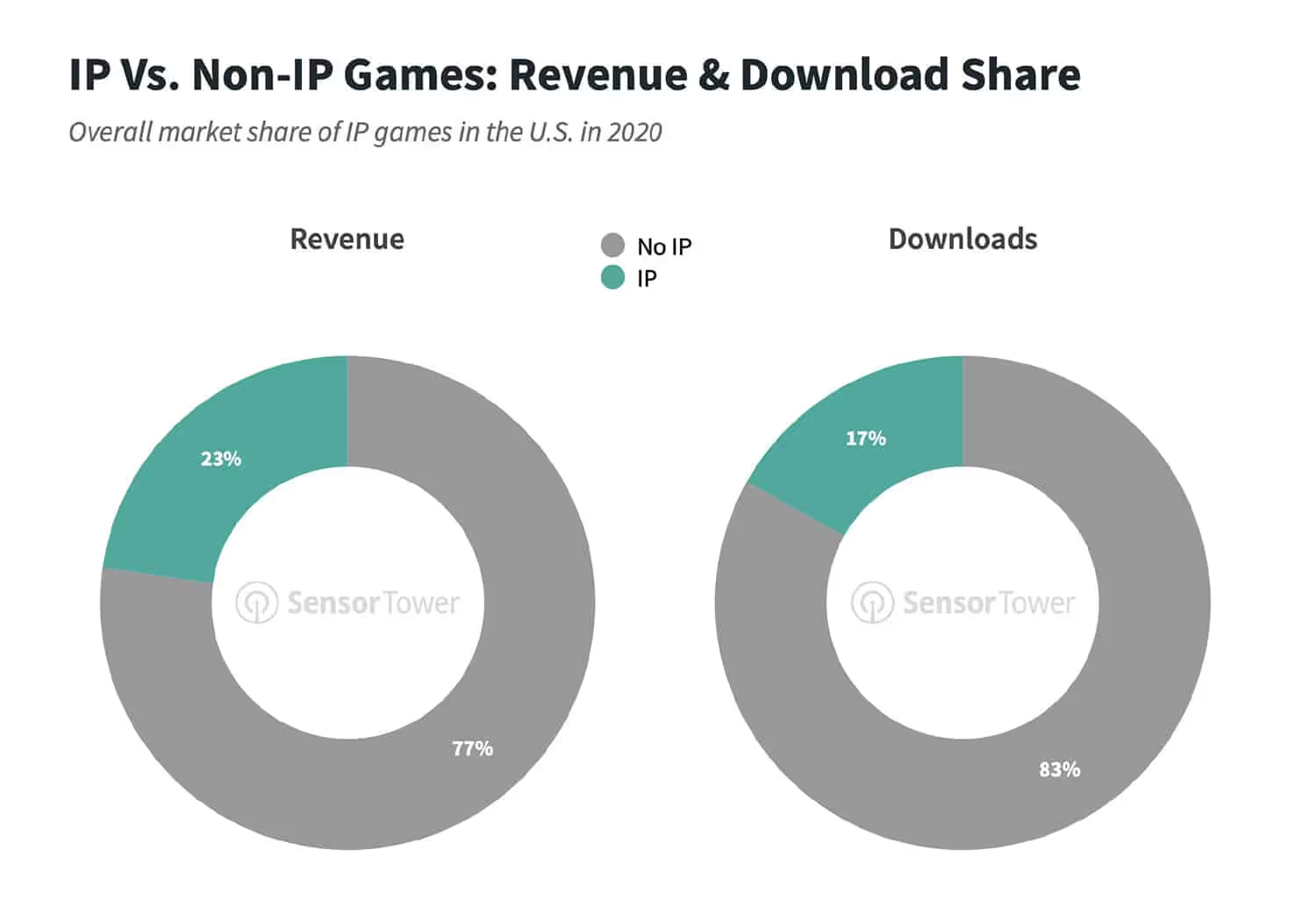
Via SensorTower
Post-collaboration analysis comes after the launch goes live; don’t make the mistake of resting on your laurels and thinking the hard work is over; monitoring changes in key metrics will provide valuable insights into the collaboration’s impact. Metrics such as user acquisition rates, average session length, retention rates, and monetization data can help quantify the collaboration's effects on the game. By comparing these post-collaboration metrics with pre-collaboration data (which you’ve already done, right?), you can determine whether the collaboration achieved its objectives and use the analysis to inform future strategies.
So, what is the bottom line when it comes to carefully measuring and analyzing your first IP collaboration? Simply this: game studios on the fence about an IP collaboration tend to see it as fundamentally different from regular UA investing. And while there are more complexities and challenges to navigate, it is simply another, potentially much more powerful way to introduce your game to new players...in this case, by leveraging a popular IP. Just as you would go about a major UA campaign and keep track of the data to understand both the long and short-term impact of the campaign–from retention to organic uplift, and everything in between–an IP collaboration should be approached with a similar mindset.
What about the risks?
Nothing is ever guaranteed, of course, but time after time statistics show that IP collaborations are, in most cases, a major boost to a game studio's bottom line, attracting not just any players but high-spend ones, who are nearly three times as likely to download a game based on an IP they love.
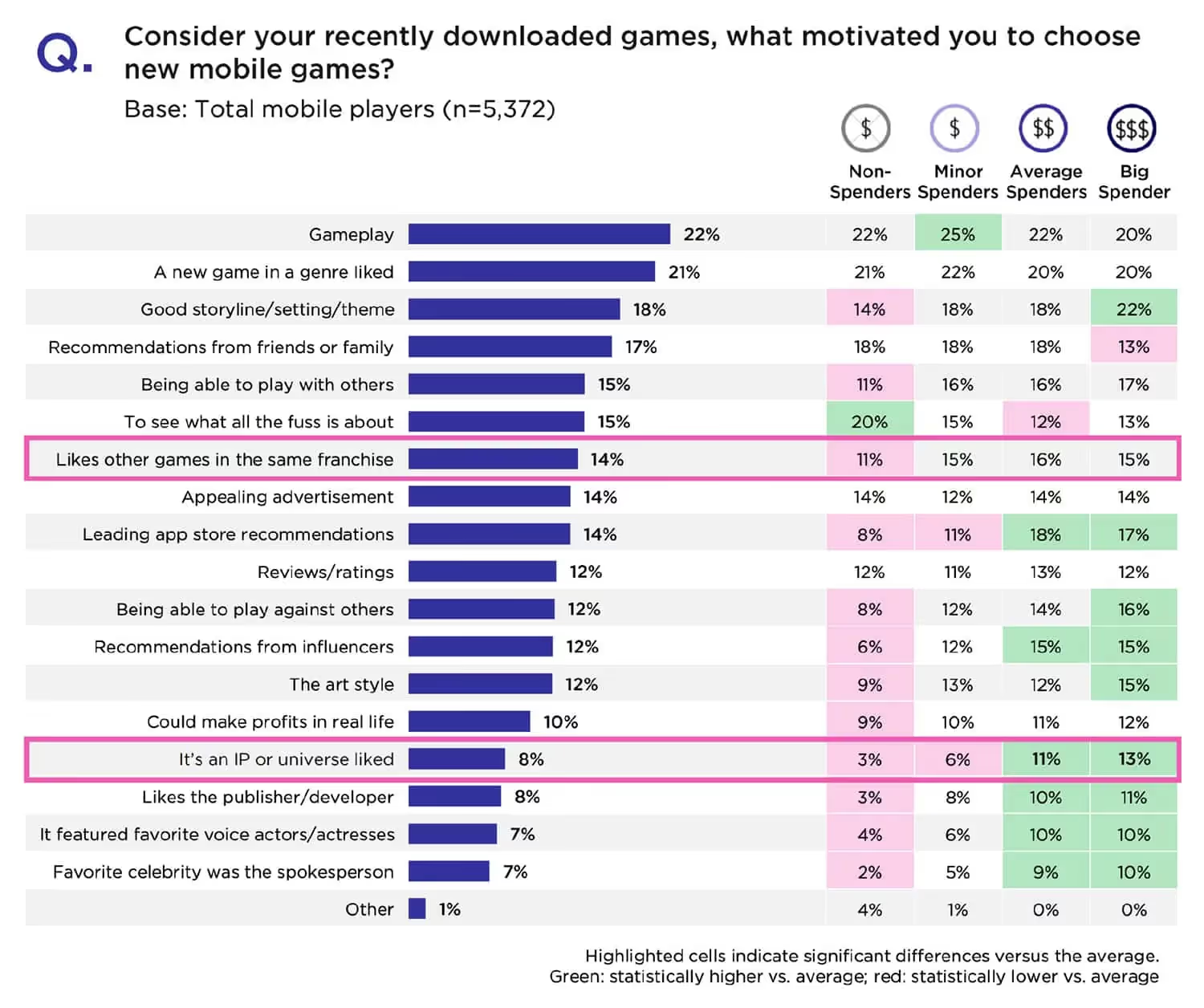
And while you should always be aware of potential risks in any growth strategy, to adopt effective mitigation strategies and come out on top: be aware, but don’t let them scare you off!
Know your audience and keep what makes your game beloved front and center when you’re planning. A poorly received collaboration can damage the game's brand or alienate existing players, particularly if they believe it deviates too much from the game's original concept or ethos. In our experience, a well-conceived IP collaboration can easily mitigate this risk.
Financial planning is key: Make realistic revenue forecasts and carefully control the costs associated with the collaboration. What this means is that you should carefully consider the opportunity cost of an IP collaboration. Dedicating significant resources and time to development, design, testing, research, contract negotiation, and navigating all the unexpected hiccups over 6 months (at least) to bring the collaboration successfully across the finish line is hardly a walk in the park. Whether that is worth doing when compared to other things you could be doing to reach new players and grow your game is perhaps the most important question to answer before embarking on this journey.
“Ok, but what ROI can I expect?”
For context, Yodo1’s IP licensing team works with top global IP holders like Legendary, Paramount, and Hasbro. We work with huge games like Puzzles Survival, Top War, and Mobile Legends, to name a few. What that means is, we have a lot of first-hand experience.
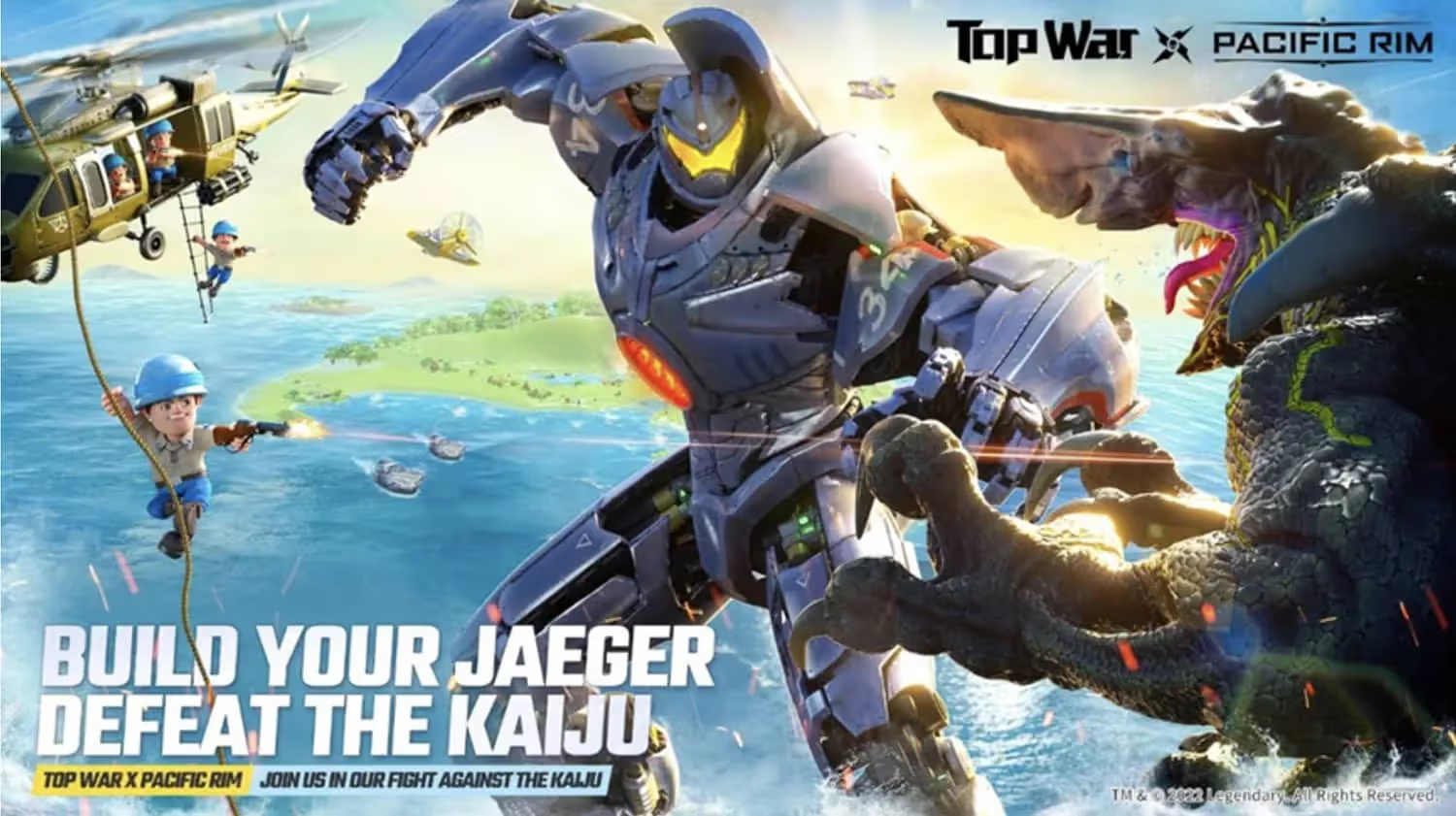
Via Yodo1
With that context, let’s assume everything goes according to plan with a given IP collaboration, and that your game has both average retention for its size and a well-balanced game economy. In such a case, with the caveat that these are averages, here is what you might project:
During the collaboration:
- Revenue: 20 - 30%
- Downloads: 15 - 25%
Six months following the collaboration:
- Revenue: 10 - 15%
- Organic uplift: 5 - 10%
Don’t let the wave pass you by
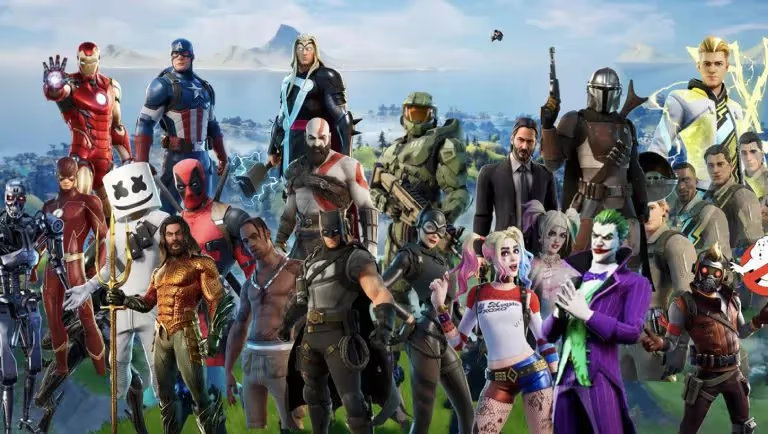
Major brands and IP holders are now seeing the light when it comes to the incredible reach a well-executed game collaboration can have. Big games like Fortnite have paved the way for a much broader field of opportunities. These are still the early days of a trend likely to become standard practice for any game of sufficient size (revenue around USD 500,000 per month), that like UA, periodic IP collaborations are a core pillar of growth, and a solid investment when executed correctly.
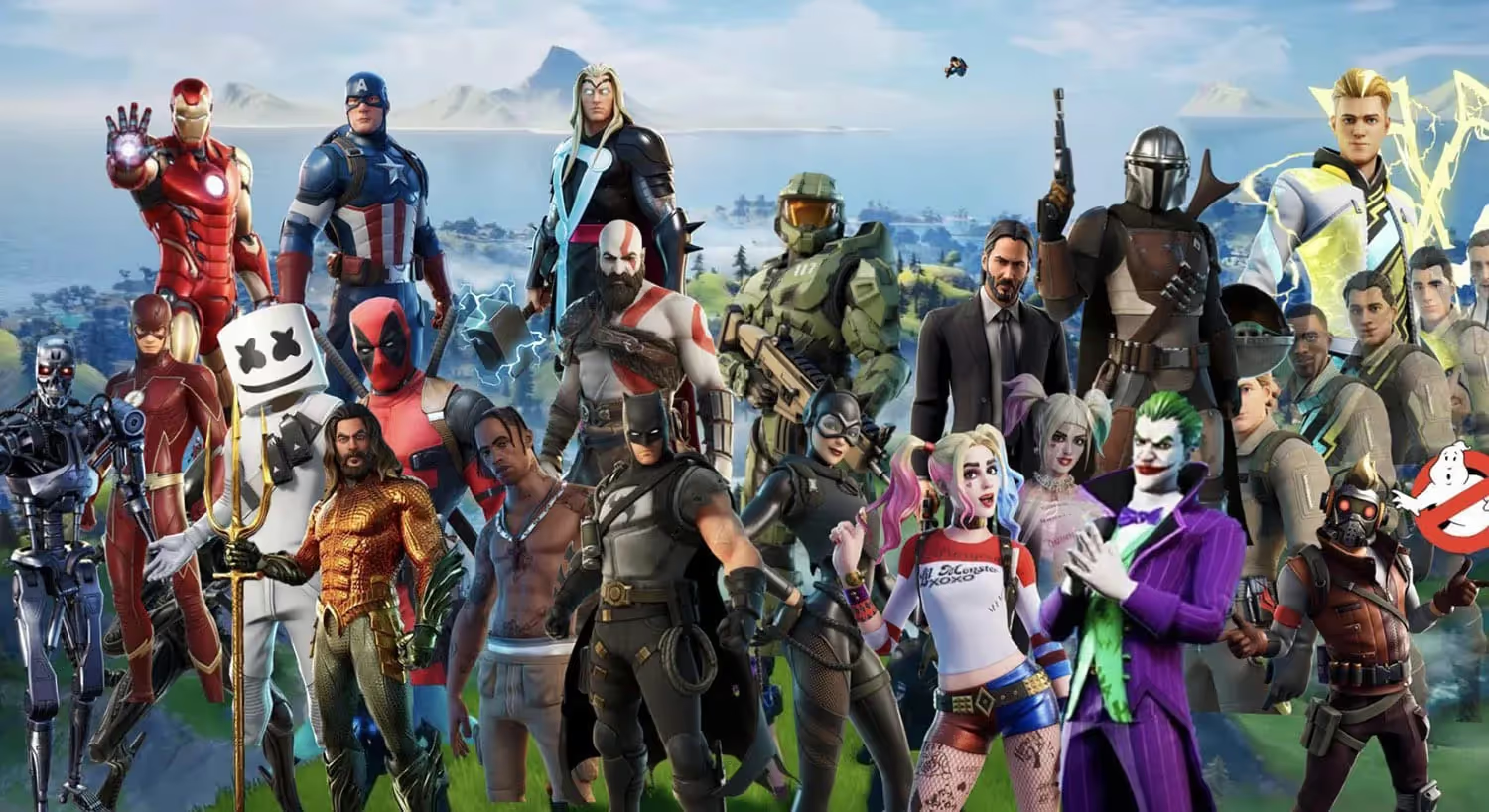
Via Reddit
Maybe you, like us, are very bullish about the amazing growth opportunities that IP licensing provides to reach players on a whole new scale, and, like the games we work with, look at these collaborations as a key pillar for growth, and an exciting landscape of possibilities.
But you may also be concerned about the opportunity cost, the complexities of dealing with brands, concerns about choosing the right IP, or whether it will pay off in the end. The Yodo1 IP licensing team is all about helping game studios achieve the incredible benefits of IP collaborations, without having to stress about the headaches along the way. We eat those headaches for breakfast. With a proven track record, such as our successful collaborations with Top War—just one among many—we’ll be in your corner for each step of the process.
Our team of experts specializes in guiding studios through the intricacies of IP licensing for mobile games. With a comprehensive understanding of the business models, audience dynamics, and key metrics involved, we can help you factor in the risks, make informed decisions, and optimize collaborations for maximum impact.
Don't let the complexities hold you back. Reach out to us today and let's explore the incredible growth opportunities together!
Latest Blog Posts
Bumblebee joins the battle for a second Puzzles & Survival x Transformers event
Viking Rise x Vikings: Valhalla Event 4 – The Grand Finale of an Epic IP Saga
Wing Fighter x TRANSFORMERS – A Battle for the Ages!
Dragonheir: Silent Gods x Dungeons & Dragons – Enter the Third Phase of Epic Collaboration!
TRANSFORMERS bots and Puzzles & Survival Game Unite to Combat a Massive Invasion!
Yodo1 Gathers China’s Top Mobile Gaming Leaders to Explore Global Brand Partnerships in 2025
Game Growth

An Insider's Take on Social Media Marketing for Mobile Games
06.07.2023
•
5 mins read
An Insider's Take on Social Media Marketing for Mobile Games
Sandy Smith | Social Media Content Manager at Yodo1 Games
As a social media manager for Yodo1 games, I'm nearly always knee-deep in the often-fascinating-sometimes-infuriating world of mobile game marketing. Navigating this landscape involves understanding the trends, adopting an experimental mindset, and most importantly, digging deep into the niche a game naturally occupies to make impactful marketing decisions. It’s not enough to create a great game; you need to stay ahead of the marketing curve to ensure genuine success and longevity.
Let’s dive in.
Platform trends
We live in a fast-paced digital world where the only constant is change. Embracing this reality means aligning with the trends that the major platforms are pushing.
Let's use TikTok as an example. The platform has shifted towards favoring video clips that are longer than a minute. If we leverage this trend and start creating longer and more carefully planned content, we can reap big rewards. It’s pretty simple: platforms will favor content that embraces whatever new thing they’re pushing.
How to make storytelling content:
@maggievirtually SAVE THIS for your next content creation day! I know a lot of you guys are confused about storytelling content and what it actually looks like 👀 so I’m back with my greenscreen notes with 7 specific examples of how to create storytelling content! SO many people think that storytelling content is just telling a ‘once upon a time’ full start to finish story- but it doesn’t have to be that way! It’s basically just outlining a process or sharing the journey from problem to resolution. Simple! Make sure to save this video for later so that you can start making storytelling content and connecting with your audience on a deeper level. Follow along for more TikTok Strategy advice (And for part 2 of this video!) #storytellingcontent #storytime #contentcreationtips #contentideasforbusinesses #tiktokforbusiness #tiktokstrategyforbusiness #tiktokstrategist ♬ original sound - Maggie 💖 TIKTOK STRATEGIST
This doesn't mean putting all your eggs in the TikTok basket. It's essential to experiment across platforms and with different content types—short, long, trending sounds, original trends, streaming, memes, reels, stagnant pictures, comedic elements, or story-based content—to uncover what resonates with your audience. Try it all!
Case in point: Riot Games. They suffered a backlash from a controversial update to League of Legends. Some quick thinking led them to do a pre-recorded premiere on YouTube (with live chat), candidly explaining the situation authentically. The message resonated with players, who retracted their claws and let Riot live to fight another day. This highlights a key mindset: Think deeply about how and when to share content. Don’t fall into autopilot mode. If Riot had been upfront with their community, preemptively, about what was going on internally, odds are, things may have transpired differently. Riot Games learned the hard way just how influential “Developer Updates” can be, and they now release a video with every update. Remember, at the end of the day it is important to remain authentic and keep your community front and center; they are what makes your game.
To keep up with trends like these, I suggest following platform newsletters and staying abreast of changing winds and the latest features. Understand the advantages of each platform and diversify your content across them, following what works but never losing your experimental mindset. Diversify! That way, if TikTok should ever be restricted, it will feel like a pivot rather than the end of the world.
Creatives and content
The best social media managers are like mad scientists—constantly experimenting and refining their strategies, never settling into one style or format—and certainly never making assumptions about what’s going to work! Recently I’ve been helping the mobile game Idle Slayer grow its newly-created social media channels, as part of Yodo1’s UA and social media service. Given their eye-catching 8-bit aesthetic, I’m trying longer videos with voiceovers to share tips and strategies, making sure to show moments of gameplay that existing players love.
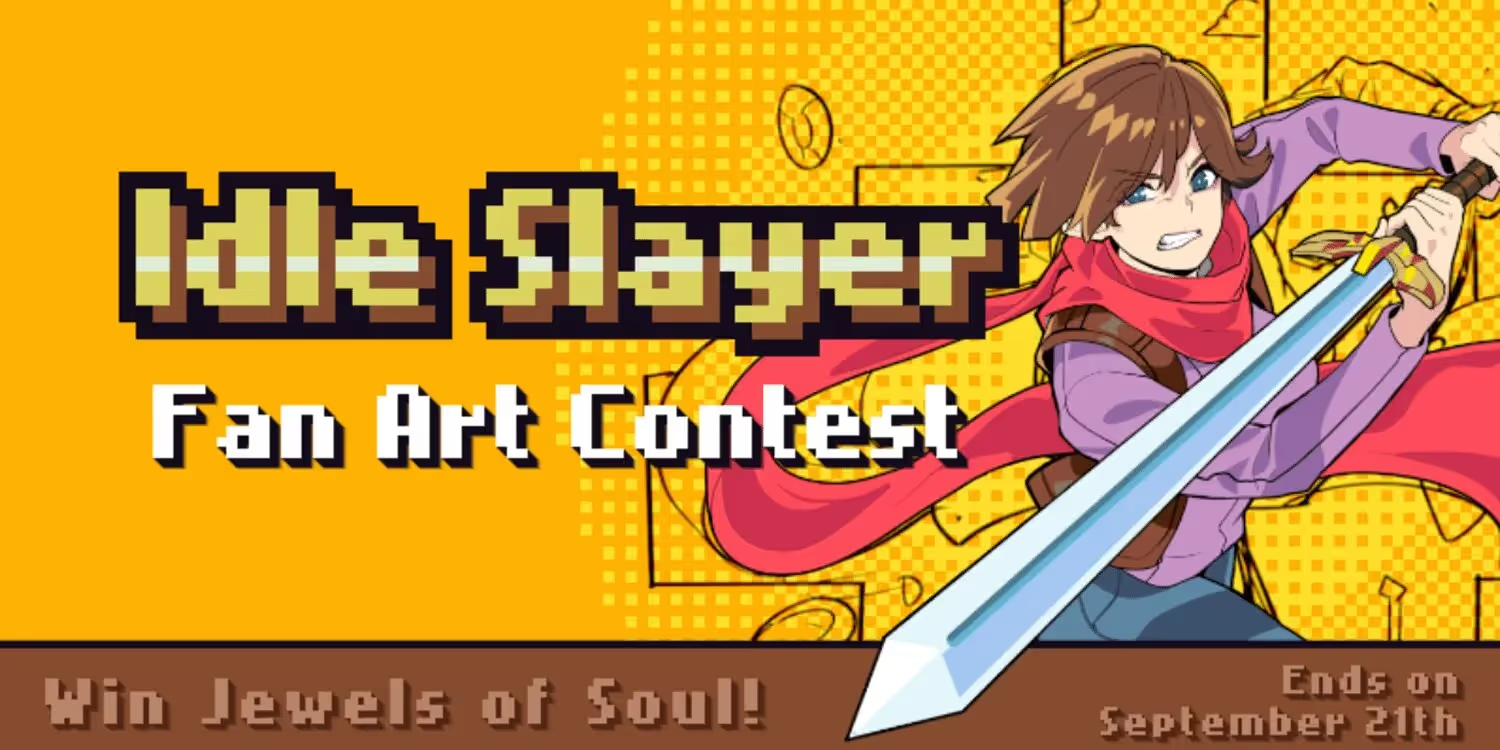
That may sound odd coming from a social media manager also handling top games like Rodeo Stampede. But this is the beauty of social media marketing. There’s no ivory tower where all the secrets are kept. Experimentation and iteration are the keys to finding your niche, whatever the size or genre of your game. That’s what it boils down to.
This ties into the next key: in addition to constant experimentation, understanding your game's core appeal to players is critical. With Idle Slayer, we discovered that tagging posts with ‘#retrogaming’ significantly increased views. Who would have guessed?
https://www.tiktok.com/@idle_slayer/video/7238282348280778027is_from_webapp=1&sender_device=pc&web_id=7249583292084258346
If you can gain a deep understanding of your potential players and their interests (again, through experimentation and iteration), you should be able to uncover the unique things that make your game stand out from the crowd. Then amplify them in your social creatives. In the case of Idle Slayer, the key has been an emphasis on the unique retro aesthetic. If you haven’t found your niche yet, get to work.
It’s also worth noting how crucial it is to be consistent. Remember, social media success is a marathon, not a sprint. Tools like Later can help you schedule and plan content to ensure a regular posting schedule.
What about streaming?
Since we're exploring the diversification of content formats and the need for experimentation, I would be remiss not to mention streaming.
While not necessarily a key top-of-funnel activity (unless you're working with influencers--a topic for another day), streaming consistently can become a core pillar of your social media presence over the long term, and is a particularly useful way to keep players engaged in your community and coming back for exciting new content.
Let's get into this a little bit more.
Streaming has matured into a powerful way to connect with your community, share updates, and receive feedback. Consider the impact of spending an hour streaming: it creates an evergreen content piece (as a VOD) that players can revisit for information, tips, and rewards. Also, you can then repurpose that content for other formats and platforms. That’s a lot of value for a one-hour stream.
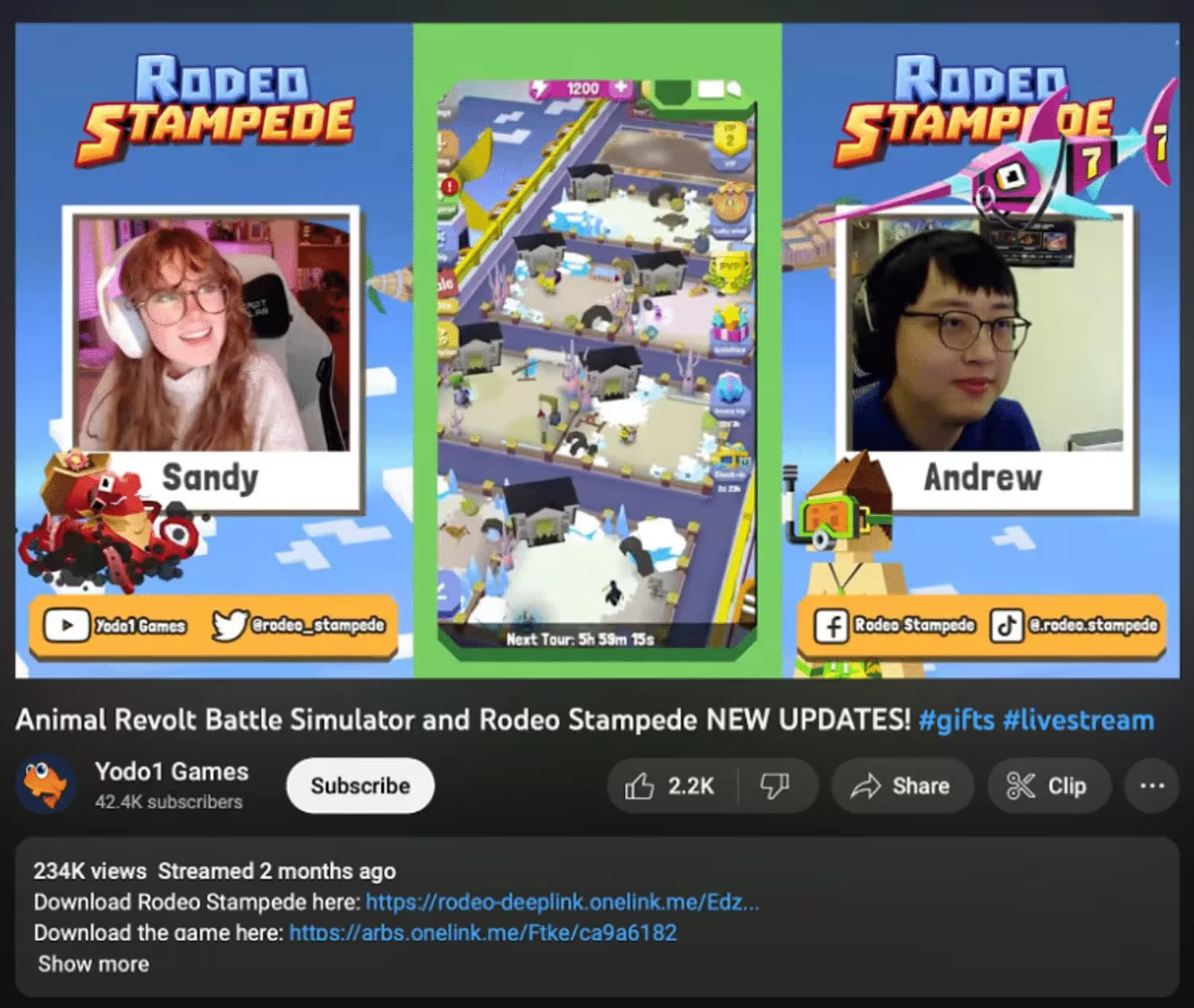
Recent ARBS and Rodeo Stampede Update Stream
But what about getting people to click? The promise of in-game rewards during streams can be a significant draw for your audience. Stagger rewards throughout the stream, with the biggest reward at the end, to keep viewers hooked. Think outside the box with tournaments, anniversary streams, and post-stream replays. It can be an opportunity to show the faces behind the game and get your community excited and involved in upcoming events!
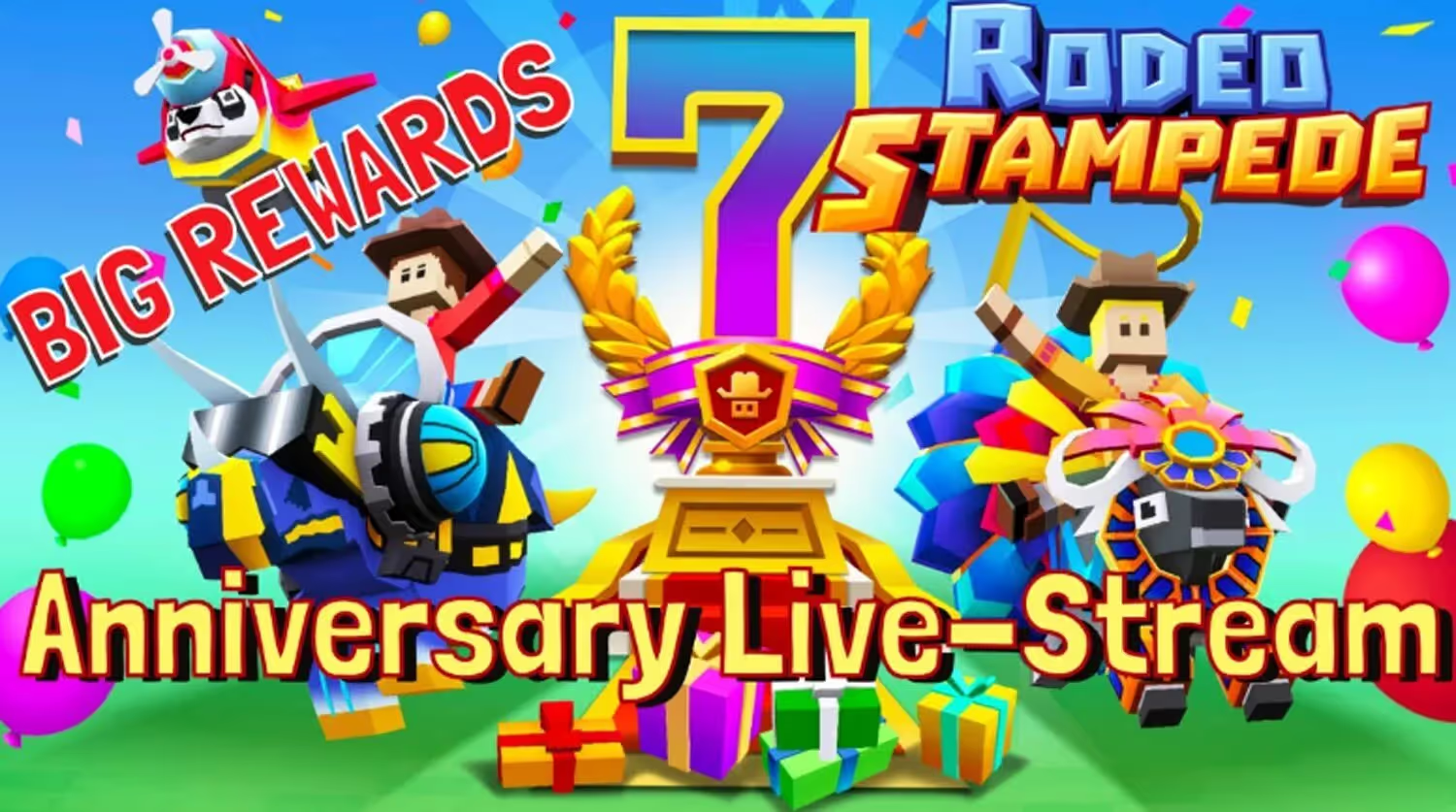
Yodo1 recently organized Rodeo Stampede's 7th-anniversary stream, as well as an update stream for Animal Revolt: Battle Simulator, both of which were big successes due in large part to their structure. Each stream may only be around an hour, but we put a lot of time into planning the most attractive awards, deciding when to drop them, and how to tease those in the title and thumbnail.
What’s next?
Here’s a final thought: The most common issue I see in game development teams, around social media marketing, is analysis paralysis—or posting paralysis.
While you may want to meticulously plan your next game trailer, the same approach isn’t necessarily the right path for social media. Trends move so quickly that this article is probably already out of date. Don’t be a perfectionist—get your game out into the culture and refine it as you go. That’s how the biggest games do social media. They try a lot of stuff, learn, then try again, and continue learning. It’s the main difference between those who succeed and those who flounder.
If you’re looking for help with your game’s growth, including your social media, reach out to Yodo1 and learn how we could help take your game to the next level.
Latest Blog Posts
Bumblebee joins the battle for a second Puzzles & Survival x Transformers event
Viking Rise x Vikings: Valhalla Event 4 – The Grand Finale of an Epic IP Saga
Wing Fighter x TRANSFORMERS – A Battle for the Ages!
Dragonheir: Silent Gods x Dungeons & Dragons – Enter the Third Phase of Epic Collaboration!
TRANSFORMERS bots and Puzzles & Survival Game Unite to Combat a Massive Invasion!
Yodo1 Gathers China’s Top Mobile Gaming Leaders to Explore Global Brand Partnerships in 2025
IP Licensing
Yodo1 IP Licensing: Why Major Game Studios Keep Coming Back
26.06.2023
•
5 mins read
Yodo1 IP Licensing: Why Major Game Studios Keep Coming Back
In an increasingly competitive mobile gaming industry, the quest for innovation and new growth strategies is relentless. To thrive, game studios must stay ahead of the curve so that they can tap into new audiences, and ultimately keep growing. One of the most effective strategies in recent years is the integration of popular Intellectual Properties (IPs) into games.
As the bridge connecting game studios with IPs, Yodo1 has become a critical player in this emerging landscape. We work with top IPs like The Walking Dead, Transformers, Ninja Turtles, and many more to bring new audiences to mobile games, helping game studios achieve next-level growth. The era of IP collaborations is here to stay and set to grow in leaps and bounds. This article will cover some of the ways Yodo1 works to help studios take full advantage of this major trend, and why we’ve become the recurring go-to partner for games like Top War.
Top War - A Partnership of Epic Proportions
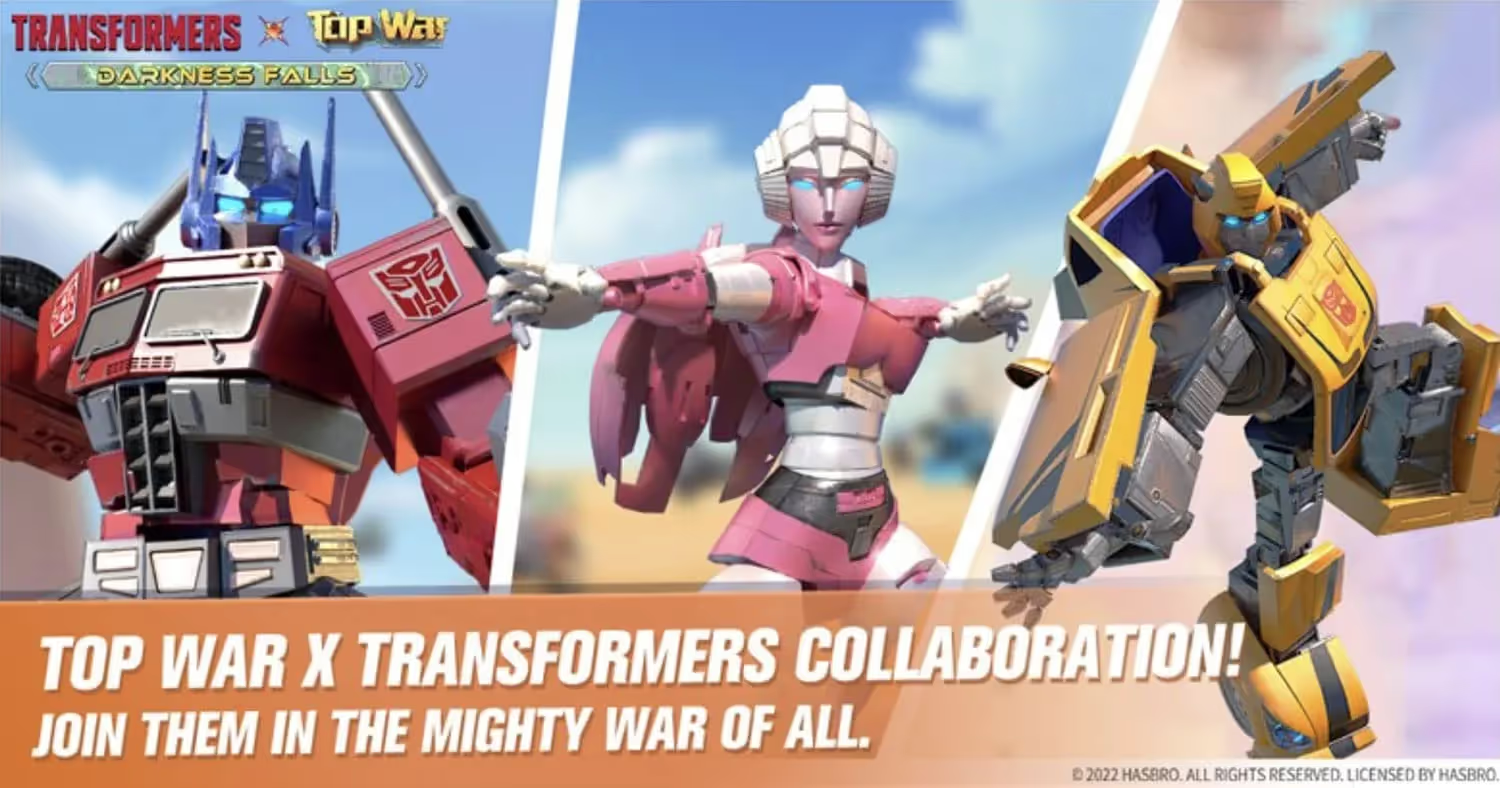
Top War, an addictive military simulation SLG from Rivergame, swiftly climbed to the top of the charts after its launch in 2019. With an eye on expanding its horizons into IP collaborations, Top War sought help from Yodo1’s IP licensing team, integrating the ever-iconic Transformers IP, one of many in our roster of iconic brands and IPs.
Via Pocketgamer
This collaboration was a massive success, ultimately bringing in over 13 million players in the first phase of the 2-week event and breaking a revenue record on the day of the launch. Given the massive performance of this first collaboration, Top War was eager to plan a second, citing Yodo1’s reliability and clear guidance throughout the process. After all, these deals are complex, resource intensive, and potentially risky. We help studios navigate challenges from day one to ensure that everybody wins.
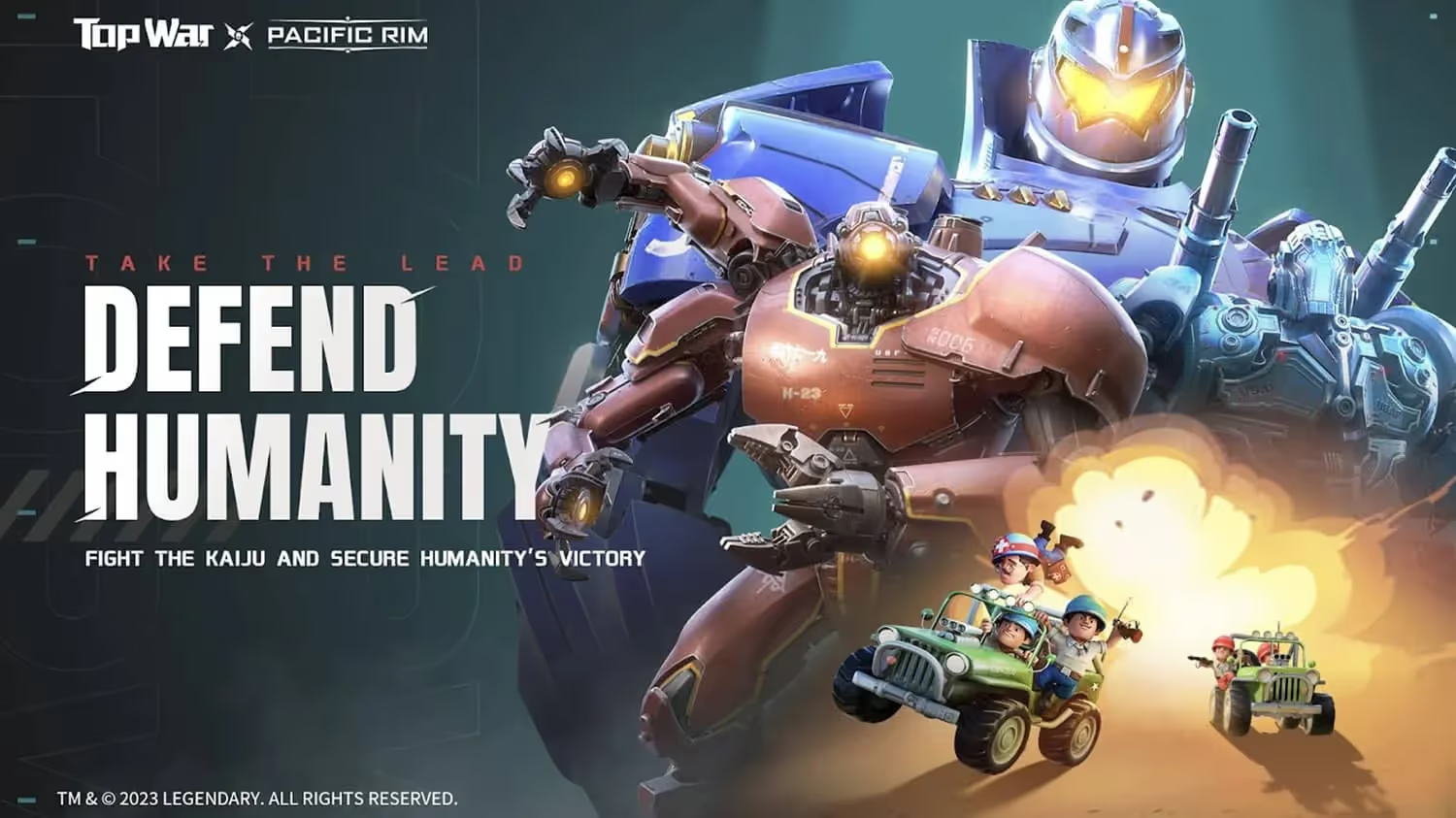
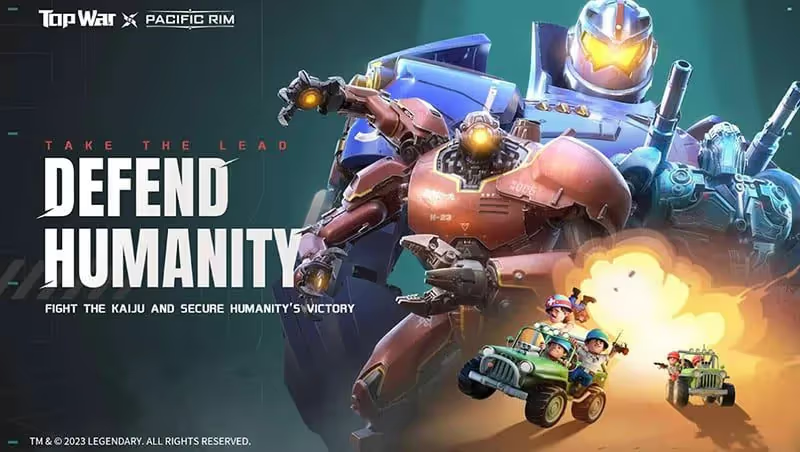
The second collaboration, this time integrating Pacific Rim, has also done extremely well, yet again boosting revenue and bringing whole new audiences to the game. Phase 2 of the Top War x Pacific Rim collaboration started on June 10th and promises nothing short of jam-packed action. Be sure to check out the trailer below.
https://www.youtube.com/watch?v=ugNH5uFjbNU
How Yodo1 Facilitates Successful IP Collaborations
Yodo1’s role in IP collaborations goes well beyond simple mediation. For the Top War x Transformers collaboration, we leveraged our familiarity with the Transformers brand and worked closely with the developers to plan the collaboration from scratch, helping with character selection, discussing the story's backdrop, and ensuring the IP would fit organically within the player experience.
A crucial advantage here is our extensive publishing background. With hit games like Rodeo Stampede helping bring in over 1.5 billion players worldwide, a wealth of expertise can be brought to bear to ensure collaborations like these are massive hits. In the case of the Top War x Pacific Rim collaboration mentioned above, we were able to provide unique solutions throughout the development process. Pacific Rim’s Kaijus and Jaegers needed to feel fully integrated into the game, yet add freshness to the gameplay and feel like a special experience (a critical balance to get right). The event also had to tie into To War’s overall game economy and event monetization strategy, while considering the film series’ characters and the integrity of the IP. Again, these are complex dynamics and certainly not easy to navigate.
The Era of IPs in Mobile Games is Here
As more IP holders begin to see the appeal of bringing their IPs and brands to mobile gaming audiences, we feel there’s never been a better time for studios to catch this wave. The opportunities provided to game developers and studios to reach a new scale of players cannot be ignored. It’s happening now, and the trend isn’t going anywhere.
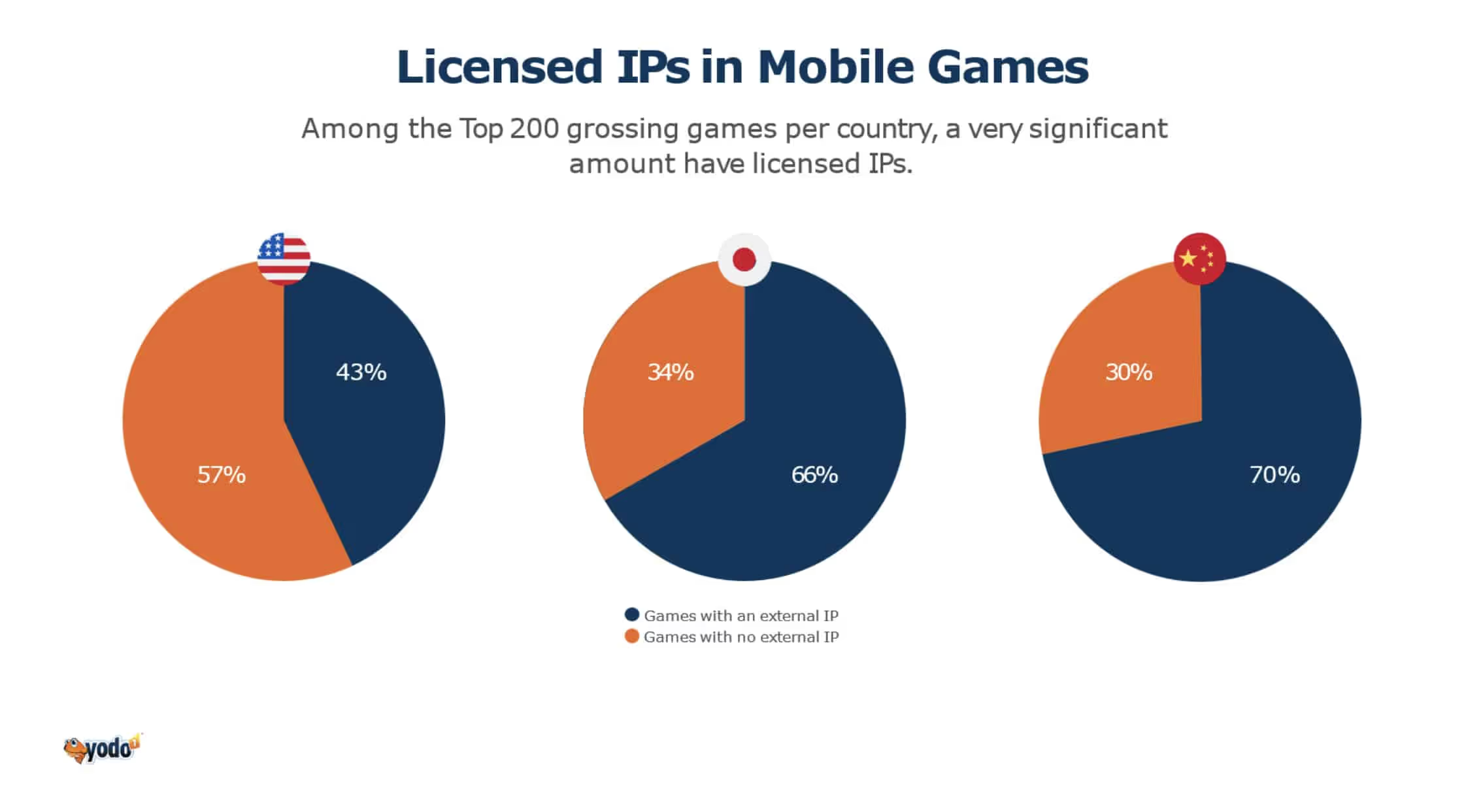
Leveraging 12 years of game publishing experience and six years of IP game operation and collaboration, we’ve become the go-to partner for game studios looking to access hundreds of top global IPs, including Sony, AMC, Legendary Pictures, and Hasbro. As an all-in-one platform, we offer full-stack support throughout the collaboration, consulting on negotiations, project management, operational supervision, insurance, operational authorization, dubbing, promotion, and celebrity image rights, to name a few. And since timing is key when it comes to a successful collaboration, we do all this within a four-month timeframe (on average).
This is not the time to watch the IP-licensing wave pass you by. Like Top War, look to a partner with the experience and breadth of know-how to help you navigate the complexities while gaining the massive upside of well-executed IP collaborations. If you’re ready to explore what’s possible, reach out to our IP licensing team to learn more.
Latest Blog Posts
Bumblebee joins the battle for a second Puzzles & Survival x Transformers event
Viking Rise x Vikings: Valhalla Event 4 – The Grand Finale of an Epic IP Saga
Wing Fighter x TRANSFORMERS – A Battle for the Ages!
Dragonheir: Silent Gods x Dungeons & Dragons – Enter the Third Phase of Epic Collaboration!
TRANSFORMERS bots and Puzzles & Survival Game Unite to Combat a Massive Invasion!
Yodo1 Gathers China’s Top Mobile Gaming Leaders to Explore Global Brand Partnerships in 2025
IP Licensing

The Economics of IP Licensing
12.06.2023
•
5 mins read
The Economics of IP Licensing
Fil Robinson, BD Manager IP Licensing | Yodo1
When you think of licensing... think of a Happy Meal!
Licensing. It's a term many of us have heard tossed around, but may not know what it actually is, or the huge role it plays in the world of business, entertainment, food, and fashion.
Since becoming the IP licensing Manager at Yodo1, many people have asked me "What do you do?" or “What is licensing?" Initially, I tried numerous variations of the formal business definitions, such as "I work with companies to make business agreements, whereby a company authorizes another company the right to use its IP or brand for a set period of time."
I soon found that lines like these weren’t relatable to most people, and so to keep things simple, I decided to use the analogy of a McDonald's Happy Meal. "Every month or so, McDonald's has a new toy, usually based on a children’s movie, TV show, or toy brand, which gets included in a Happy Meal. My job is to accomplish that, but for different video games instead of Happy Meals."

Once you start to look, you’ll find the Happy Meal licensing analogy all around you, in every facet of consumer products and merchandise life. From limited-edition cars to board games, toys, and fashion, examples are everywhere. The images below are just a small showcase of the numerous and unique products which can come to life through licensing agreements.

SpongeBob Kyrie 5 via Nike

Via Star Wars
How licensing works
In this article, I will be looking into how licensing works, especially within the context of the gaming industry, and its future potential.
The basic concept of licensing is this: one party/company grants another the right to use their IP or brand for an agreed-upon period of time, just like a Happy Meal. You have the licensor and the licensee. The licensor (e.g. Disney) is the owner of the IP or Brand and decides who gets to use it for a set period of time (the licensee). The licensee (e.g. McDonald's) is the party/company that uses the granted license to make a new product inspired by the IP or brand. Aside from the obvious advantage to the consumer in the creation of some seriously cool products, there are many benefits to both the licensor and licensee from this agreement-some are outlined in the image below.
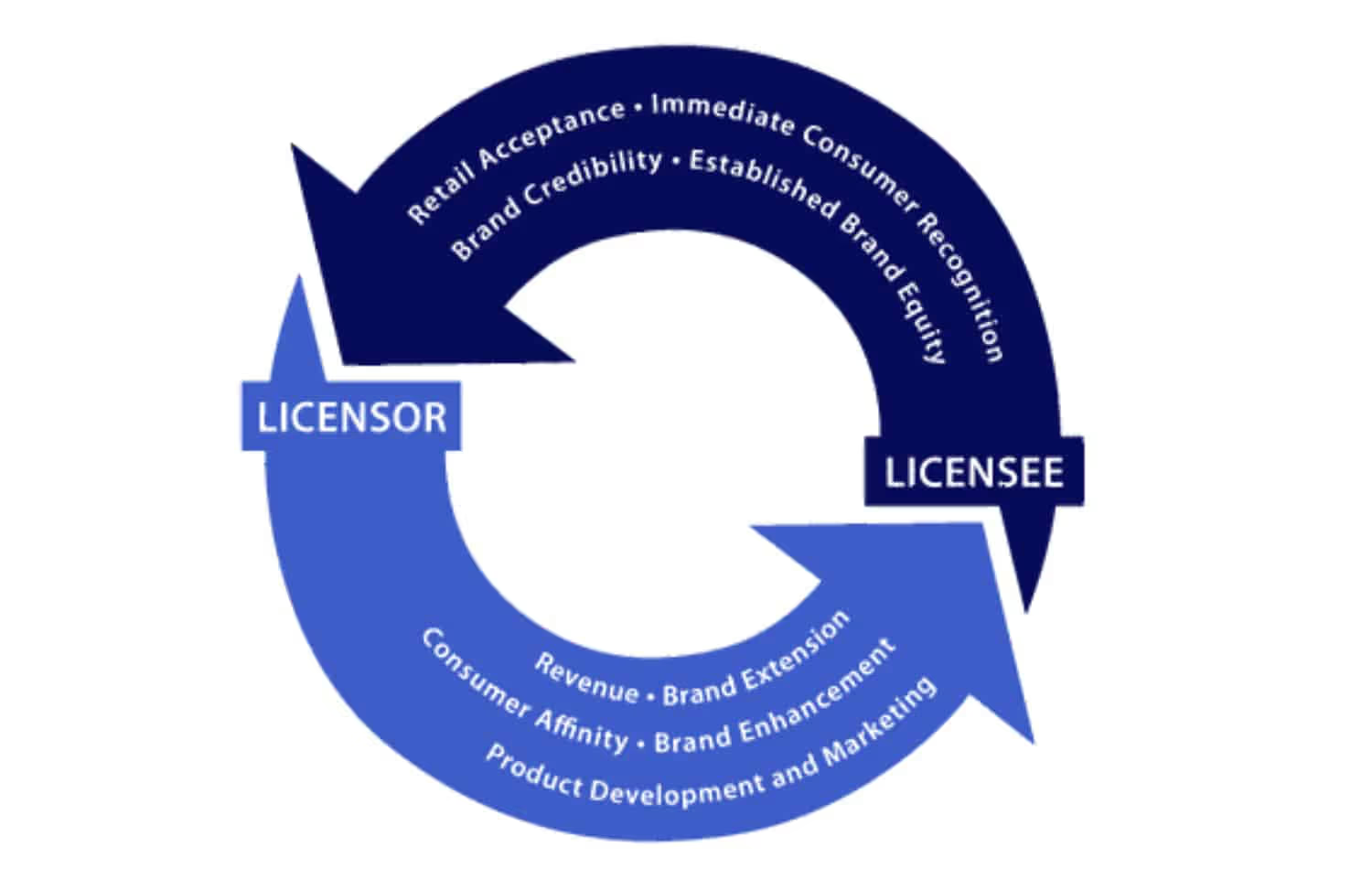
Business models
The process
- The process of creating a license agreement begins when a licensor or licensee approaches the other (usually, the licensee will approach the IP/brand owner) with an idea of how they would like to use the IP/brand for a new product or project—be it physical or digital.
- If both parties agree on the concept and the rules governing the development and launch of the product, then they move on to the commercial model for the agreement.
- There are many different commercial models that can be implemented when concluding a licensing agreement. However, the three most common are Royalties only, Royalties + Minimum Guarantee (MG), and Flat Fee.
Model 1: Royalties only (with no Minimum Guarantee)
A royalty is a binding payment made to an individual or company for the ongoing use of their assets (including IPs or brands). Licensors have a right to receive a payment for every product sold related to their IP. The licensor and licensee negotiate and agree on what percentage each party should receive for every IP-related item sold (this is commonly known as Revenue Share).
This model is popular for licensees as no capital investment needs to be paid to the licensor upfront.
Model 2: Royalties with a Minimum Guarantee (MG)
Royalties with a Minimum Guarantee are similar to royalties, but require the licensee to guarantee an agreed amount of royalties to the licensor. Even if the total royalties do not reach the agreed amount, the licensor will be guaranteed that money. The MG amount is usually based on the IP and how the licensor values it. It’s not fixed and so can be negotiated between the licensor and licensee. It is normally paid upon signing of the agreement (though it can be split into multiple payments), so it’s an important financial investment for licensors.
MGs are recoupable against royalties, so once the event takes place and royalties are generated and calculated, the MG is deducted and the remaining revenue is paid. So net-net, if the event goes well, everyone achieves a successful outcome: The licensee will recoup the MG with revenue from sales and the licensor will receive more royalties beyond the MG.
Model 3: Flat fee (licensing fee)
The Flat Fee model requires the licensee to pay a fee (which, again, can be split into several payments) to the licensor for the use of the license for a specific period of time. The flat fee price is negotiable between the licensor and the licensee. The fee is non-recoupable for the licensee. In this case, the outcome of the event is less relevant for the licensor as they are not receiving royalties for any sales related to the IP.
The flat fee model is often a good option for a licensee on their first IP collaboration, as they will not be required to provide a licensor with a highly detailed report of sales based on the IP once the collaboration is complete.
Trends in the licensing industry
With these three commercial models used as a basis for many licensing deals across multiple industries, huge revenues are being generated, with nearly unlimited potential. In the 2021 fiscal year, $260.8 billion in revenue was reported (sold at retail) based on the top 88 companies who submitted to License Global's top Global Licensors Report 2022. This was an increase of 28.35% from $203.2 billion over the previous year.
Entertainment licensors were the top-performing licensing sector in 2021, with many of their IPs being the top media-performing IPs of 2021. Many of their IPs and the licensees (game studios within the entertainment licensing sub-sector of gaming) have been used to drive growth and revenue within the entertainment licensing sector overall.

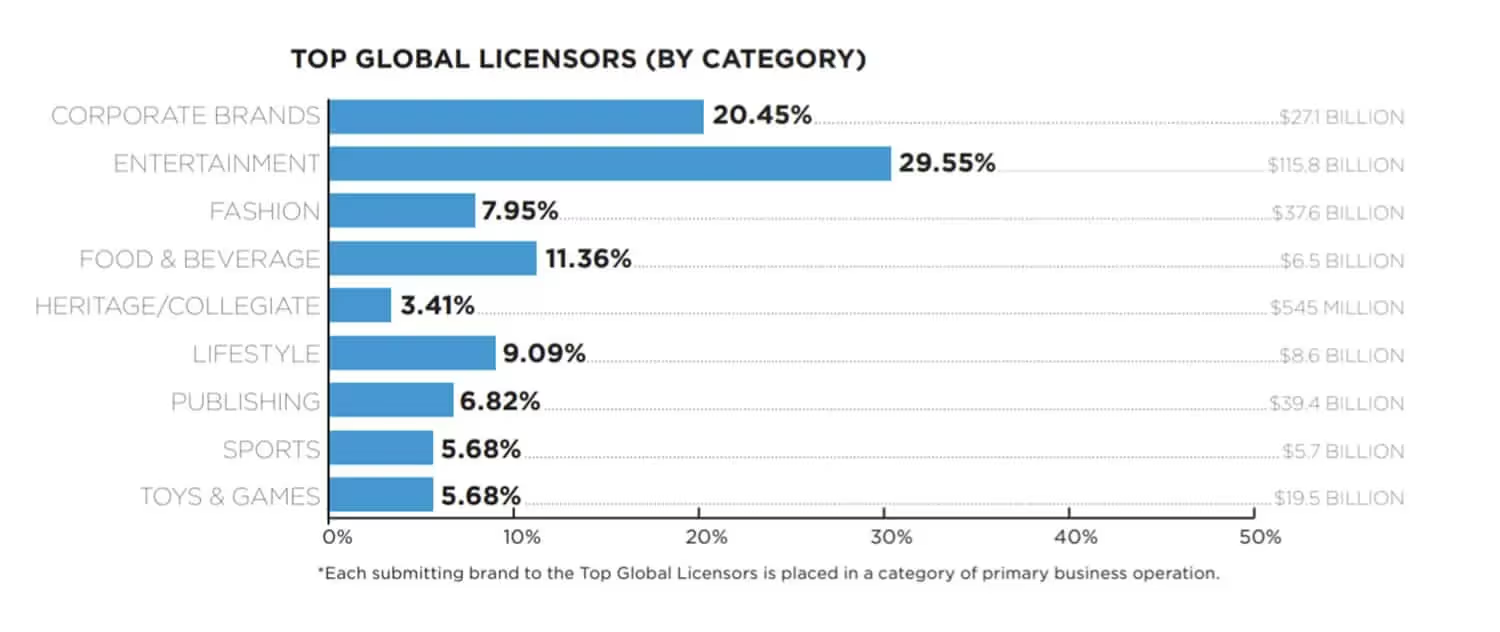
Via License Global
IP licensing in mobile games
Licensing in gaming has been around for decades (since the 1970s), but its growth and revenue generation in the last decade has grown exponentially. Mobile games have been at the forefront of this. The development of mobile technology and free-to-play games have been major factors driving this growth, according to the 2022 Newzoo IP Mobile Games Report.
Developers usually choose to incorporate IPs into games in one of two ways:
Timed events/DLCs such as the recent Last Shelter: Survival x The Walking Dead or Top War x Pacific Rim, have brought IPs into an existing game for a limited period of time, or standalone games (brand new games), which are developed from scratch based on an IP, such as Transformers: Earth Wars or Monopoly Go.

The image below reflects the growth in IP-based games (based on standalone IP-based mobile games) developed and launched by game studios (licensees) year-on-year.
Note: The slowdown of standalone IP-based games in 2021 can be attributed to Covid development delays and the trend towards more live service games (like Fortnite, etc, which are games continually in development that were initially released a while ago).

Via Newzoo
The combination of mobile games and IPs has become very popular and powerful, with IP-based games being the most downloaded and biggest revenue-generating games in the mobile sector throughout 2021 (as shown in the images below). Marvel in particular is a great example of how a licensor with a big IP can do very well when incorporated into top mobile games (such as Strikeforce or The Game Awards 2022 Mobile Game of the Year Marvel SNAP).

Via Newzoo
The future of game licensing
Licensing within the gaming industry is only set to keep growing. The continued development of gaming technology (e.g. VR, AR), innovation, and the numerous benefits for both the licensor and licensee, as outlined in this article, ensures that new ideas for collaborations will continue to come to the fore. The success of entertainment licensor's IPs/brands (including game studios) has attracted the interest of licensors in everything from fashion, food and beverage, to sports and corporate brands across the world—everyone wants in on the potential for growth and revenue generation. Game studios who’ve seen this explosion of success amongst their fellow studios that have engaged in IP licensing also want to join the party.
At Yodo1 we bring a decade of industry-leading experience to the table to assist both global IP licensors and game studios to achieve successful IP gaming collaborations. Are you ready to dive into the world of IP licensing? Reach out at BIG@Yodo1.com to learn more.
Latest Blog Posts
Bumblebee joins the battle for a second Puzzles & Survival x Transformers event
Viking Rise x Vikings: Valhalla Event 4 – The Grand Finale of an Epic IP Saga
Wing Fighter x TRANSFORMERS – A Battle for the Ages!
Dragonheir: Silent Gods x Dungeons & Dragons – Enter the Third Phase of Epic Collaboration!
TRANSFORMERS bots and Puzzles & Survival Game Unite to Combat a Massive Invasion!
Yodo1 Gathers China’s Top Mobile Gaming Leaders to Explore Global Brand Partnerships in 2025
Get Updates From Yodo 1




Simplifying game growth
京ICP备12010993号-2 · 京ICP证120652号 · 京网文(2015)2029-371号 · 京公网安备11010502036836号
© Yodo1 Ltd. 2025 | All rights reserved.