Welcome to the Yodo1 Blog
Bringing you the latest news and updates from Yodo1, the mobile gaming industry, and work-from-anywhere culture
Game Growth

How Clash of Clans Makes Hundreds of Millions from IAPs
06.03.2024
•
5 mins read
How Clash of Clans Makes Hundreds of Millions from IAPs
In-app purchases (IAPs) are the lifeblood of sustainable revenue for any mobile game monetization strategy. But more than that, when implemented strategically, IAPs can create a win-win scenario for both developers and players.
The key is in striking a delicate balance. Players need to perceive value in what they purchase, whether it's special items, aesthetic customizations, in-game currency, etc. However, they shouldn’t feel that they are in a pay-to-win scenario that impacts the core game loop. If you can achieve this balance, players are more likely to spend – and keep spending. Of course, getting there is easier said than done. Finding the right IAP strategy for each game requires a deep understanding of player motivations and a data-driven approach.
A great example to learn from is Clash of Clans. This game has nailed its IAP mobile game monetization strategy. In this article, we will explore how they do it and what we can learn from them. But first, let's go over some of the basics.

Metrics that Matter:
If you cannot measure it, you cannot improve it,” said the wise Lord Kelvin. And while he wasn’t a game developer (that we know of), he had the right idea! Here are some key metrics to track and analyze:
- Average Revenue Per User (ARPU): Measures the average amount of money generated by each player, indicating the overall profitability of your IAP strategy.
- Conversion Rate: The percentage of players who purchase out of the total player base, highlighting the effectiveness of your IAP integration and visibility.
- Lifetime Value (LTV): Estimates the total revenue a player will generate throughout their engagement with the game, guiding long-term retention strategies.
- Purchase Frequency: Tracks how often players buy IAPs, aiding in optimizing the timing for promotional offers and new item releases.
- Retention Rate Post-Purchase: Assesses how making a purchase affects player retention, indicating the impact of IAPs on long-term engagement.
Player Motivation:
Players spend for a few different reasons. Apart from understanding these reasons, you should factor in value for money, and getting to the right price point for each IAP. Spending time understanding player motivation isn’t simply an intellectual exercise–it’s a crucial part of the process. Let’s briefly touch on these.
- Desire to Purchase: Identifying what drives players to spend is very important. Is it to gain a competitive edge, to express themselves, to improve the overall gaming experience? Understanding these motivations can help you create IAPs they will respond to.
- Value for Money: Players need to feel they're getting their money's worth. Diverse pricing bundles can cater to different player types, from those looking for a slight edge to those willing to invest more.
- Price Elasticity: Experimenting with price points through A/B testing will help you find the sweet spot where you’re maximizing revenue and making players happy. Adjust based on player feedback and purchasing behavior, aiming to create a win-win for you and your players.
Consumables vs. Non-Consumables:
- Consumable IAPs: Consumable IAPs (like game currency or boosts) should enhance the game but not be necessary to progress. This can help avoid pay-to-win scenarios.
- Non-Consumable IAPs: Non-consumable IAPs (like skins) add a personal touch and don't affect the game's balance. They generally emphasize style and personal expression or gaining in-game clout.
By always validating and updating your strategies based on what players say and how they act, you can find the best ways to price your in-game items. The main goal is to make players feel good about buying, not just once but over and over.
Clash of Clans: A Playbook for IAPs
Clash of Clans made $482 million in IAP revenue in 2022, with over 1.8 million daily active users (second only to Subway Surfers). Holy cow! The goal, then, is to reverse-engineer their success and see what insights we can uncover. As we go, think about how you might apply what you learn to your own IAP strategy. Let’s begin!
1. Balancing Consumables and Non-Consumables:
Gems: The quintessential consumable, gems fuel faster construction and troop training. For impatient players eager to climb the ranks, they're invaluable. Yet, Clash of Clans ensures progress remains attainable, albeit slower, for free-to-play users, preventing pay-to-win scenarios.
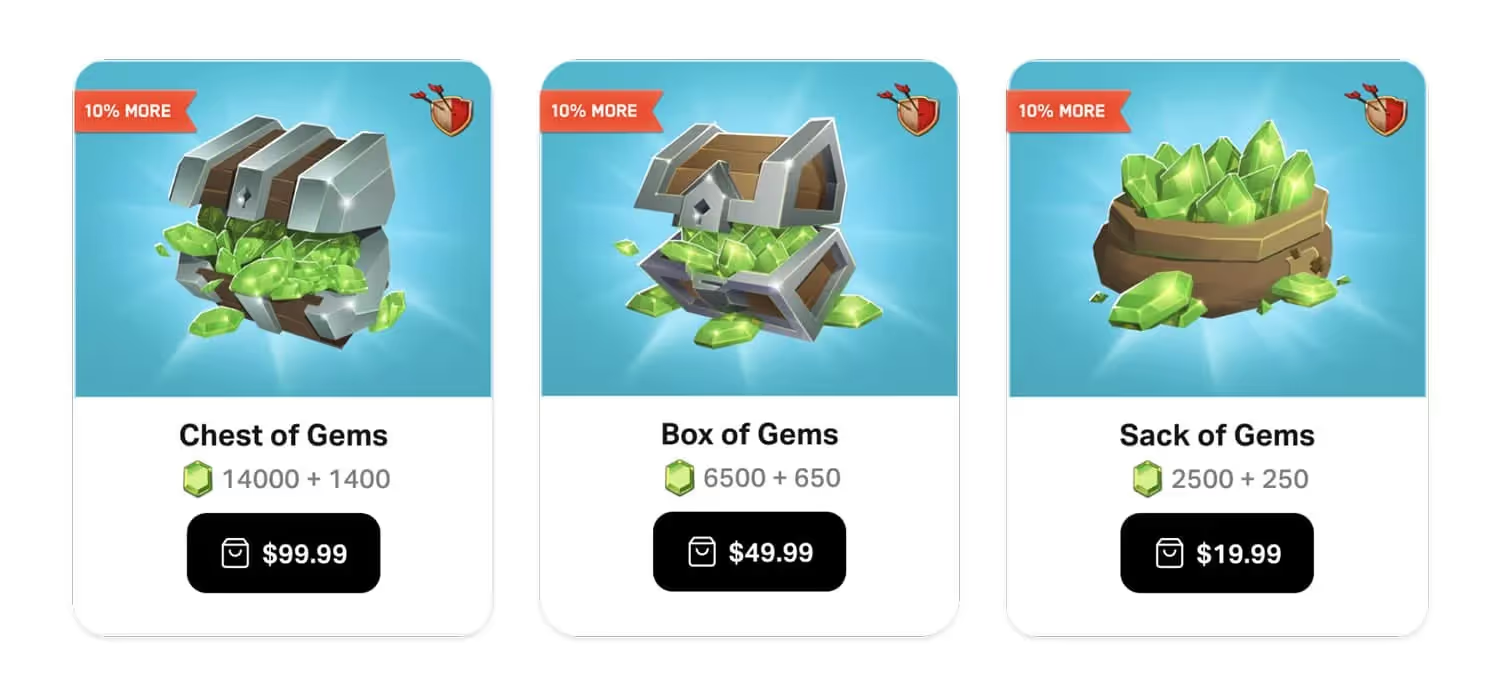
Hero Skins and Decorations: These non-consumables add a layer of personalization, letting players flaunt their individuality and dedication. The "Pumpkin Barbarian" or the "Crystal Queen Archer" don't impact gameplay but fuel emotional investment, encouraging long-term engagement. Games like Fortnite also put this principle at the core of their monetization strategy.
2. Understanding Player Demographics:
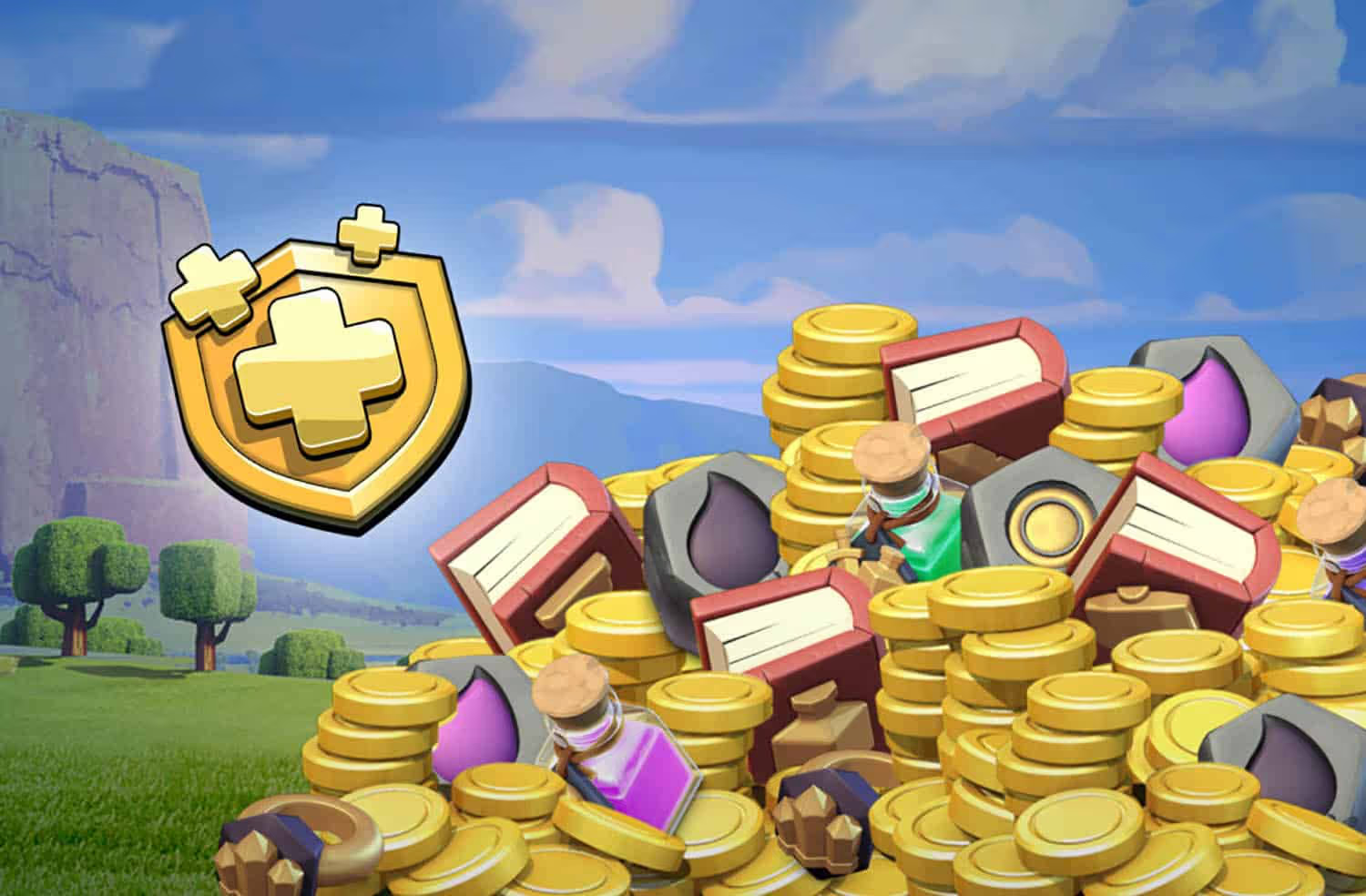
Hardcore Players: The Gold Pass, a monthly subscription offering exclusive rewards and bonus resources, targets those players seeking an edge. Its success shows Clash of Clans understands the premium placed on time optimization by dedicated players.
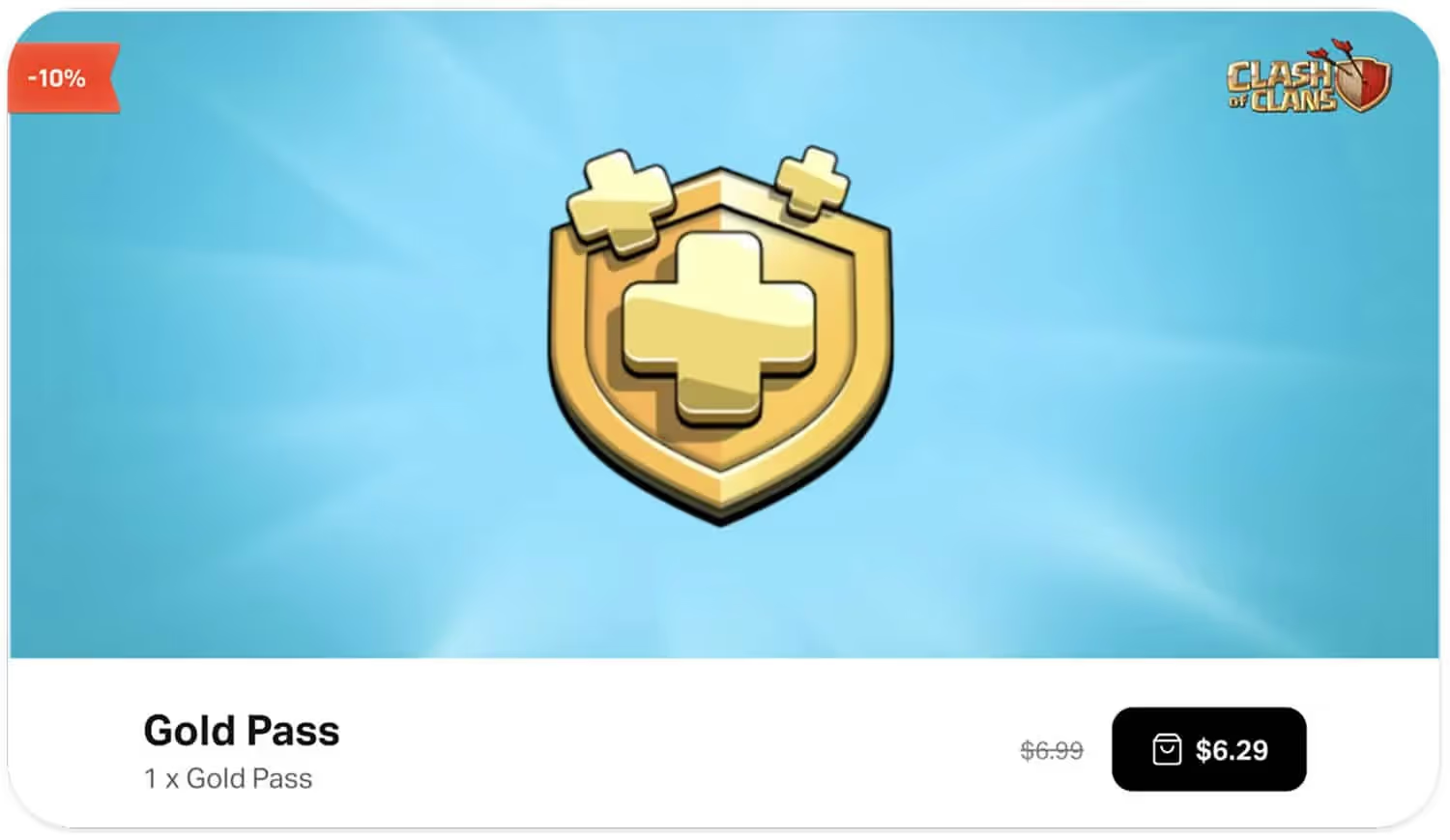
Casual Players: Limited-time offers and visually appealing bundles featuring discounted gems or resources cater to casual spenders who crave occasional boosts or want to catch up with friends. The "Builder Potion” or the "Cyber Special Bundle" offer instant gratification at an attractive price point.
3. A/B Testing and Iteration:
Clash of Clans constantly tweaks its IAPs based on data and player feedback. For instance, it introduced the "Seasonal Bank", a tiered reward system for active players, after testing different reward structures and price points. This data-driven approach ensures their IAPs remain relevant and enticing.
Key Takeaways
Clash of Clans is a textbook example of how to implement IAPs without compromising the player experience or the core game loop. Its success emphasizes the importance of:
- Variety: Offering a balanced mix of consumable and non-consumable IAPs appeals to diverse player motivations.
- Targeted Pricing: Tailoring IAPs to specific player segments, like the Gold Pass for hardcore players, maximizes revenue potential.
- No Pay-To-Win: Creating a compelling gameplay loop that incentivizes, but doesn't force, spending.
- Limited-Time Offers: Creating a sense of urgency with temporary deals encourages impulse purchases and keeps players engaged.
- Data-Driven Optimization: Constantly testing and iterating based on player behavior and feedback ensures IAPs remain effective.
- Player Psychology: Understanding player motivations (factoring in demographics) and tailoring IAPs accordingly.
- Data, Data, Data: Leveraging data and player feedback to constantly iterate and optimize.
It’s also important to note that Clash of Clans doesn't rely solely on IAPs for engagement. Regular content updates, clan wars, and seasonal events keep players hooked and incentivize spending. This holistic approach creates a vibrant ecosystem where IAPs feel like natural extensions of the gameplay experience, rather than intrusive monetization tactics.
By following these principles and analyzing the strategies of games like Clash of Clans, mobile game developers can unlock the true potential of their IAPs, building sustainable businesses while keeping players happy and engaged.
Remember, it's all about finding that sweet spot where player satisfaction meets profitability. For mobile games, the optimization of IAPs is a continuous journey. At Yodo1, we partner with game developers to hone their mobile game monetization strategies, bring in more players with tailored game growth strategies, and ultimately scale their games to new levels. And we do it well, with over 10 years of experience and over 3 billion downloads across our games. Check out Yodo1’s Growth Accelerator Program to learn about all the ways we help games grow.
Latest Blog Posts

Bumblebee joins the battle for a second Puzzles & Survival x Transformers event

Viking Rise x Vikings: Valhalla Event 4 – The Grand Finale of an Epic IP Saga
Wing Fighter x TRANSFORMERS – A Battle for the Ages!

Dragonheir: Silent Gods x Dungeons & Dragons – Enter the Third Phase of Epic Collaboration!

TRANSFORMERS bots and Puzzles & Survival Game Unite to Combat a Massive Invasion!

Yodo1 Gathers China’s Top Mobile Gaming Leaders to Explore Global Brand Partnerships in 2025
IP Licensing

The Upcoming Live-Action Zelda Film Marks Nintendo's Strategic Expansion
24.01.2024
•
5 mins read
The Upcoming Live-Action Zelda Film Marks Nintendo's Strategic Expansion
Ismael Jorge, BD Manager for Global Games at Yodo1
On the heels of a successful Mario movie, and after months of speculation, Nintendo has at last confirmed that a live-action Zelda movie is coming. Of course, it has opened the floodgates for speculation but also raises an interesting conversation about the future of brand staying power and the blurring of lines between games and Hollywood. In my experience helping bring mobile games and big IPs together, it's clear that translating gaming experiences to the big screen is a move loaded with potential – and pitfalls.
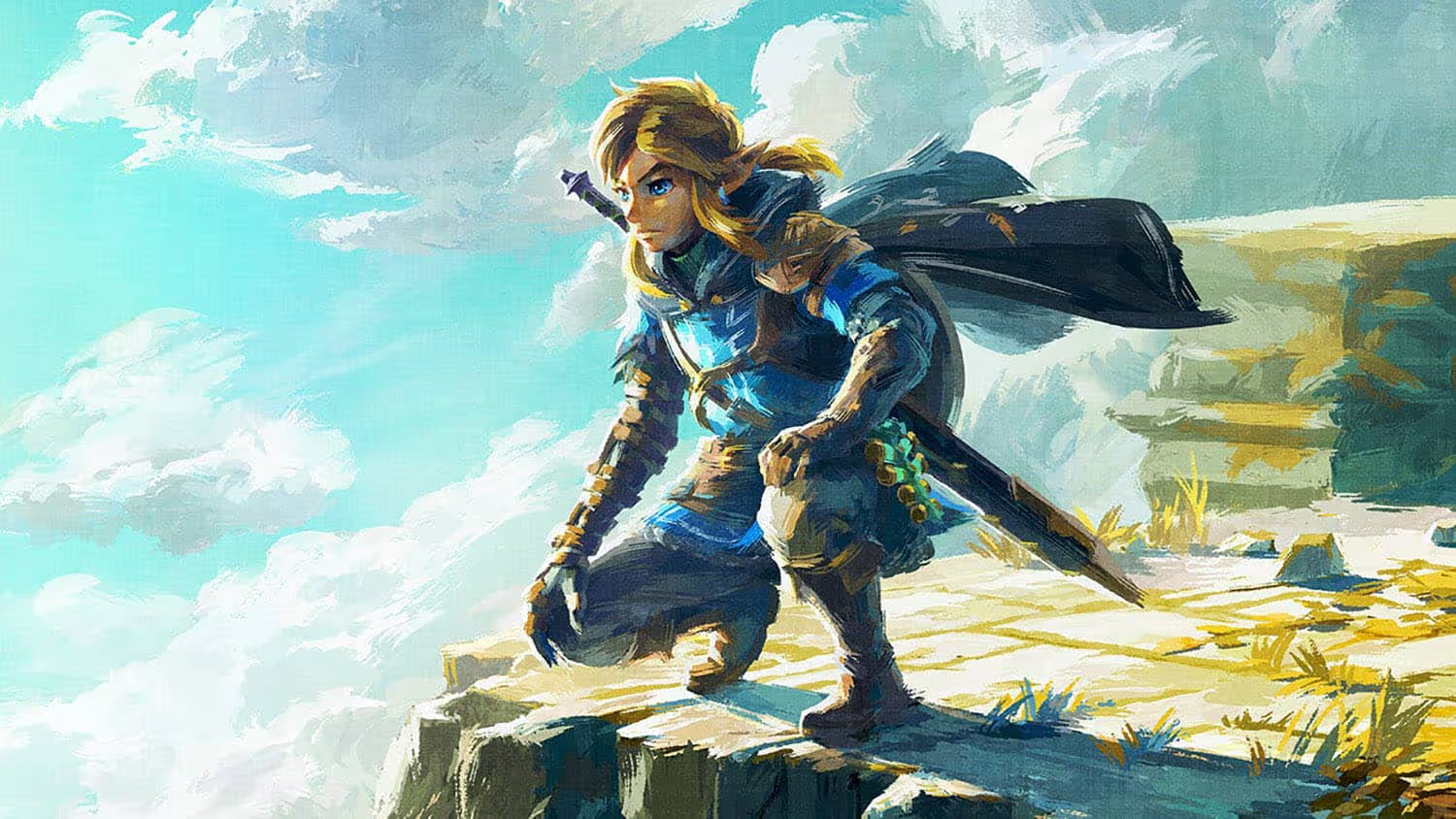
Via Nintendo
Strong Indicators of Success
Let's dig into the mechanics of this partnership. Nintendo's choice to bring Shigeru Miyamoto on board is a move that promises authenticity for the franchise. Partnering with a heavyweight like Avi Arad suggests a blend of storytelling that could capture the hearts of fans and newcomers alike. Here are a few key elements that I see working in the project’s favor:
- Miyamoto's Vision: As Zelda’s creator, he knows the characters and the universe inside out. His involvement is like a seal of quality for fans. A good proxy for this might be the hands-on oversight role Eiichiro Oda took on in the development of the live-action Netflix One Piece series, arguably the best live-action anime adaptation of all time – “Goda” be praised.
- Arad's Expertise: With a résumé full of Marvel's finest, Arad knows how to turn a beloved series into box office gold.
- Financial Backing: Sony and Nintendo are splitting the bill, which means they're both betting big on Zelda's success. Both have skin in the game, and reputations to protect. That could be a good indication, especially for Nintendo, who has been very cautious with movie projects over the years.
The choice between live-action and animation is a hot topic in fan circles, but it seems the ultimate decision came down to Miyamoto’s vision for the project, saying on Twitter, “I have asked Avi-san to produce this film with me, and we have now officially started the development of the film with Nintendo itself heavily involved in the production.”
I have asked Avi-san to produce this film with me, and we have now officially started the development of the film with Nintendo itself heavily involved in the production. It will take time until its completion, but I hope you look forward to seeing it. [2]https://t.co/2H9lzzS5Pv
— 任天堂株式会社 (@Nintendo) November 7, 2023
Casting decisions and plot direction are under lock and key, but the rumor mill is in full swing; with names like Hunter Schafer already linked to the project. There is speculation about Tom Holland as well, given his previous collaborations with Avi Arad on Uncharted and the Spiderman films.
A Strategic Expansion for Nintendo
Nintendo's move to adapt one of its most iconic games into a movie speaks to a broader strategy – capturing hearts beyond the console. With the success of other game-to-movie adaptations paving the way, Nintendo is poised to cast its net over the massive ocean of potential fans and I think it’s important to understand the broader strategy behind big bets like this.
- Broader Audience Reach: Nintendo is aiming to captivate not just gamers but “Zelda fans” more broadly. It’s one example of a much larger trend happening among major IP holders; it’s all about connecting with the fanbase and staying top-of-mind.
- New Market Opportunities: Movie and TV adaptations open up fresh avenues for merchandising and cross-promotion. One need only look to the 1.4x increase in year-on-year sales of Mario game titles to understand the massive economic halo effect an IP-driven movie release can create.
- Brand staying power: By expanding its IP to new mediums, Nintendo reinforces its place as a cultural powerhouse. A big part of Nintendo’s success is in its ability to continually renew and reinforce nostalgia among fans through fresh titles that feature iconic characters, be it in a new game, on a new platform, or in films. Nintendo adapts.
https://www.youtube.com/embed/n9_nOA3Md_c?si=xLRrnRnXhoecpsd5
Looking Ahead: The Zelda Movie and Beyond
The Zelda live-action movie is more than a new venture for Nintendo; it's a signal to all of us in the industry that the lines between games and other media are blurring. Nintendo's approach shows a keen understanding of the importance of storytelling and character development, something that any successful mobile game developer must appreciate.
Nintendo's expansion into live-action movies with Zelda is not just an exciting development to watch—it's a playbook for IP-based games. As we await more details on the Zelda movie, one thing is clear: the potential for mobile games to step beyond the small screen has never been greater.
Latest Blog Posts
Bumblebee joins the battle for a second Puzzles & Survival x Transformers event
Viking Rise x Vikings: Valhalla Event 4 – The Grand Finale of an Epic IP Saga
Wing Fighter x TRANSFORMERS – A Battle for the Ages!
Dragonheir: Silent Gods x Dungeons & Dragons – Enter the Third Phase of Epic Collaboration!
TRANSFORMERS bots and Puzzles & Survival Game Unite to Combat a Massive Invasion!
Yodo1 Gathers China’s Top Mobile Gaming Leaders to Explore Global Brand Partnerships in 2025
Game Growth

Game Growth Strategies: Boosting Your Game Globally with Strategic Localization
18.01.2024
•
5 mins read
Game Growth Strategies: Boosting Your Game Globally with Strategic Localization
So you built a game, launched it into the world, and it’s thriving! You’re monitoring and updating it, players are enthusiastic and your community is growing. That’s amazing! But you believe your game can go even further. So what comes next? Well, maybe it’s time for strategic localization. This can be a powerful way to increase the reach of your game, build global communities, boost retention, and ultimately create your own luck when it comes to game growth.
Don’t take our word for it. According to App Annie, 50% of the top 10 countries for downloads and revenue in the App Store are non-English speaking, predominantly from Europe and East Asia, and it’s even more for Google Play.
In this article, we will explore different sides of localization as a game growth strategy, and provide practical tips for how you can reach a global audience of players without breaking the bank. Let’s dive in!
What is Localization?
Going global with your game means speaking the language of your audience, literally. It's about expanding your player base and boosting player retention and long-term engagement by understanding the motivations, preferences, and cultural uniqueness of your potential players around the world. This involves tailoring your game's content, marketing materials, store listings, and overall messaging to resonate with specific demographics and regions.
But where do you begin? Well, let’s get into it! We’ve got practical suggestions and case studies to show what steps to take, how they work, and why they are important.
Pillar 1: Game Translation
Translation might be the most obvious part of localization, but there’s more to it than you might think. If you do a simple translation, even if the result seems natural (to you!), are you capturing the nuances? Connotations don't translate easily across languages. Your task is to craft a cohesive gaming experience that is extra-welcoming to players from a particular region.

At Yodo1, we’ve found a keyword-focused approach to translation to be the most successful–at least initially. Translating a whole game is generally time and resource-intensive, so dip your toes in with keywords and go from there (as time and resources allow). Do keyword research in tools like Semrush or App Radar in your target language just as you would for your English store listing, and then, test! For example, maybe you want to localize your fantasy game for the German market. You may find that the term 'Zauberer' (Wizard) resonates more deeply with players than 'Magier' (Mage), despite their similar meanings in the game's context.
You need to identify those magic keywords (through A/B testing) that will connect with prospective players, but if you don’t know enough about the region in question, consider hiring a freelancer from the target country via Fiverr or Upwork to fine-tune your keywords and make sure they resonate from a local perspective. You could also consider reaching out directly to some of the players in your community to ask for input and refine your region-specific messaging. You may also consider crowdsourcing translations in your player community, as games like Idle Slayer have done, to great success.
Even in countries that speak the same language—like Portugal and Brazil, for example—you’ll find a lot of subtle differences, especially when it comes to colloquial terms or slang. Authenticity in the little things can make a difference, so make sure you give this the attention it needs.
Pillar 2: In-game Content Localization
While translating parts of your game is a good start, that's not even scratching the surface. Creating unique content for specific regions can show players that you understand their culture and genuinely care about them, which helps build strong bonds and can foster community. When you have that bond, players are likely to stick around longer. Yes, it boosts retention, which is a key component of a game’s overall success long term.
That’s why content localization is the second pillar of effective game localization. Put simply, it’s taking adaptation to another level by crafting experiences that incorporate specific cultural and regional elements.
“Well yes, that sounds great,” you may be thinking, “but how?”
Two primary approaches can work magic here.
The first approach is adding relevant in-game cultural content, and adapting parts of the game to highlight important elements in specific cultures and regions. You’ve already been analyzing your game’s market performance data (right?), so you can make informed decisions about which areas to invest your time and resources in to give you the best odds of success, whether that’s an increase in downloads, higher retention, etc.
Here at Yodo1, we’ve successfully used cultural events like Chinese New Year, for example, to craft specific in-game events and content for our game Rodeo Stampede, and it always results in exceptional player engagement. Players are drawn not just to the fun gameplay, but also to the sense of community and local connection as virtual celebrations overlap with real ones. This is where you really get to exercise your creativity!

The second approach that can really pay off is collaborations with local content creators; after all, they already know their audience and often wield significant influence within their regions. By partnering with them, you can tap into their unique insights and work together to create game-related content that local/native players will love.
Integrating localized content is not just about adapting the game; it's about creating an authentic and personalized gaming journey, bridging the cultural divide, and forging strong connections with global audiences. But how does this work in the real world?
Case Study: Crossy Road in South Korea
In 2015, the development team behind Crossy Road tapped into the power of tailored localization after noticing an organic surge in the game’s popularity in South Korea. Crucially, they were quick to react to the opportunity, creating an exclusive update designed specifically for South Korean gamers, incorporating cultural elements and familiar references.
In this case, the South Korean update introduced 10 new characters, including one inspired by the iconic K-Pop star, Psy, who quickly became an in-game favorite–he even recorded all his in-game sounds!
https://www.youtube.com/embed/3b4bZKfVIQw?si=JY2BKqE0ZTyZPAuF
And the game's localization efforts didn't stop there.
After members of the mega-boyband BTS mentioned the game on Twitter, the Crossy Road team was again quick to capitalize on it. They sent plush toys modeled after the game's beloved chickens to the group, who then shared these gifts on their Twitter accounts, further boosting the game’s reach.
The result? Crossy Road stayed at the number 1 download spot in the Google Play charts in South Korea for nearly 50 days!

What can we learn from Crossy Road’s successful strategy?
- Tailored localization can have a profound impact on player engagement and community bonding
- Introducing culturally relevant content in games makes players feel valued and understood, and investing in these elements can amplify a game's appeal and foster strong connections in the focus region.
- Monitoring trends so you can strike while the iron is hot can yield significant dividends—this success story started with an initial unexpected, organic boost. Allocating resources intelligently allowed the team to leverage existing trends and amplify what was already working, rather than trying to generate hype where none existed.
These few examples of how strategic localization can make a huge difference are just the tip of the iceberg. In today’s mobile gaming market, having an effective localization strategy can be the magic formula that helps you stand out from the crowd and take your game to the next level.
Localization Playbook
Localization that is smart, personalized, and above all strategic is key for developers who want to grow a game to its fullest potential. Putting in the effort needed in this area can make the difference between being a successful, regional hit–and a global one.
Here are a few actionable points to recap what we’ve covered above, and get you started on the right foot with your localization efforts.
Research before diving in: Before investing in full-scale localization, do your research and make sure you understand the market and potential audience.
Localize based on data: Prioritize localization in regions where your game already has traction or shows potential based on the data. Build on organic trends.
Use keyword analysis early: Before translating everything, use keyword analysis to identify which are most relevant to your game, and focus on those first.
Deepen cultural connections: When localizing, go beyond mere translation by incorporating cultural nuances, slang, and local trends. Add content related to local cultural events or holidays.
Collaborate with local influencers: Partner with regional content creators to help introduce and promote your game in their communities.
Stay alert to regional trends: Continue to monitor your game's performance by region, so you can respond quickly if you notice a sudden spike in a particular area, like the Crossy Road example in South Korea.
We believe that great games make the world a better and more joyful place, and that game developers are modern-day wizards. Well, sometimes even wizards can use a hand. To learn more about how Yodo1 helps game developers at every stage reach the next level of growth, check out our Game Growth Accelerator program.
Latest Blog Posts
Bumblebee joins the battle for a second Puzzles & Survival x Transformers event
Viking Rise x Vikings: Valhalla Event 4 – The Grand Finale of an Epic IP Saga
Wing Fighter x TRANSFORMERS – A Battle for the Ages!
Dragonheir: Silent Gods x Dungeons & Dragons – Enter the Third Phase of Epic Collaboration!
TRANSFORMERS bots and Puzzles & Survival Game Unite to Combat a Massive Invasion!
Yodo1 Gathers China’s Top Mobile Gaming Leaders to Explore Global Brand Partnerships in 2025
Game Growth

Is Your Mobile Game UA-Ready?
20.12.2023
•
5 mins read
Is Your Mobile Game UA-Ready?
User Acquisition (UA) is key to sustainably scaling your game in highly competitive app stores, yet many developers don’t know if their game is ready for it. With so much to do and often alone or with a small team, it’s easy to start doing UA at the wrong time (especially too early), resulting in wasted time, effort, and money.
At Yodo1, we don’t like to see developers throwing money out the window, and wasting time on something that has little chance of working. Before you consider UA, you need to know how to judge whether your game is ready for it.
In this article, we’ll get into the key metrics that need to be considered before doing UA, and explore how these can be improved. Let’s begin!
Key Metrics for UA Readiness
As with any investment, you want to make sure the numbers are on your side. The metrics we’re going to look at are like secret ingredients in a recipe—get them right, and you’ve got a winning dish. Get them wrong and you’ve created an infinite money-losing black hole. Let’s explore what these metrics are and why they’re so important.
CPI and LTV
Imagine CPI (Cost Per Install) and LTV (Lifetime Value) as a balancing act. CPI gauges the cost-effectiveness of acquiring new users, while LTV gives you a peek into the revenue a player generates over time. The magic happens when you manage to keep CPI low and LTV high – that’s where User Acquisition becomes not just viable but profitable in the long run. Remember, though, that CPI can vary a lot across genres, platforms, marketing platforms, and regions, so don’t take CPI out of context!
Retention
High retention is very important—it signals the loyalty of your players. This is the bedrock of growth and a key indicator that your game has what it takes to grow further. High retention is linked directly to LTV, as players who stick around longer tend to be more likely to drive revenue over the long term.
At this point, someone may ask, “OK but what counts as strong retention? My game’s Day 1 retention is 20%. Is that enough?”
Let’s consider that example. Generally, you would look at retention on Day 1 (D1) as the first indicator of your UA campaign’s performance, but moving forward you need to start looking at longer cohorts to see how many users actually retain beyond the first day. It is common to observe a retention curve up to 60 or even 90 days depending on your game’s genre (it would be very common, for example, for more casual games to retain very few players beyond 60 days).
Remember that every game genre is different, and player behavior and retention rates tend to differ between iOS and Android, so a UA team like Yodo1’s will have different benchmarks depending on the situation. And with that disclaimer out of the way, back to the example.
If D1 retention is 20%, you would then need to look at the falloff in retention over time. Let’s say from D1 to D30 retention decreases by 80% (not unusual). That leaves you with a D30 retention of 4%. Yes, that is close to the average, but is the average good enough?

D1 and D7 rolling retention by genre via Business of Apps
The real question is, if you have retained 4% of players by D30, are they generating enough revenue to have made your UA investment worthwhile?
In most cases, the answer is…probably not but it depends! Yodo1’s UA team generally follows the industry benchmark of around 30% D1 retention. Assuming a similar falloff, let’s say that would be around 7% by D30. In most cases, this should be good enough (depending on other factors) and can be a good point of reference for developers deciding whether or not to invest in UA, although you would still want to aim higher. It’s important to restate here that there are a lot of factors, and each game should be evaluated case by case, and genre by genre. For instance, strategy games may have a lower D1 retention compared to casual games, yet still retain a higher percentage of players long-term.
Game Economy Metrics
So, you’ve retained enough players, but enough for what exactly? Enough to make your game profitable, of course! To put it another way, the money your game generates from players over the long term is more than the money you invest into acquiring those players. If not, UA becomes an infinite money-losing black hole (which is bad).
Typical ways to monetize players:
1 - In-app purchases (IAPs)
2 - Ads (like rewarded videos or interstitials)
It’s important to understand how these fit into the overall player experience, and how effective they are in generating revenue. You want players to convert and purchase your IAPs. And if your game uses ads, you want players to interact with and/or view them (obviously). So then, you need to look at the metrics that tell you how well your IAPs and ads are performing.
For IAPs, you should be looking at and optimizing conversion rates for things like consumables, skins, battle passes, ad removal, etc. IAPs should not be an afterthought and if they are, your players will know. A good tip here would be to reflect on the games that make you want to pay for in-game items.
For ads, eCPM (effective Cost Per Mille) is important, as well as IMP/DAU (Impressions Per Daily Active User). eCPM tells you the average earnings for every 1000 ad impressions, helping you understand which types of ads are more profitable and which placements or formats work best in your game. A higher eCPM means more effective ads that resonate with your audience, leading to increased revenue. Meanwhile, IMP/DAU measures the average number of ads shown to each active user daily. This metric helps maintain a balance between engaging the user and not overwhelming them with ads. These two metrics go hand-in-hand to help you create a seamless experience where ads are integrated naturally into the gameplay, adding value to the player experience while also contributing to your monetization strategy.
Finally, to get a bigger picture of your revenue, look at ARPDAU (Average Revenue Per Daily Active User). Optimizing all these monetization metrics over time is important for long-term profitability when doing UA.
Note that specific mobile game monetization benchmark metrics aren’t being provided here because “good” can vary a lot from one game to the next. For example, eCPM factors in the country your players are in, the game’s genre, and the platform, among other variables. The key thing for this article is to understand how these metrics tie into your game’s overall profitability. If your retention is solid but those players who stick around aren’t generating enough revenue for LTV to surpass CPI, your focus should be on improving monetization metrics like eCPM, IMP/DAU, conversion rates, and ARPDAU–before you get into UA.
Rewarded ads eCPM for Android via Statista

At Yodo1, we run UA across our games and our partners’ games on a large scale. It’s enabled us to gather a treasure trove of information, and from that standpoint, the takeaways are clear: if the key metrics highlighted above don’t reach certain benchmarks, running UA campaigns likely isn’t worth it—no matter how good your ads are.
But if your metrics aren’t there, don’t give up! You may not be ready for UA yet, but that’s knowledge that is saving you time and money. Take it as a challenge to optimize and refine your game to improve those numbers so that UA then becomes a viable growth strategy for you later down the line. You can also use Yodo1’s UA and Publishing assessment tool to get a clear picture of where your game is now.
An In-Depth Approach to Growth
Yodo1 has been in the game (pun intended) for a long time. With billions of players across our games, we’ve learned a lot about what it takes to make a game succeed at each stage of its growth lifecycle. A critical inflection point is what we call ‘scale’. That’s where UA becomes profitable and viable over the long term.
To help developers with effective mobile game growth strategies, we launched the Yodo1 Growth Accelerator Program, which takes a comprehensive approach to preparing games for successful User Acquisition. This begins with a thorough analysis of a game's key metrics as listed above, comparing them against industry benchmarks to identify both strengths and areas that need improvement. Then we work hand-in-hand with developers to optimize the game and its metrics over time, leveraging our 10+ years of experience as game publishers. On the monetization front, we help boost those monetization metrics and make sure the overall game economy is well-balanced as you move forward and grow.
As your game growth partner, we want to help you take your game from where it is now to the next level, then on the next, and beyond. We believe in the power of games, and the unlimited creative genius of game developers. If this sounds like you, apply for the growth accelerator program today!
Latest Blog Posts
Bumblebee joins the battle for a second Puzzles & Survival x Transformers event
Viking Rise x Vikings: Valhalla Event 4 – The Grand Finale of an Epic IP Saga
Wing Fighter x TRANSFORMERS – A Battle for the Ages!
Dragonheir: Silent Gods x Dungeons & Dragons – Enter the Third Phase of Epic Collaboration!
TRANSFORMERS bots and Puzzles & Survival Game Unite to Combat a Massive Invasion!
Yodo1 Gathers China’s Top Mobile Gaming Leaders to Explore Global Brand Partnerships in 2025
Game Growth

Boosting App Store Optimization for Games with Ratings and Reviews
20.11.2023
•
5 mins read
Boosting App Store Optimization for Games with Ratings and Reviews
Hicham Rkini, Head of Monetization & Growth | Yodo1
For game developers aiming to carve a niche in the crowded mobile gaming market, getting ASO right is critical—but it’s easier said than done. Beyond keywords, descriptions, screenshots, and icons, one often underestimated tool at a developer's disposal is player feedback in the form of ratings and reviews. There’s a reason app stores dedicate whole sections to them! These elements don't just reflect player sentiment; they are pivotal in app store optimization for games, directly influencing discoverability, user acquisition, and overall game success.
In this article, we’ll explore the nuances of ratings and reviews as a game growth strategy, and look at a real-world example from one of our partners, Keplerians—a name synonymous with engaging horror titles. We will dive deep into the potential of strategically managed ratings and reviews, offering game developers actionable insights to supercharge their downloads and the game's popularity. Let’s dive in!
Dual Pillars: Ratings vs. Reviews
- Ratings: Think of ratings as the immediate pulse checks of player sentiment. They are quantitative, ranging from 1 to 5. A game's overall rating offers a quick barometer of its reception, letting potential players gauge its perceived quality in a split second.
- Reviews: Reviews dive deeper, offering in-depth feedback. They serve as platforms for players to express detailed thoughts, vent frustrations, appreciate features, or suggest improvements. While ratings might indicate a game's health, reviews provide the diagnosis.
How Ratings Impact ASO
Ratings are a key component of any app or game listing storefront. They directly influence the player's first impression and decision to either explore a game further or just scroll on by. Many potential players may not be diving into individual reviews before deciding whether or not to download a game, but they will inevitably see how many ratings a game has, and the average rating score. The fact that the overall ratings average and number of ratings is front and center on both the App Store and Google Play Stores’ game listing pages gives more support to the importance of this stat.

Algorithmic preference: Both app stores use ratings as a core metric within their ranking algorithms, highlighting them as key ASO ranking factors. It goes without saying, but must be said, that games with superior ratings generally find themselves with better organic positioning. However, it’s important to note that numbers matter here. A game with 5 ratings a week and a perfect score will generally not be as highly-favorited as a game with 1,000 reviews coming in per week, and a lower overall score. More reviews? That’s generally better! More on that later.
Fully Leveraging Reviews
Reviews are the voices behind the scores. Each one is a gamer telling their story, pointing out the good, the bad, and the fixable. The more reviews you get, the better you understand your game and your players. This is surprisingly not front-and-center for many developers. Let’s look into why it should be.
Feedback reservoir: Each review serves as a goldmine of feedback, with potential insights into gameplay mechanics, UX/UI decisions, in-app purchase structures, and more. Imagine that players are free playtesters, exploring every nook and cranny of the game, and letting you know what they think. This is a particularly useful mindset when it comes to ‘angry’ reviews. Often, it’s a loyal player frustrated about a very specific yet fixable issue, who cares enough to let you know. They may leave a one-star review simply to get your attention. In this case, you have the opportunity to learn something critical and improve your game for other players who experience the same issue. Bonus: if you deal with this type of player respectfully and resolve their issue, they are likely to update the rating.

Quantity matters: An aspect often overlooked is the importance of frequency and quantity. In other words, how often are players leaving ratings or reviews on your game? How many are you getting per day? It’s critical to focus on getting as many as possible simply because that feeds into the algorithms that make your game more likely to be recommended. And it would then go without saying that more reviews and ratings (especially good ones) will draw more potential players, for the reasons noted above, to say nothing about the massive potential for new insights that such a boost could bring, creating a feedback loop that can drive your game even further up the charts! Here, we look at a metric called DPR, or Downloads Per Rating, which simply means the number of downloads you need to get a rating. The goal is to make this number as small as possible.
Case-in-point: Keplerians' ASO Masterstroke
Keplerians, known for their captivating horror games, has been a Yodo1 partner since 2019. We have helped them with everything from monetization to game growth strategies. As veterans in publishing, with over 3.5 billion players and counting, ASO is well within our wheelhouse. And so we were pleased to help when Keplerians approached us with an ASO challenge. Together, we crafted a game-changing approach that sent Ice Scream 1 soaring in rankings. Here’s what happened:
Despite the strong download numbers for Ice Scream 1 since its 2019 launch, there was a disparity in the conversion to reviews. Keplerians had been counting on organic store visits for players to leave reviews. But in a space where ASO algorithms favor higher ratings and more reviews, this passive strategy was leaving a gap.

Via Keplerians
This is when we made a critical recommendation. We’ll let Keplerians’ Co-CEO and Co-founder Ion Ocasar explain it in his own words: “One of the suggestions provided by Yodo1 to increase downloads was to implement a native pop-up asking users for reviews. We implemented this feature in one of our earlier games that didn't have such a pop-up, and it significantly improved our reviews. We are constantly occupied with new projects, and these improvement suggestions make us open our eyes to see possibilities for enhancing games that are already published.”
Strategic timing: Keplerians utilized game analytics to pinpoint 'moments of elation' within the game. Review prompts were strategically placed at these junctures, maximizing the likelihood of positive feedback. What is a ‘moment of elation’? It’s something to test over time, but your initial thought is probably close to the mark. Achieving a milestone. Escaping from a terrifying situation. Getting a new item. Beating a level. These are all good candidates, but testing is essential, perhaps using heatmap analytics to arrive at data-driven optimal insertion points.
The result? A meteoric rise from 2-3 reviews a day to a whopping 200-300. This influx translated into better keyword rankings, elevated DAU (Daily Active Users), and a surge in organic downloads. But the influx of reviews wasn't just useful for ASO. Keplerians used the feedback gained for iterative development, refining game mechanics, and resolving reported bugs.
These results speak volumes. The experience with Keplerians and Ice Scream 1 drives home the point that a well-aimed ASO approach can elevate a game's visibility and success. By tapping into player engagement at the right moments, game studios can optimize their app store presence. In a landscape where every edge counts, smart ASO practices are a must for studios aiming high.
A Playbook for Making the Most of Ratings and Reviews
To recap and provide a simple playbook for leveraging reviews and ratings to boost your ASO strategy, here are some key actionable takeaways.
- Prioritize ratings: Understand the vital role of ratings in shaping first impressions and influencing app store algorithms.
- Deep dive into reviews: Treat each review as a feedback goldmine, especially 'angry' ones, using them to pinpoint areas for improvement.
- Drive review quantity: Proactively encourage more frequent reviews and ratings, as both quality and quantity fuel recommendation algorithms.
- Embrace feedback loops: Use the influx of reviews to refine game mechanics and enhance the overall player experience.
- Tap into moments of elation: Strategically place review prompts after in-game achievements or milestones to maximize positive feedback.
- Use ASO platforms: Monitor reviews, do sentiment analysis, and set up keyword-specific alerts to stay updated.
- Engage with players: Respond promptly, positively, and constructively to player reviews. After all, they are your community.
- Iterate based on feedback: Address in-game friction points identified by players to boost retention.
In the competitive arena of mobile gaming, ASO, ironically (because it doesn’t cost anything), is one of the most critical differentiators when it comes to standing out among other games. Ratings and reviews, as demonstrated by Keplerians, are not mere vanity metrics. They’re dynamic tools that, when leveraged with technical prowess and strategic intent, can catapult a game to the next level of growth.
To explore this and other ways that Yodo1 can help you boost your game’s performance and scale to the next level, book a call with our growth intelligence team today!
Latest Blog Posts
Bumblebee joins the battle for a second Puzzles & Survival x Transformers event
Viking Rise x Vikings: Valhalla Event 4 – The Grand Finale of an Epic IP Saga
Wing Fighter x TRANSFORMERS – A Battle for the Ages!
Dragonheir: Silent Gods x Dungeons & Dragons – Enter the Third Phase of Epic Collaboration!
TRANSFORMERS bots and Puzzles & Survival Game Unite to Combat a Massive Invasion!
Yodo1 Gathers China’s Top Mobile Gaming Leaders to Explore Global Brand Partnerships in 2025
IP Licensing

The Upcoming Live-Action Zelda Film Marks Nintendo's Strategic Expansion
15.11.2023
•
5 mins read
The Upcoming Live-Action Zelda Film Marks Nintendo's Strategic Expansion
Ismael Jorge, IP Licensing BD Manager at Yodo1
On the heels of a successful Mario movie, and after months of speculation, Nintendo has at last confirmed that a live-action Zelda movie is coming. Of course, it has opened the floodgates for speculation but also raises an interesting conversation about the future of brand staying power and the blurring of lines between games and Hollywood. In my experience helping bring mobile games and big IPs together, it's clear that translating gaming experiences to the big screen is a move loaded with potential – and pitfalls.
Via Nintendo
Strong Indicators of Success
Let's dig into the mechanics of this partnership. Nintendo's choice to bring Shigeru Miyamoto on board is a move that promises authenticity for the franchise. Partnering with a heavyweight like Avi Arad suggests a blend of storytelling that could capture the hearts of fans and newcomers alike. Here are a few key elements that I see working in the project’s favor:
- Miyamoto's Vision: As Zelda’s creator, he knows the characters and the universe inside out. His involvement is like a seal of quality for fans. A good proxy for this might be the hands-on oversight role Eiichiro Oda took on in the development of the live-action Netflix One Piece series, arguably the best live-action anime adaptation of all time – “Goda” be praised.
- Arad's Expertise: With a résumé full of Marvel's finest, Arad knows how to turn a beloved series into box office gold.
- Financial Backing: Sony and Nintendo are splitting the bill, which means they're both betting big on Zelda's success. Both have skin in the game, and reputations to protect. That could be a good indication, especially for Nintendo, who has been very cautious with movie projects over the years.
The choice between live-action and animation is a hot topic in fan circles, but it seems the ultimate decision came down to Miyamoto’s vision for the project, saying on Twitter, “I have asked Avi-san to produce this film with me, and we have now officially started the development of the film with Nintendo itself heavily involved in the production.”
I have asked Avi-san to produce this film with me, and we have now officially started the development of the film with Nintendo itself heavily involved in the production. It will take time until its completion, but I hope you look forward to seeing it. [2]https://t.co/2H9lzzS5Pv
— 任天堂株式会社 (@Nintendo) November 7, 2023
Casting decisions and plot direction are under lock and key, but the rumor mill is in full swing; with names like Hunter Schafer already linked to the project. There is speculation about Tom Holland as well, given his previous collaborations with Avi Arad on Uncharted and the Spiderman films.
A Strategic Expansion for Nintendo
Nintendo's move to adapt one of its most iconic games into a movie speaks to a broader strategy – capturing hearts beyond the console. With the success of other game-to-movie adaptations paving the way, Nintendo is poised to cast its net over the massive ocean of potential fans and I think it’s important to understand the broader strategy behind big bets like this.
- Broader Audience Reach: Nintendo is aiming to captivate not just gamers but “Zelda fans” more broadly. It’s one example of a much larger trend happening among major IP holders; it’s all about connecting with the fanbase and staying top-of-mind.
- New Market Opportunities: Movie and TV adaptations open up fresh avenues for merchandising and cross-promotion. One need only look to the 1.4x increase in year-on-year sales of Mario game titles to understand the massive economic halo effect an IP-driven movie release can create.
- Brand staying power: By expanding its IP to new mediums, Nintendo reinforces its place as a cultural powerhouse. A big part of Nintendo’s success is in its ability to continually renew and reinforce nostalgia among fans through fresh titles that feature iconic characters, be it in a new game, on a new platform, or in films. Nintendo adapts.
https://www.youtube.com/watch?v=n9_nOA3Md_c
Looking Ahead: The Zelda Movie and Beyond
The Zelda live-action movie is more than a new venture for Nintendo; it's a signal to all of us in the industry that the lines between games and other media are blurring. Nintendo's approach shows a keen understanding of the importance of storytelling and character development, something that any successful mobile game developer must appreciate.
Nintendo's expansion into live-action movies with Zelda is not just an exciting development to watch—it's a playbook for IP-based games. As we await more details on the Zelda movie, one thing is clear: the potential for mobile games to step beyond the small screen has never been greater.
Latest Blog Posts
Bumblebee joins the battle for a second Puzzles & Survival x Transformers event
Viking Rise x Vikings: Valhalla Event 4 – The Grand Finale of an Epic IP Saga
Wing Fighter x TRANSFORMERS – A Battle for the Ages!
Dragonheir: Silent Gods x Dungeons & Dragons – Enter the Third Phase of Epic Collaboration!
TRANSFORMERS bots and Puzzles & Survival Game Unite to Combat a Massive Invasion!
Yodo1 Gathers China’s Top Mobile Gaming Leaders to Explore Global Brand Partnerships in 2025
IP Licensing

The Magic Behind Last Shelter: Survival's IP Crossover with The Walking Dead
06.11.2023
•
5 mins read
The Magic Behind Last Shelter: Survival's IP Crossover with The Walking Dead
Great things can happen when the right IP meets the right game in just the right way—for players and fans, it’s magic. One such collaboration launched on May 4th, 2023, when the universes of Last Shelter: Survival and AMC's The Walking Dead converged.
Let’s dig into the making of this unique post-apocalyptic alliance.
Setting the Stage
Last Shelter: Survival, a mobile survival SLG with over 100 million downloads, was poised for its debut IP collaboration. The game’s publishers partnered with Yodo1’s IP licensing team to help identify that perfect match and then supervise the process on their behalf from inception to launch.
Enter The Walking Dead, AMC’s iconic television series, with its compelling story of survival in a world overrun by zombies. It was the obvious choice given the show’s narrative richness, iconic characters, and passionate fanbase. Yodo1’s previous collaboration with 37 Games, integrating their title Puzzles & Survival with The Walking Dead, further solidified this collaboration and underscored The Walking Dead’s status as the premier IP for zombie-themed mobile game integrations.

Bridging Worlds
One of the keys to a great crossover game event is finding common themes between the game and the chosen IP. With Last Shelter: Survival and The Walking Dead, it wasn’t just about zombies. The famous characters and stories from the television series aligned naturally with Last Shelter’s gameplay style, making it possible to craft a storyline that felt fresh yet familiar, leveraging both established elements from the show and the game’s core mechanics, as well as its monetization system.

This is where Yodo1’s IP licensing team stands above the rest. We don’t simply bring mobile games and IPs together, then hope for the best. We are meticulous at all stages, ensuring the best possible experience for players, and the best possible outcomes for our partners. For this collaboration, we were able to leverage our 12-year history as mobile game publishers, helping make the most of characters, story elements, and props, and then weaving it all together into an experience that made players feel right at home.
Overcoming the Challenges
Collaborations invariably face hurdles. The chance for misunderstandings and misalignments throughout the supervision process is always there. Yet our experience in bridging such gaps ensured that both the developer and AMC were not only heard but truly understood and that everyone was on the same page from day one. From business negotiations and proposal suggestions to overseeing commercial arrangements, and story elements, our specialist team’s involvement turned potential roadblocks into stepping stones.

Another potential hurdle: events can get watered down and have less impact when the supervision process isn’t carried out with attention to detail, a depth of knowledge across industries, and a clear vision of success from start to finish. In this case, folding in IP elements organically while being true to the show’s characters was key to the whole thing.
We worked tirelessly to understand and respect the developer’s objectives, the nuances of the game, as well as AMC’s requirements around brand identity and integrity. As with all major IP holders, there are many approval stages along the way, which we were able to navigate smoothly. The end result? Well, see for yourself!
Looking Forward
This partnership shines a spotlight on Yodo1’s dual strengths. As a seasoned mobile gaming company and an industry-leading expert in IP licensing in games, we can do what others can’t: we leverage our strengths to understand games on a deep level, and then find the perfect IP to partner with. Then we guide the collaboration along a smooth track, every step of the way towards launch. We work hard to make each event fun and memorable for players, and of course profitable for all parties.
In today’s gaming market where IPs can elevate games to new heights, Yodo1 is uniquely positioned to help gaming studios and IP holders alike. And we have the track record to prove it. So if you are looking to dive into these exciting waters, reach out to our team today and find out how the wonderful world of IPs can enhance your game.
Latest Blog Posts
Bumblebee joins the battle for a second Puzzles & Survival x Transformers event
Viking Rise x Vikings: Valhalla Event 4 – The Grand Finale of an Epic IP Saga
Wing Fighter x TRANSFORMERS – A Battle for the Ages!
Dragonheir: Silent Gods x Dungeons & Dragons – Enter the Third Phase of Epic Collaboration!
TRANSFORMERS bots and Puzzles & Survival Game Unite to Combat a Massive Invasion!
Yodo1 Gathers China’s Top Mobile Gaming Leaders to Explore Global Brand Partnerships in 2025
IP Licensing

The Spooky Success of Seasonal IP Licensing for Mobile Games
30.10.2023
•
5 mins read
The Spooky Success of Seasonal IP Licensing for Mobile Games
Fil Robinson, BD Manager IP Licensing | Yodo1
Seasonality is all about taking advantage of events that occur on an annual basis. And for many businesses, the fourth quarter takes center stage. It’s the most important part of the year due to the sheer variety of seasonal events that take place then: Halloween, Thanksgiving, Black Friday, Cyber Monday, Diwali, Christmas, Hanukkah, and the New Year all fall within this period, providing both companies and consumers valuable opportunities to participate in and capitalize on—and potentially generating massive revenue for savvy businesses.
This is equally true for IP licensing in mobile games, which relies on novelty and freshness to generate buzz and drive spending on things like limited-time in-game purchases (i.e. skins, special items, exclusive content, etc.). In this article, I will explore the dynamics of seasonality and IP licensing in mobile games, specifically through the lens of Halloween (to keep things simple). Let’s begin!
Via GameRefinery
The Big Picture
Halloween kicks things off in Q4 and is a very good place to start when discussing how licensing has changed what we expect at this time of the year.
The nature of Halloween enables people of all demographics to participate in the festivities—whether it be dressing up as iconic movie characters, engaging in some seasonal decorating, buying sweets for trick-or-treating children, or watching scary movies, there is something for everyone.

Many of these activities have become traditions and are a potential gold mine for companies that focus on the scary stuff. In the USA, consumer spending on Halloween-related merchandise is expected to reach a record $12.2 billion this year, up from $10.6 billion in 2022. That’s $108.24 per person.

Much of the spending and revenue generation comes from IP and brand rights holders licensing out their properties to other companies to make new and/or exclusive products to follow the buzz generated by a recent film, TV series, or game. As you can see from the list below (which is fascinating to look at with IP-licensing goggles off), many IPs (some not even related to Halloween) receive a meaningful yet short-lived boost. Were it not for the viral success of Jenna Ortega’s dance scene in 2022’s Netflix series Wednesday, it’s unlikely the Wednesday Addams costume would have made number six.

Seasonal IP Licensing in Mobile Games
Through mobile games IP collaborations, the integration of DLCs and live-ops has taken on a new dimension, enriching the mobile gaming landscape. These partnerships allow players to engage with the festive spirit of holidays such as Halloween, merging the excitement of physical celebrations with the interactive nature of the digital gaming world.

For example, IP-based games like Disney Dreamlight Valley capitalize on Halloween with events such as Haunted Holiday Star Path, where players can trick-or-treat and don costumes inspired by films like Hocus Pocus and The Nightmare Before Christmas. Similarly, Call of Duty’s The Haunting update enriches its gameplay with licensed characters like Spawn, Skeletor from Mattel’s Masters of the Universe, and Ash from The Evil Dead film franchise.
Another great example of a successful seasonal IP crossover is the ongoing Puzzles & Survival x SAW event which Yodo1 helped orchestrate; it includes iconic characters from the film franchise like Billy and Amanda
And check out these examples of Halloween gaming events/DLCs from 2022—I think you’ll agree that the results speak for themselves.
NPixel’s MMORPG
- Went live with a huge Halloween update on October 20, 2022
- Resulted in a massive daily revenue spike of over 400%
Mario Kart’s Halloween Tour update
- Went live on October 18, 2022
- Caused daily revenue to double following the update


Via GameRefinery
Aside from the financial benefits they can provide, these seasonal collaborations are very important to both IP licensors and game developers for other reasons, too. Licensors get to see their brands and IPs promoted in new, creative ways that often lead to expanding their reach among new audiences. Developers get to show that their games are in tune with their players and the physical world, driving acquisition and retention. They also get to be even more creative with the brands and IPs than during typical collaborations, as the seasonality theme can be integrated into the game (i.e. through skins, UI, etc.) with less potential friction from fans of the IP when compared to non-seasonal events.

Via Mattel
In my view, leveraging seasonality represents a great opportunity for licensors and developers to come together and create something magical that drives engagement, excitement, and a major boost in revenue. For a deep dive into practical specifics, you’ll want to check out our last article on this topic.And don’t forget, what’s covered here is just the tip of the iceberg when it comes to IP licensing in games. There’s so much more: sporting events like World Cups or the Olympics, Valentine’s Day or Chinese New Year—these are all important events that both brands and games can get in on.Yes, a lot goes into planning and preparation for a hit seasonal event, and by their very nature they’re time sensitive—that’s where we come in: at Yodo1 we have the skills and know-how to facilitate opportunities like these. Get in touch to explore what great seasonal events we can make happen together in 2024. LEARN MORE
Latest Blog Posts
Wing Fighter x TRANSFORMERS – A Battle for the Ages!
Dragonheir: Silent Gods x Dungeons & Dragons – Enter the Third Phase of Epic Collaboration!
TRANSFORMERS bots and Puzzles & Survival Game Unite to Combat a Massive Invasion!
Yodo1 Gathers China’s Top Mobile Gaming Leaders to Explore Global Brand Partnerships in 2025
Viking Legends Unite in Viking Rise A Once-in-a-Lifetime Crossover!
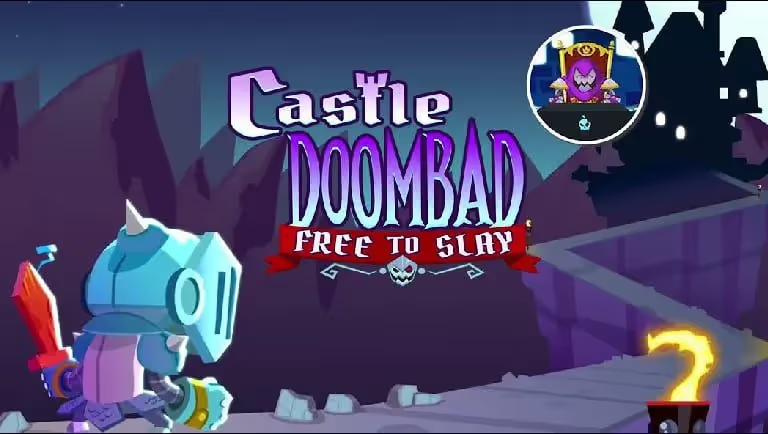
Grumpyface Studios announces Castle Doombad: Free to Slay is available now on iOS and Android devices
IP Licensing

Game Growth Strategies: Taking Advantage of Seasonal Trends
13.10.2023
•
5 mins read
Taking Advantage of Seasonal Trends to Grow Your Game
Hicham Rkini, Head of Monetization & Growth | Yodo1
You fire up your favorite mobile game and see, with excitement, that it’s been fully decked out for Halloween! Pumpkins. Spooky story elements. Costume skins. The works! You can’t wait to explore and see what’s possible because you know it won’t be around for very long!
As a game developer, it can be easy to forget the freshness and delight that seasonal events like these can bring to players, and how impactful that delight can be. The fact is this: seasonal trends play a big role in user engagement and revenue streams for mobile games, acting like a magnet for both new and existing players, with the most action happening in Q4, which we will discuss below. As the seasons roll by, each brings unique opportunities, and for the savvy developer, this is a goldmine, especially if you plan ahead.
And so, since the holidays are rapidly approaching, let’s explore the concept of seasonality, its importance, and how developers can ride these waves to propel their games toward success.
What is seasonality?
Seasonality is about predictable changes that happen around the same time each year. These can be religious holidays like Christmas, Diwali, or Ramadan, shopping events like Black Friday, or other happenings like elections or sports events. Companies often have special sales or promotions during these times.
However, many developers miss this opportunity, possibly because they have too much on their plate or don’t know what to focus on in game development and marketing. As a top mobile publisher for over a decade, we at Yodo1 always maximize these trends in the games we publish and work with, seeing notable success in user engagement and revenue growth.

Spotlight on Q4
The last chunk of the year, the fourth quarter (Q4), is special for three main reasons:
- Key Events: Q4 is packed with events starting with Diwali and Halloween in October, moving through Singles Day, Black Friday, and Cyber Monday in November, and wrapping up with holidays in December and New Year’s celebrations.
- Heightened Competition: Advertisers are willing to spend more, so advertising costs shoot up. What does that suggest? Higher eCPM is an objective measure of the increase in opportunity but certainly doesn’t mean that only paid marketing will move the needle.
- User Engagement: The holiday spirit often leads to more online shopping and mobile gaming, causing a rise in user engagement.

Navigating the Seasonal Tide: A Developer’s Toolkit
Seasonal trends offer a treasure trove of opportunities for developers. By tweaking various aspects of their games and marketing strategies, they can make the most out of these cyclical market dynamics. Here are some tools in the developer’s toolkit:
App Store Optimization: Revamp icons and screenshots to reflect ongoing events. For instance, changing your game icon to feature a pumpkin during Halloween. This can improve your conversion ratio and lead to more downloads, which in turn can improve your category and keyword rankings! On top of this, app store curators are more likely to feature games that embrace trends.
Search optimization: Include keywords related to seasonal events to attract more traffic. For example, using keywords like "Christmas Special" during the holiday season could drive more traffic to your game.
Seasonal makeover: Embrace the season in your game’s visuals. For example, add snow and holiday decorations in your game environment during Christmas to give it a festive feel. Here is an example from Rodeo Stampede:
https://youtu.be/VT0f9qIu46E?si=ltUEMnJh4zhkfGP3
Ad format and placement optimization: Revisit your monetization strategies before Q4, ensuring the right ad formats are chosen and placed at the correct points throughout the game. It's also a good time to try different ad formats that might resonate better with the seasonal audience. For example, exclusive holiday-themed items or skins might be available within a lucky spin mechanic, with spins being earned when players choose to watch a rewarded video ad.
Last-minute sprint: If you just realized the importance of seasonality, focus on quick changes like updating visuals and incorporating user-friendly ad formats like App Open Ads.
Understanding cultural nuances: Dive into local expertise or conduct thorough research to ensure your seasonal changes are culturally appropriate, especially when targeting global audiences. This may be the perfect opportunity to work with local freelancers in different countries, perhaps to create translations with nuance, or craft culturally sensitive assets. And imagine how much you’ll learn in the process!
Engaging Users Seasonally
Seasonal strategies can significantly enhance the gaming experience and keep players engaged. As the seasons change, so can the in-game environment, offering fresh, themed content that resonates with players’ real-world experiences.
In-game events: Create seasonal in-game events or challenges to generate buzz and get players excited. For the games we publish, as well as with the other games we work with, a focus on elements like UA and social media, creating special tournaments, rolling out seasonal quests, or even introducing limited-time characters or items, can be a powerful magnet that draws players in.
Discounts and special offers: Tempt users with seasonal discounts on in-app purchases or special item bundles. Offering exclusive items or discounts during a season can encourage spending and retain players.
https://youtu.be/OWaYzU5GixI?si=qQpxLuQ7O8gcsKMP
Case Spotlight: Pokémon GO 2022 Halloween Event
The 2022 Halloween event in Pokémon GO is a great example of how seasonal in-game events can boost user engagement and revive interest in a game. Here’s how Niantic, the game’s developer, embraced the Halloween season:
During the event, a new animation was introduced for the Spooky Pose available in the in-game shop. This update made the pose more lively, applying to new and past purchases alike. New Halloween-themed avatar items were also rolled out, allowing players to dress up their avatars in spooky Halloween attire.

Via Pokémon GO
Going even further, the PokéStops and Gyms in the game were decorated to reflect the Halloween theme, offering a visually festive environment for players. A special remix of the Lavender Town music played at night throughout the event, enhancing the spooky atmosphere of Halloween.
Loyal players were given double Candy rewards for various in-game actions like catching, hatching, and transferring Pokémon. Trainers level 31 and above received one guaranteed Candy XL when walking with their buddy, encouraging players to stay active within the game, and special questlines were introduced to make the whole event even more exclusive and timely.
https://www.yodo1.com/wp-content/uploads/2023/10/halloween-event-2022-avatars-mummy-zombie-final.mp4
Via Pokémon GO
While not every developer may have the resources to take seasonality to this level, the meticulously planned Halloween event in Pokémon GO serves as a great example and offers insights that mobile game developers can learn from as they strategize and experiment with infusing seasonal elements into their own games. Good stuff!
Concluding Thoughts
At Yodo1, we have seen firsthand how leveraging seasonality can lay a strong foundation for sustainable growth in the fiercely competitive mobile gaming arena. Our experience in helping developers grow their games has shown that a well-thought-out seasonal strategy can be a game-changer in standing out in the crowded app stores and captivating players’ interest all year round. If you haven’t yet given it a try, why not start this holiday season?
Latest Blog Posts
Wing Fighter x TRANSFORMERS – A Battle for the Ages!
Dragonheir: Silent Gods x Dungeons & Dragons – Enter the Third Phase of Epic Collaboration!
TRANSFORMERS bots and Puzzles & Survival Game Unite to Combat a Massive Invasion!
Yodo1 Gathers China’s Top Mobile Gaming Leaders to Explore Global Brand Partnerships in 2025
Viking Legends Unite in Viking Rise A Once-in-a-Lifetime Crossover!
Grumpyface Studios announces Castle Doombad: Free to Slay is available now on iOS and Android devices
Get Updates From Yodo 1




Simplifying game growth
京ICP备12010993号-2 · 京ICP证120652号 · 京网文(2015)2029-371号 · 京公网安备11010502036836号
© Yodo1 Ltd. 2025 | All rights reserved.