Welcome to the Yodo1 Blog
Bringing you the latest news and updates from Yodo1, the mobile gaming industry, and work-from-anywhere culture
Game Growth
How Chinese Game Developers and Global IPs Can Build the Next Generation of Hit Games
01.09.2026
•
5 mins read
Yodo1’s event at ChinaJoy 2026 brought together Hasbro, leading Chinese developers and industry partners to explore what it really takes to build successful global IP games.
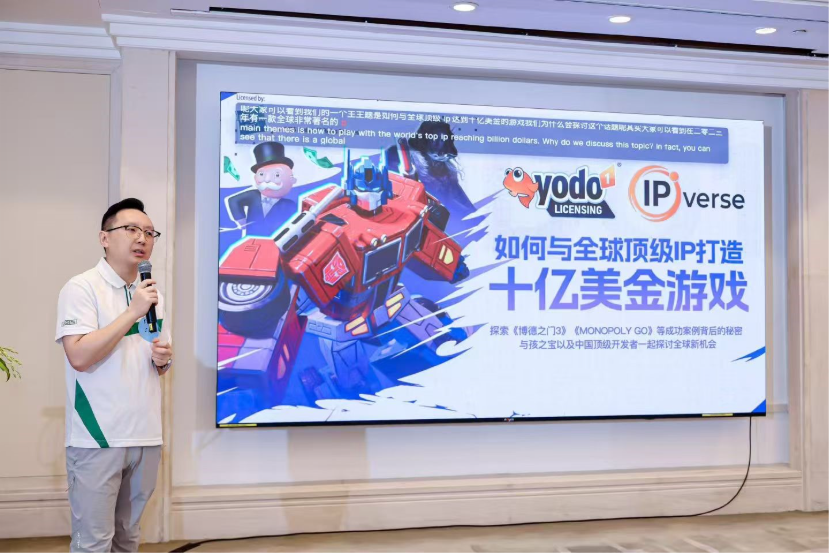
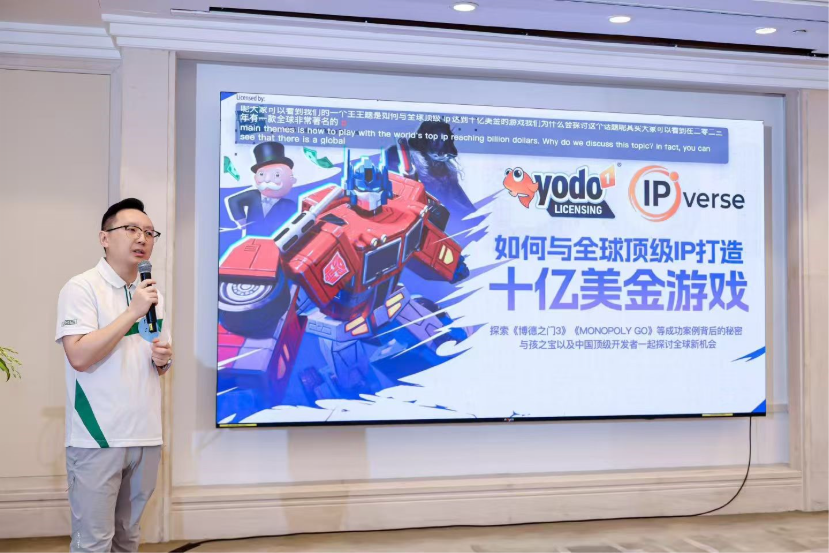
During ChinaJoy 2026, Yodo1 brought together more than 80 producers, product leaders and business executives from many of China’s leading game companies for an event in Shanghai.
Under the theme ‘How to Build a Billion-Dollar Game with the World’s Top IPs’ the event featured perspectives from Yodo1, Hasbro, Wanda Cinemas Games, Kingnet Network and the IPverse team. Together, the speakers explored one increasingly important question: how can Chinese developers and the world’s leading entertainment IPs build successful games together?
The answer that emerged throughout the event was clear: great IP games are not created by simply licensing a famous brand, they are built through the right combination of IP, development expertise, long-term partnership, operational experience and shared knowledge.
A New Opportunity for Chinese Developers

Chinese studios have become an increasingly important force in the global games industry.
Their expertise in genres such as RPG and SLG, combined with sophisticated live operations and increasingly global development capabilities, has made Chinese developers highly attractive partners for international IP owners. But as Vivien Zhang, Head of IP Licensing Business at Yodo1 highlighted during her opening presentation, development capability alone is no longer the main barrier.
The bigger challenges are often understanding global IPs, accessing the right resources, navigating approval processes, and creating efficient ways for developers and rights holders to work together.
That is why Yodo1 sees the next stage of the market as an ecosystem opportunity rather than simply a licensing opportunity. Instead of connecting one developer with one IP at a time, the industry needs infrastructure that makes collaboration faster, more informed and increasingly repeatable business.
Hasbro: Great Games Start with Great Partnerships

Claire Hunter Gregson, Digital Licensing Director at Hasbro, shared Hasbro’s perspective on what successful partnerships look like.
Hasbro’s portfolio includes globally recognized franchises such as Transformers, Monopoly, Dungeons & Dragons, Magic: The Gathering, Nerf, Peppa Pig, and My Little Pony, giving the company a unique view of how established entertainment brands can grow through gaming.
Claire highlighted two very different examples from Hasbro’s recent gaming journey: MONOPOLY GO! and Baldur’s Gate 3.
Their genres, audiences, and development models may be different, but both demonstrate a similar principle: the strongest results happen when IP owners and developers share a clear vision, understand their respective strengths, put players first, and build for the long term.
Hasbro brings iconic worlds, characters, and fan communities. Developers bring gameplay expertise, innovation, technology, and an understanding of their players. The opportunity comes from combining those strengths rather than treating licensing as a simple transaction.
Chinese developers are becoming an increasingly important part of that strategy, particularly given their capabilities in RPG, SLG and live-service development.
Transformers: Eternal War - From Licensing to Co-Creation
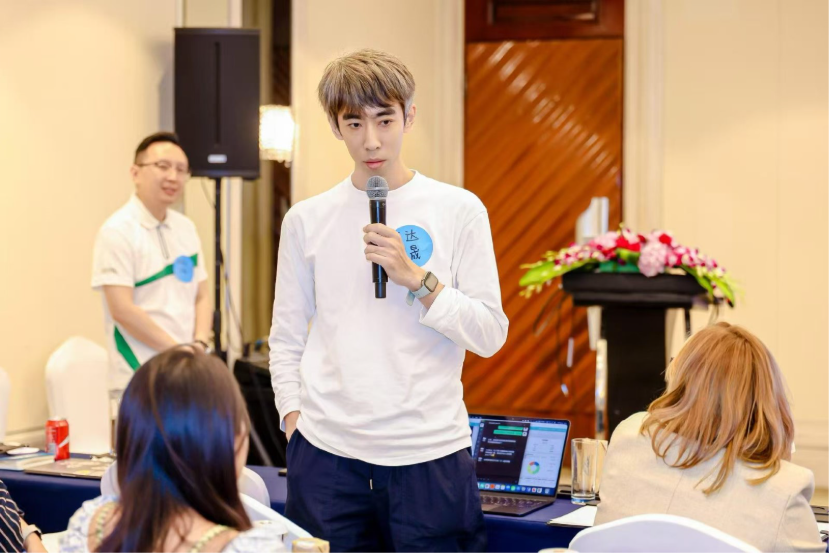
The importance of collaboration became even clearer through the story of Transformers: Eternal War.
Bi Sheng, Vice President of Overseas Publishing at Wanda Cinemas Games, shared how the project has evolved through close cooperation between Wanda Cinemas Games, Hasbro, and Yodo1.
The development process has involved hundreds of creative reviews and approval discussions covering areas such as character design, original narrative, world-building, art direction, and voice production.
The team also worked with veteran Transformers writer Simon Furman on original narrative material and brought in classic Chinese voice actors to preserve the franchise’s emotional connection with local fans.
The lesson from the project is simple: obtaining an IP license is only the beginning.
Successful IP development requires the developer, IP owner, and operating partners to solve problems together continuously throughout the life of the project.
The commercial model can reinforce that mentality as well. For Transformers: Eternal War, a net-revenue-share structure helped create stronger alignment among the parties, turning the relationship into something closer to a long-term business partnership than a traditional licensing arrangement.
Understanding an IP Matters More Than Simply Acquiring It

Shan Jing, Head of Korea Business at Kingnet Network, offered another important perspective: successful IP adaptation begins with understanding why audiences care about an IP in the first place.
Characters and visual assets alone are rarely enough.
Developers need to recreate the emotional connection between an established franchise and its audience while adapting that experience to modern gameplay and contemporary player's expectations.
From Kingnet’s experience working with classic IP, three principles stand out:
- Respect the original work and the memories existing fans have attached to it.
- Integrate the IP naturally with modern gameplay and local player behavior.
- Build for long-term operation rather than relying on the short-term attention generated by a famous brand.
Developers also need to evaluate whether an IP truly fits their studio’s strengths, understand its world and character systems, learn from previous adaptations, and prepare for the realities of global approval workflows.
In other words, the value is not simply having access to an IP but it is in knowing what to do with it.
Building a More Scalable Global IP Ecosystem
This thinking is also driving the next stage of IPverse Community.
IPverse is evolving beyond an information platform into a broader ecosystem designed to help developers work more effectively with global IP.
Alongside IP knowledge and market insights, the goal is to connect development teams with resources that can support real production - including creators, voice talent, case studies, industry experts and accumulated best practices from previous collaborations.
The objective is to reduce some of the hidden complexity surrounding IP development.
Better access to information and resources can help studios make stronger IP decisions, shorten learning curves, improve communication with rights holders, and turn knowledge gained from one successful project into capabilities that can be applied to the next.
The Next Generation of Global IP Games

Across the different perspectives shared at the event, one common theme stood out.
Building a successful global IP game requires far more than acquiring a recognizable license.
It requires developers who understand both the IP and their players. It requires IP owners willing to work collaboratively with development teams. And it requires partners who can bridge the commercial, operational, creative, and cultural gaps between the two.
For Yodo1, this is where the next major opportunity lies.
As Chinese developers expand globally and entertainment companies look for new ways to bring their franchises into games, Yodo1 will continue working with partners such as Hasbro and leading development studios to make global IP collaboration more open, efficient, and scalable.
The ambition is not simply to create more licensed games.
It is to create better partnerships - and through them, the next generation of games capable of reaching audiences around the world.
Interested in exploring global IP opportunities for your game? Visit ipverse.com to learn more about available IPs, industry resources, and collaboration opportunities.
Game Growth
Passive Monetization Is Quietly Killing Your LTV
17.03.2026
•
5 mins read
Most indie studios believe they have monetization handled.
Ads are installed.
Revenue is coming in.
The dashboard shows numbers going up.
So everything must be fine.
But here is the uncomfortable truth:
Revenue coming in does not mean revenue maximized.
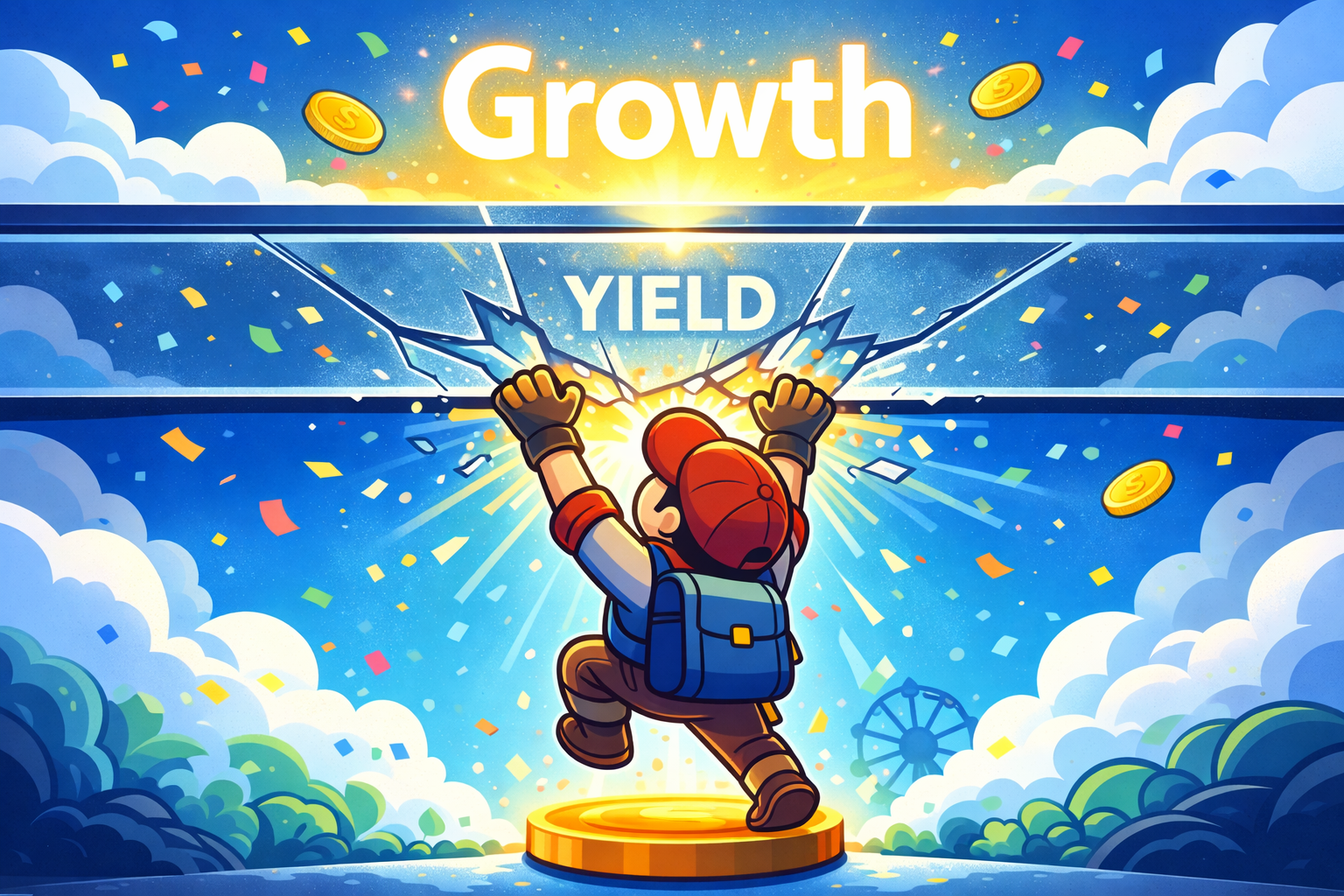
And when monetization runs on autopilot, it quietly lowers your LTV.
That is where growth starts to choke.
Let’s break this down in plain terms.
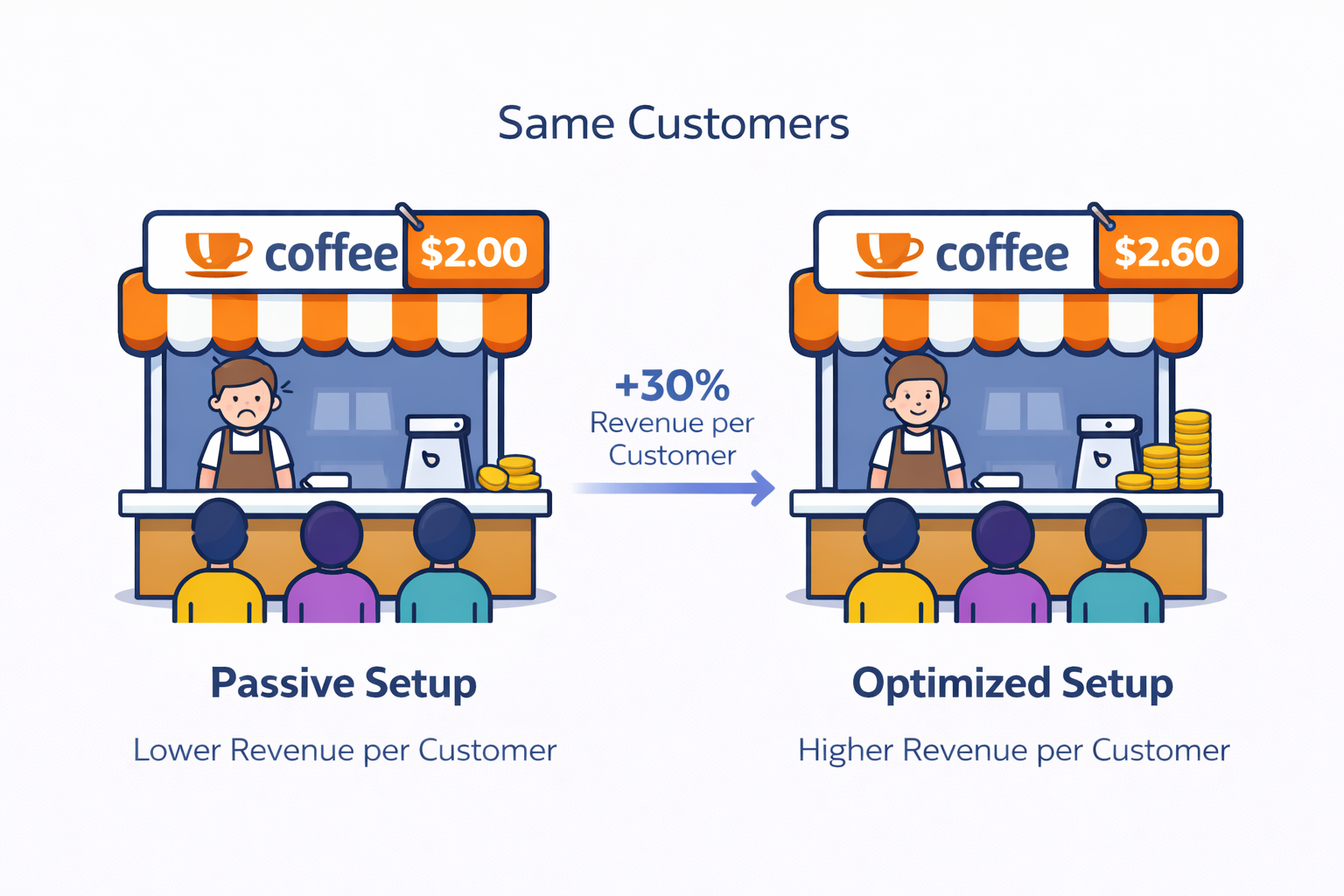
The Coffee Shop Problem
Imagine you open a coffee shop.
Customers walk in.
They buy coffee.
Money hits the register.
You are profitable.
Now imagine you accidentally priced every drink 30 percent too low.
You would still make money.
You just would not be making what you should be making.
You might even think:
“Margins feel tight.”
“Growth feels harder than it should be.”
But the issue would not be traffic.
It would be pricing.
That is what passive monetization does to your game.
It works.
It just works below its potential.
The Domino Effect No One Sees
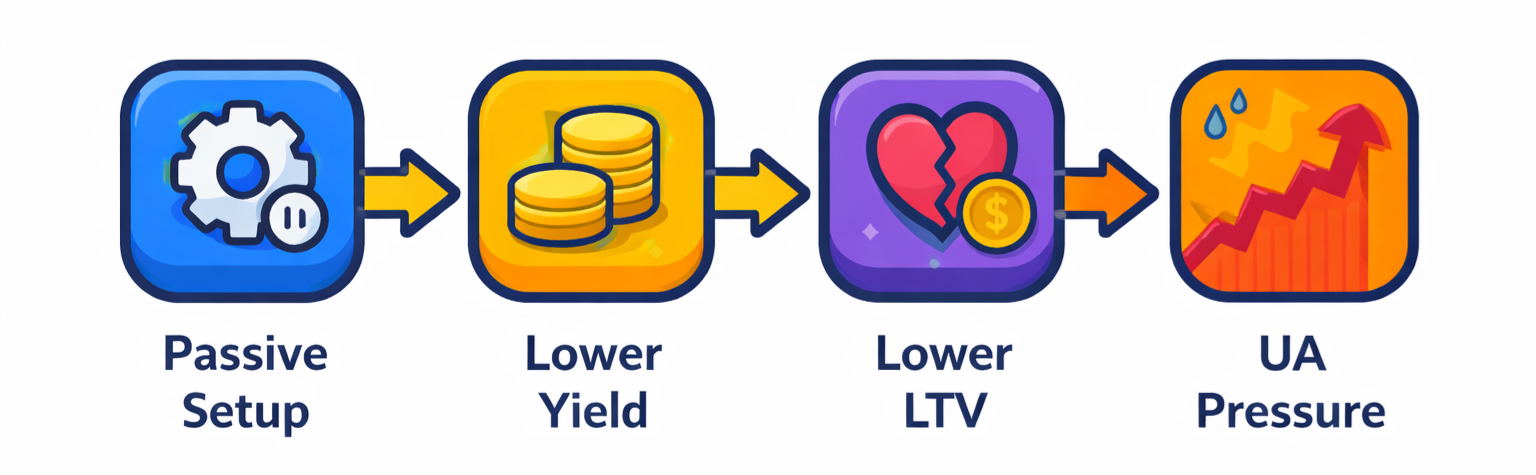
Here is what usually happens:
Passive monetization
→ Lower yield
→ Lower LTV
→ UA pressure
A small blind spot at the start creates pressure everywhere else.
This is not dramatic. It is structural.
Step 1: Passive Monetization
This is extremely common:
- Mediation installed
- One or two ad networks connected
- Default setup
- No active yield ownership
Revenue starts appearing.
The team moves on.
No one is directly responsible for asking:
“Are we earning the maximum per player?”
It is like turning on cruise control and assuming you are taking the fastest route.
You are moving.
But you are not optimizing.
Step 2: Lower Yield
Yield is simply how much money you earn per ad impression.
If your setup is basic or lightly optimized, you earn less per impression than you could.
Not zero.
Not broken.
Just lower.
At small scale, it feels invisible.
At large scale, it becomes expensive.
Think of it like a tiny leak in a water pipe.
One drop does not matter.
Millions of drops do.
Step 3: Lower LTV
LTV is lifetime value. It is how much revenue a player generates over time.
Lower yield directly lowers LTV.
And LTV determines how much you can afford to spend on user acquisition.
If your LTV is artificially capped, your growth is artificially capped.
It is like trying to build a taller building on a short foundation.
You hit a ceiling that should not exist.

Step 4: UA Pressure
Now the pain shows up.
- CPIs rise
- Margins shrink
- ROAS targets tighten
- Scaling feels risky
The team responds by:
Testing creatives.
Trying new channels.
Tweaking bids.
But they are adjusting the engine
while the fuel line is restricted.
The issue is not always traffic.
It is revenue per player.
Let’s Put Real Numbers on It
Assume your game generates:
$200,000 per month in ad revenue.
Everything looks stable.
Now imagine your setup is leaving just 30 percent on the table.
That is not extreme. That is common in single-network or lightly optimized setups.
Here is what that means:
$200,000 × 30% = $60,000 per month
That is:
$720,000 per year
From the same players.
With the same traffic.
Without increasing CPI.
You did not acquire more users.
You simply improved yield.

Why This Changes UA Immediately
If revenue increases 30 percent, LTV increases 30 percent.
If LTV increases 30 percent, you can afford to bid higher.
That means:
- More campaigns become profitable
- You win more auctions
- You scale faster
You did not fix traffic.
You fixed monetization ownership.
The Hidden Growth Constraint
Most studios do not fail because they lack tools.
They have mediation platforms.
They have dashboards.
They have access to networks.
Tools run auctions.
Dashboards report revenue.
But no one owns closing the revenue gap.
Passive monetization feels safe because money is coming in.
But growth requires ownership, not autopilot.
Monetized Is Not the Same as Optimized
Old definition of monetized:
Ads installed. Revenue visible.
New definition:
Revenue gap closed.
There is a massive difference between making money
and making the maximum money your game can generate.
One sustains your studio.
The other unlocks scale.
What You Should Do Next
Start with clarity.
You do not need to rebuild everything.
You need to answer three simple questions:
- What is our revenue ceiling?
- What uplift is realistically possible?
- Is our current setup leaving money on the table?
If you cannot answer those clearly, you are scaling in the dark.
And scaling in the dark always creates artificial limits.
At MAS, we start by estimating the revenue gap before engagement.
We model conservative uplift based on setup.
We track modeled vs actual performance.
And we take accountability for revenue lift.
Because running ads is not monetization.
Closing the revenue gap is.
If passive monetization is quietly limiting your LTV,
the first step is not more traffic.
It is visibility.
And visibility changes everything.
Game Growth
%20(1).png)
Monetized Is Dead: The Category Shift Reshaping Game Growth in 2026
26.02.2026
•
5 mins read
For a decade, “monetized” was the milestone.
Ads integrated. Revenue flowing. Dashboard green. Ship it.
That definition built an industry. It lowered barriers and gave small teams access to real revenue without massive ad ops departments.
But in 2026, monetized is not an achievement. It is table stakes. And studios that still treat monetization as a box to check are quietly capping their own growth.
Every Mature Market Goes Through This
Every industry follows a pattern.
Phase one: Access. Make the capability widely available.
Phase two: Automation. Simplify complexity so anyone can participate.
Phase three: Optimization. Separate average operators from elite ones.
Mobile ad monetization has completed phase two. We are entering phase three.
The winners will not be the studios who “have ads.” They will be the studios who understand their revenue ceiling.
That is the category shift.
.png)
The Dangerous Illusion of Revenue Visibility
Revenue showing in a dashboard creates psychological safety. Money is coming in. eCPMs look stable. Fill rates look fine. So the team moves on to UA, content, and roadmap priorities.
But visibility is not clarity.
Most studios know what they are earning. Very few know what they could be earning. That difference is not incremental upside. It is a structural ceiling.
And in tighter markets, structural ceilings become growth limits.
The Hard Truth: Optimization Is Now a Growth Lever
Let’s be direct.
If your monetization strategy looks like this:
• Install mediation
• Connect one or two networks
• Leave default logic in place
• Review performance occasionally
You are not optimizing. You are participating.
Participation was enough when traffic was cheaper and competition was lighter. It is not enough when:
• CPIs fluctuate unpredictably
• Privacy changes reduce targeting precision
• Ad demand cycles impact CPM stability
• Investors demand capital efficiency
In tight markets, small inefficiencies compound.
Optimization is no longer a monetization improvement. It is a UA multiplier.
That is the shift many teams are only beginning to recognize.
The Revenue Ceiling Conversation Is Coming
The shift becomes obvious when new questions enter the room:
• What is our monetization ceiling?
• What uplift is realistically possible?
• How competitive is demand per impression in our top geos?
• Is our current setup structurally limiting LTV?
When those questions appear in leadership meetings, the category has moved.
The conversation is no longer about SDK integration. It is about performance ownership. That is a maturity leap.
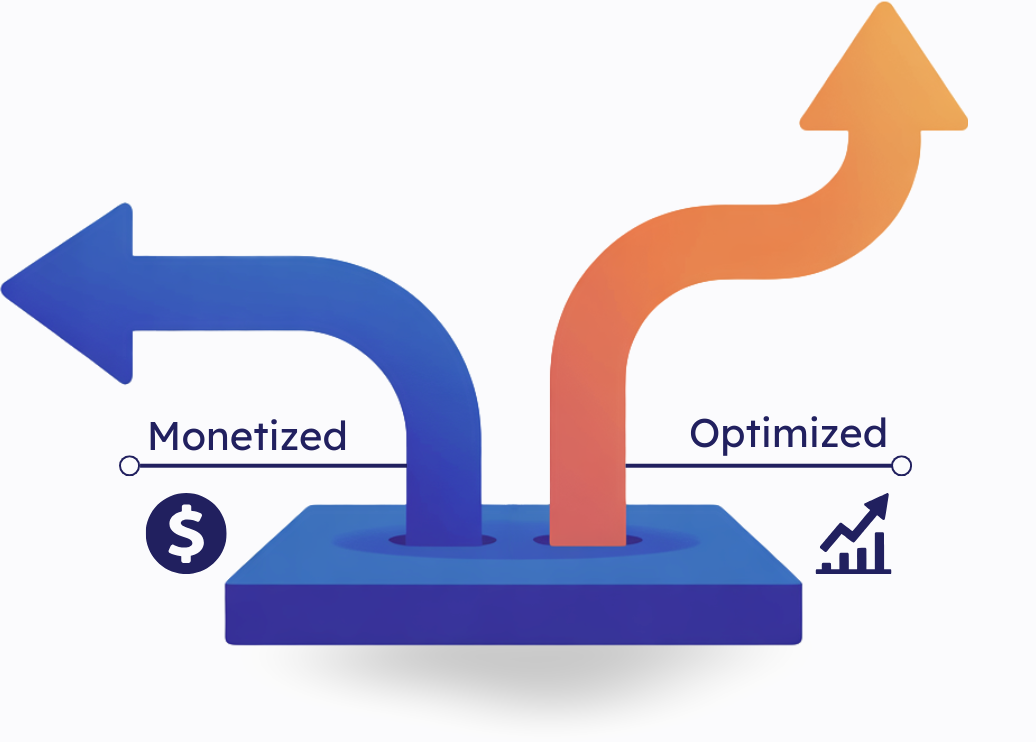
Monetized Was Infrastructure. Optimized Is Strategy.
Monetized means revenue exists. Optimized means revenue is engineered.
Monetized sustains. Optimized scales.
Monetized is defensive. Optimized is offensive.
The difference might look subtle in a dashboard. It is massive in a growth model.
If yield improves even modestly, LTV expands. If LTV expands, bidding flexibility expands. If bidding flexibility expands, market share expands.
Optimization is leverage. Leverage defines leaders.
The Industry Will Quietly Divide
Over the next few years, the industry will split into two camps.
Camp one: Ads are live. Revenue looks fine. Monetization is “handled.”
Camp two: Yield is owned. Floors are strategic. Competition is maximized. Revenue gap is measured.
Camp one will experience unexplained UA pressure. Camp two will scale more predictably.
The difference will not be loud. It will show up in margins. It will show up in confidence. It will show up in how aggressively studios can pursue growth.
The Provocation
If you cannot clearly articulate:
• Your revenue ceiling
• Your optimization roadmap
• Your realistic uplift range
• Your demand competitiveness by geo
You are not optimized. You are monetized. And monetized is no longer enough.
This is not criticism. It is evolution.
Markets mature. Definitions tighten. Performance gaps widen.
The shift from monetized to optimized is already underway. The only question is whether you are leading it or reacting to it.
In 2026, monetization is no longer plumbing. It is a growth discipline. And disciplines create category leaders.
Still Just Monetized?
If you can’t clearly define:
• Your revenue ceiling
• Your optimization roadmap
• Your realistic uplift potential
Then you’re not optimized yet.
Our MAS team works with studios to close the revenue gap and unlock scalable growth.
Game Growth
From Limited To Limitless: Why MAS Is A Great Choice For Lean Teams
26.11.2025
•
5 mins read
The mobile apps market is booming, with mobile games making up over half of the indie segment and projected to grow at 17% CAGR through 2030. On the surface, it looks like a golden opportunity. But for small studios, turning that growth into actual revenue isn’t as simple as it seems.
The Everyday Challenges of Lean Teams
Competing on crowded app stores, paying ever-rising UA costs, and trying to grow alongside AAA players with large marketing budgets is already a stretch of resources. And for lean teams, it’s also piling up with internal challenge:
- No room in the budget for specialists. With revenue unstable, there’s no budget for ad ops managers, so monetization falls on already busy developers.
- Limited time resources. Every hour spent testing networks or adjusting waterfalls is time taken away from building the game itself.
- Mistakes are costly. Compliance issues, wrong setups, or bad reporting don’t just take time to fix — they cut directly into revenue.
So, for small teams, the challenge isn’t just growth — it’s achieving it with limited time and money.
MAS Can Save The Day
MAS by Yodo1 is a monetization solution that connects your game to top ad networks and optimizes performance through a mix of AI and expert support. It takes care of waterfalls, bidding, ANRs and network testing — saving lean teams both time and money while reducing the risk of costly mistakes.
How MAS Meets the Needs of Small Teams
MAS is built to support lean teams with their everyday challenges, so you can stay focused on game development:
- Removes the need for additional hires by taking on the work of ad ops specialists.
- Saves developers’ time through automated mediation and testing.
- Keeps budgets on track with compliance, smooth integrations, and accurate reporting.
Externally, MAS helps teams:
- Compete in crowded marketplaces by maximizing revenue from existing players instead of relying solely on UA.
- Offset rising UA costs by boosting ad efficiency and creating budget headroom to reinvest in growth.
- Levels the playing field with professional-grade monetization at a fraction of enterprise-level costs, helping smaller teams grow sustainably even in AAA-dominated markets.
Real Teams, Real Results
We’ve seen the benefits of MAS monetization optimisation across both gaming and non-gaming apps:
- Kenpasoft (Brasileiro Apps): Before MAS, the team experienced low ROAS and was operating with a limited mediation setup, using only one ad network. After integration, ARPDAU grew by 59% in just one week, while eCPM nearly doubled. More insights are available in the full case study.
- ActFirst Games: Recently, we worked with ActFirst Games, the studio behind the hit Obsidian Knights, which wanted to explore if there were untapped ad revenue opportunities. After the full MAS integration, ARPDAU increased by 48%, revealing significant monetization potential. Learn more in the case study.
Ready To Boost Your Revenue?
For lean teams, every resource counts. MAS automates mediation to drive faster ad revenue growth, while your team stays focused on making great games.
Ready to improve your monetisation strategy results?
Game Growth
How to Spot Hidden Revenue in Your Ad Stack
11.11.2025
•
5 mins read
Every year, mobile games leave millions of dollars on the table — not because their titles lack players, but because their ad stacks aren’t optimized. According to industry estimates, poorly structured mediation and outdated SDKs can reduce ad revenue by 20–30%, meaning that for a game generating $1M annually from ads, up to $300,000 could be lost without developers even noticing.
Why is this revenue hidden?
There’re few common reasons from the technical side:
- Fragmented mediation setup: Many developers rely on a single network or outdated waterfalls, leaving demand sources untapped.
- Lack of transparency: Without proper reporting, it’s hard to know which ad units underperform.
- Unbalanced ad strategy: Too many interstitials can hurt retention, while too few rewarded ads miss monetization opportunities.
- Slow SDK updates: Networks release optimizations regularly, so it’s essential to update your SDKs to avoid draining eCPMs. Heavy SDKs can also slow performance, frustrating players and causing churn.
And a few more from the development team side:
- Hard to keep up with ever-changing ad tech (SDK versions, bidding adoption).
- Limited time or expertise to A/B test ad placements.
- Difficulty analyzing regional performance — what works in the US may flop in Brazil.
- Fear of hurting player experience when experimenting with new formats.
How to capture hidden revenue with MAS?
That’s where MAS (Managed Ad Services) comes in. MAS connects your game to multiple ad networks through one SDK and automatically optimizes placements, formats, and bidding for more effective revenue effect.
More precisely, here’s how MAS helps developers spot and capture hidden revenue:
- Full mediation coverage: Full mediation coverage: MAS integrates and manages multiple top ad networks—and keeps adding new ones—so you never miss demand from the highest bidder.
- Always up-to-date SDKs: The MAS team handles all updates, so your game runs on the latest optimizations without dev headaches.
- Smart ad strategy: MAS places and balances ad formats to boost ARPDAU while maintaining retention, turning rewarded ads into both revenue and engagement drivers.
- Global performance insights: With MAS, you can compare monetization across regions and adapt strategy for every market.
- Hands-off growth partner: MAS continuously audits, tests, and adjusts your ad stack, so you’re not leaving 20–30% of potential revenue on the table.
Win This Hide and Seek
Getting the most from your ad stack means more than just chasing higher eCPMs — it’s about keeping monetization smooth without burning developer time. Having experienced these challenges firsthand as a publisher, we built MAS to take care of the complex parts in the background and make our insights available to everyone, so you can focus on making great games.
IP Licensing
From Fear to Pride: What October’s Gaming Collabs Teach Us About IP Strategy
04.11.2025
•
5 mins read
Look back on IP Collabs during October | Powered by IPverse
Players are not just chasing brands. They are chasing feelings. Fear in the dark with friends. Pride in a story that feels like home. The studios that win are building an IP operating system—one that turns collaborations into sustained growth, not one-off fireworks.
The IPverse Framework: World, Moment, Mechanic
Use this three-lens test before you sign any collaboration.
- World: Does the partner IP extend or enrich your game’s fantasy rather than sit on top of it?
- Moment: Is there a cultural or calendar moment that naturally amplifies discovery and earned media?
- Mechanic: What new behaviour will this IP unlock in your LiveOps or economy that persists after the campaign?
If you cannot answer all three with specifics, you do not have a collaboration. You have a poster.
Case Reads and What to Steal

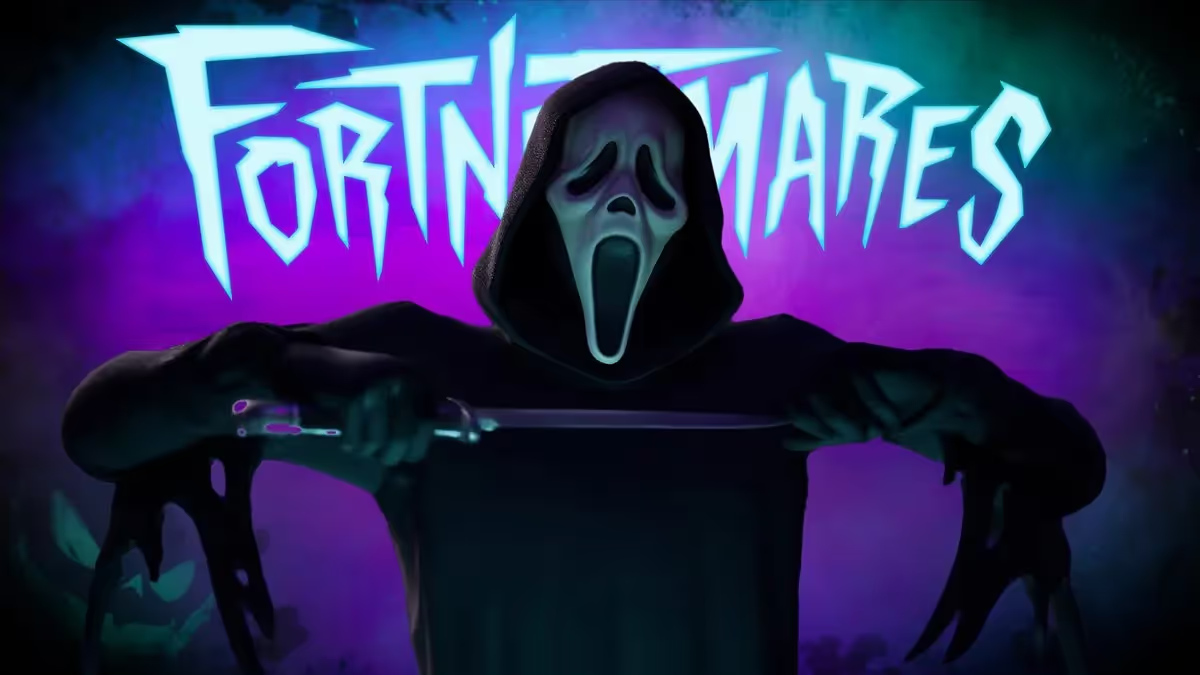
Fortnite × Scream (Ghostface)
Fortnitemares 2025 brings transformation mechanics that move beyond a skin. That matters. Cosmetics lift ARPDAU for days. Mechanics shift cohorts.
Yodo1’s take: Build IPs that change how players behave. A seasonal fear theme is the excuse—the real win is repeatable design space.
What to steal:
- Tie a limited transformation to a social trigger such as proximity voice or squad downs.
- Run a creator challenge rewarding creative kills or stealth routes—the content loop is the marketing.
- Keep one mechanic fragment as a permanent unlock to create post-event stickiness.

Honor of Kings × Sanxingdui
Four limited skins inspired by archaeological bronzework for the 10th anniversary. This is not heritage as wallpaper. It is heritage as meaning.
Yodo1’s take: Cultural authenticity builds trust and frequency. It also clears regulatory review with ease.
What to steal:
- Co-create with museum partners so the visual language and lore are precise.
- Design progression that teaches without preaching—drip lore through quest breadcrumbs and AR filters outside the game.
- Treat heritage IP as a long arc. Return to it annually with new chapters rather than a one-off celebration.
.avif)
Azur Lane × DanMachi V
Anime fandom meets gacha discipline. New story missions and limited ships are almost too easy, yet they work because both communities are mobilised.
Yodo1’s take: Anime crossovers are mature territory. Differentiation now comes from narrative cadence and pity-system tuning, not just the guest star.
What to steal:
- Build a three-beat narrative arc that escalates daily, not over weeks.
- Make shard acquisition routes legible—confusion kills spend in time-boxed events.
- Commission two influencer micro-series in parallel: one lore-focused, one gameplay meta.
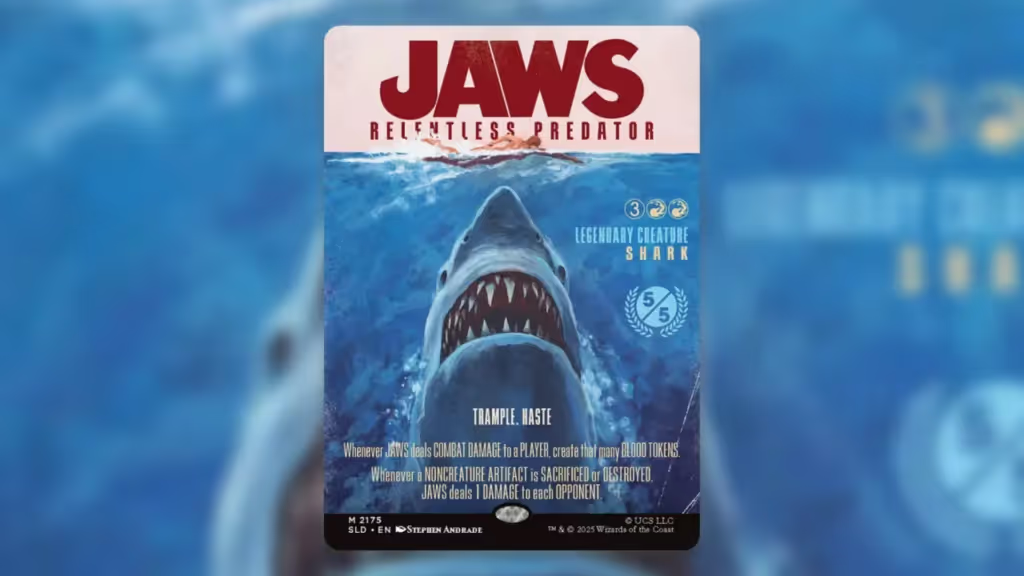
Magic: The Gathering × Jaws
Secret Lair turns nostalgia into a recurring revenue machine. Small drops, sharp art direction, confident curation.
Yodo1’s take: Micro-drops are the ultimate IP sandbox. You test appetite without retooling the core game.
What to steal:
- Pilot micro-drops around film anniversaries and soundtrack remasters.
- Offer a collector path and a player path. The art variant is a trophy; the rules variant is the meta.
- Use scarcity honestly—short windows, transparent print numbers, zero false FOMO.
Market Signals to Watch
- Q4 horror beats Q4 cosy in share velocity across social and creator platforms, especially for ages 13–24.
- Heritage collaborations in China sustain longer DAU tails because they live inside cultural conversation, not just game news.
- Cross-platform synchronisation now defines reach: if cosmetics and entitlements aren’t portable, you pay twice to win once.
Deal Mechanics That Maximise Upside
- Licence for the system, not a skin. Secure rights to reuse motifs, SFX stems, VO lines, and UI widgets in future events.
- Bundle the moment. Lock in promotional beats on partner channels, plus music rights for short-form edits and creator remixes.
- Own your metrics. If you cannot tag partner posts and track inbound traffic, your incrementality study will be folklore.
Measurement That Actually Proves Value
Don’t stop at immediate revenue—prove you changed trajectory.
- Leading indicators: Day-zero and day-three install lift versus control geos, creator clip velocity, wishlist adds for upcoming modes.
- Cohort shift: 30- and 60-day reactivation from lapsed players who engaged with the collaboration.
- Economy health: Spend distribution across price tiers to confirm you didn’t over-skew whales.
- Cultural footprint: Share of voice inside the partner IP’s community, not just your own.
Risks to Manage
- Aesthetic mismatch: Gorgeous art that breaks your UI readability will tank ranked modes.
- Regulatory drift: Heritage IPs need provenance and disclaimers integrated early.
- Over-rotation: Too many back-to-back collaborations train players to wait for the next one—space them strategically.
The 12-Month IP Calendar Playbook
Think in seasons and families, not single hits.
- Q1: Identity & tech — sci-fi, mechs, gadgets; aligned with esports cycles.
- Q2: Adventure & travel — outdoor brands, film tourism boards, social referral loops.
- Q3: Music & fashion — festival capsules and avatar expression; prime UGC window.
- Q4: Fear & legacy — horror, heritage, and awards season; double down on narrative and micro-drops.
Where BiG and IPverse Help
We treat IP as a system. IPverse identifies high-fit partnerships through data on audience overlap, cultural moments, and mechanic feasibility. BiG negotiates the deal terms that secure reuse rights, data visibility, and promotional muscle—then helps your team ship the live ops that make it profitable.
Closing Thought
Master the World, Moment, Mechanic framework, and every collaboration becomes more than a campaign—it becomes part of your game’s DNA. To translate any of the above into a live plan, we can map partner shortlists, calendar slots, mechanic concepts, and measurement blueprints in one working session.
Want to learn more about making the most of IP's in your game?
IP Licensing

From Subway Runs to Haunted Manors: September’s Biggest IP Crossovers
15.10.2025
•
5 mins read
Powered by IPverse • Published by Yodo1
Every month, we pull signal from noise: the most impactful IP crossovers, market shifts you shouldn’t miss, notable releases, and what it all means for studios planning their next move. (Powered by IPverse, Yodo1’s AI-assisted IP licensing and insights platform.) This months spotlights a new bar for reciprocal collabs, the continued gravitational pull of anime IP, and the business power of nostalgia.
Yodo1 Corner
From our team to yours—what we’re seeing and how to act on it:
- Reciprocal Collabs = Multipliers, Not Add-ons. We’re advising partners to design two-way integrations with mirrored value: content and mechanics in both titles, shared LiveOps calendars, and coordinated creator campaigns. This is how you convert “cool moment” into durable LTV lift.
- Anime Still Prints Money—If You Localize the Emotion. The best-performing runs pair faithful character kits with contextual event beats (voice lines, story snippets, region-specific challenges) rather than a generic reskin.
- Nostalgia With New Toys. Anniversary and retro revivals work best when they bundle QoL updates, modern monetization paths, and a light skill curve so lapsed fans feel powerful by Day 2.
Want a second set of eyes on your collab pitch or P&L? Send us your goals and we’ll map the fastest route—IP sourcing, deal terms, creative, LiveOps, and measurement—end-to-end.
Top IP Collaborations
Brawl Stars × Subway Surfers — Reciprocal Crossover
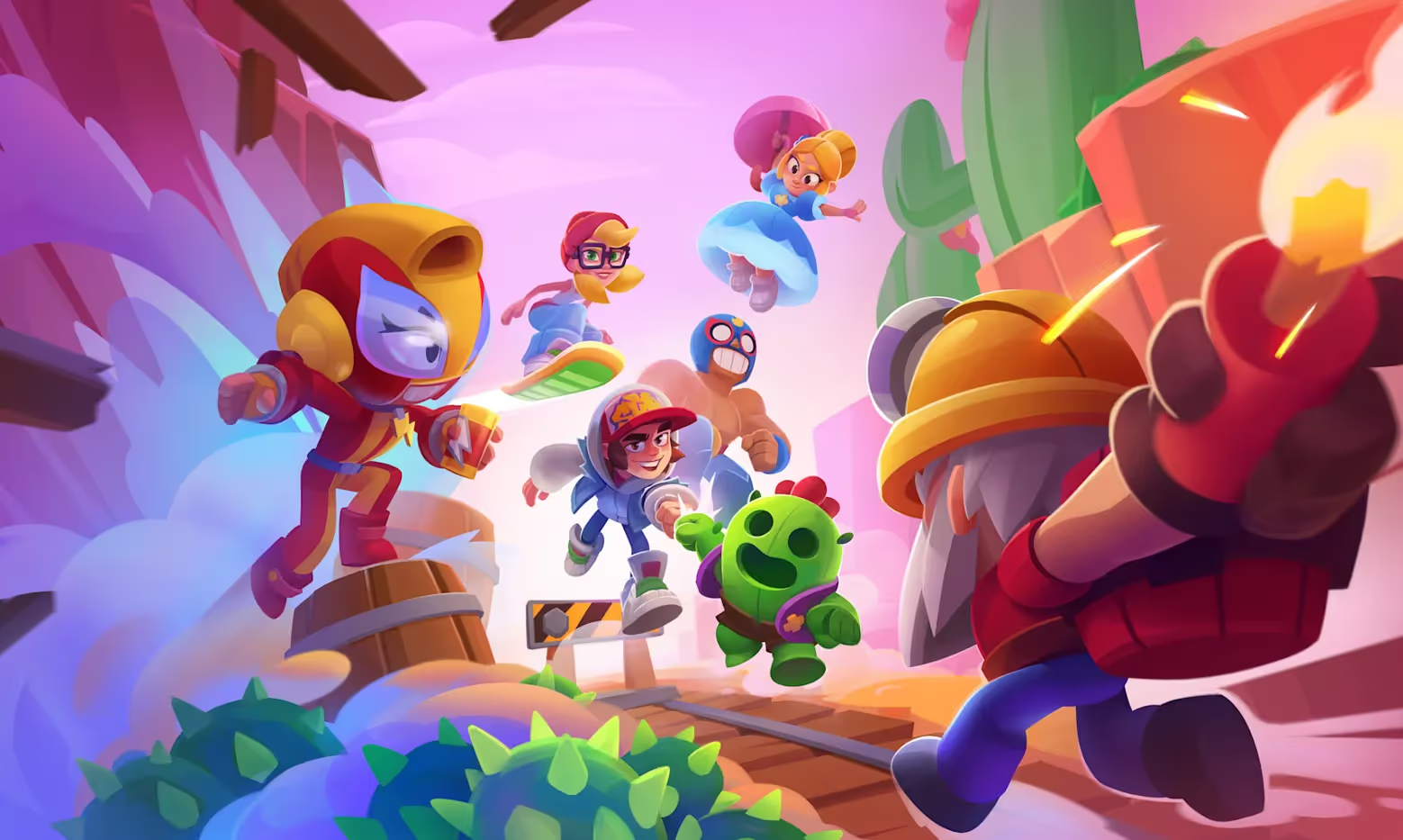
Global (Mobile) • Sep 4–Oct 5, 2025
What happened: Two juggernauts trade deep content. Subway Surfers introduces six Brawl Stars characters and a “Showdown” mode; Brawl Stars ships a “Subway Run” mode plus themed skins—a true two-way experience rather than one IP guesting in another.
Why it matters: This is the template for 2025–26: parity of effort, fresh mode design, and co-owned outcomes (UA, retention, and revenue) across both ecosystems.
Yodo1’s take:
- Design for Habit, Not Hype. Bake the crossover into your daily loop (quests, streaks, limited gear paths) so it powers D2/D7 habit formation, not just Day-0 installs.
- Mirror the Mechanics. If you’re the faster-twitch title, import traversal verbs from your partner; if you’re the runner, borrow combat cadence—give players a new rhythm to master.
- Shared KPI Contract. Define mutual targets (cross-game MAU migration, ARPDAU by cohort, sink utilization) and split incentives that reward both sides for long-tail performance.
- Creator Co-Launch. Synchronize challenges (speedrun + high-score + build meta) across both titles with the same hashtag to compound reach and reduce CAC.
PUBG MOBILE × Resident Evil

Global (Mobile) • Starting Sep 4, 2025
What happened: Jill Valentine and Ada Wong drop with Version 4.0, plus ghost-themed mechanics, an asymmetric PvP mode (“Unfail”), and a Haunted Manor POI—survival horror meets BR.
Why it matters: Seasonal horror + BR sandbox = repeatable tentpole. Asymmetric modes drive UGC, clip-worthy moments, and re-engagement without fracturing your core loop.
Yodo1’s take:
- Ship a ‘Fear Funnel’. Calibrate difficulty bands (casual scares → high-stress hunts) that ladder players into the asymmetric mode—don’t strand the new audience behind high MMR walls.
- Inventory With Intention. Limited horror cosmetics should have use value (e.g., event perks, aura interactions) to avoid pure vanity fatigue.
- Regional Cadence. Lean into spooky season timing differentials (LATAM vs. APAC) with rolling mini-beats to keep CPM efficient and organics steady.
- Measure the Right Thing. Track mode elasticity (how many players return to core BR after horror sessions) to prove additive value, not cannibalization.
War of the Visions: FFBE × Valkyrie Profile: Lenneth
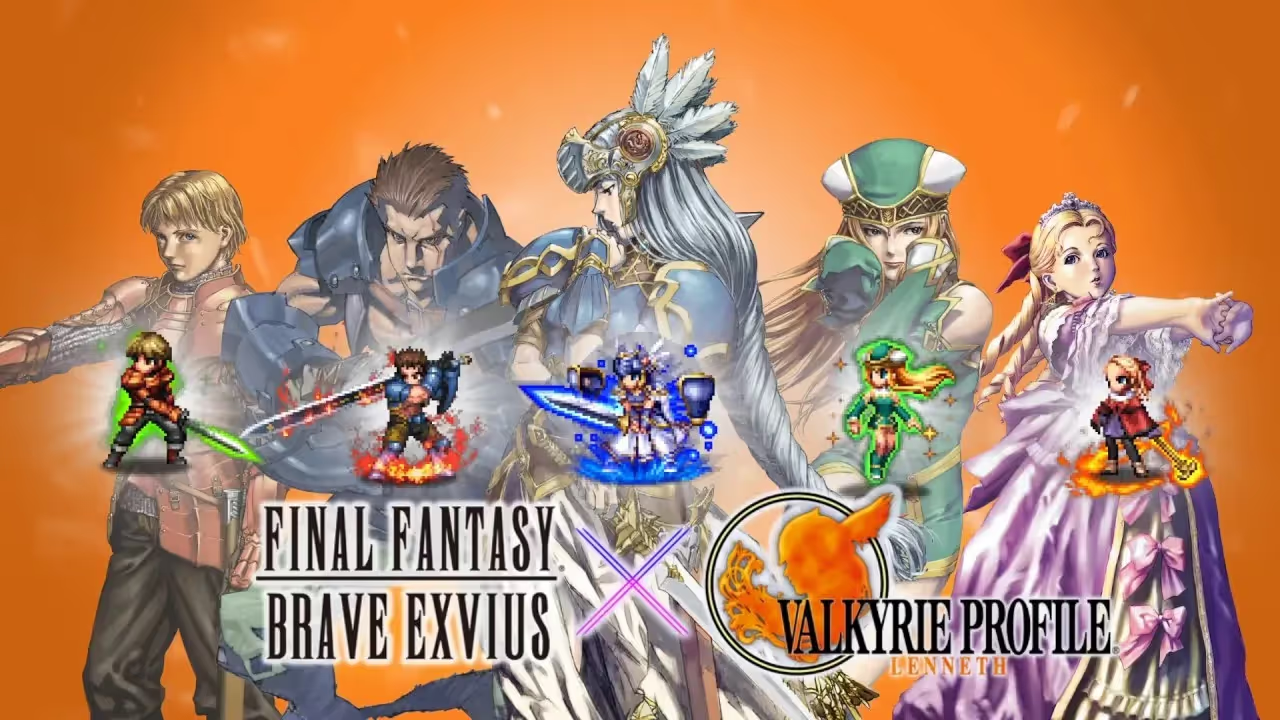
Japan (Mobile) • Sep 1–Oct 16, 2025
What happened: Lenneth, Arngrim, and Freya arrive with themed vision cards, quests, and login bonuses—celebrating Valkyrie Profile’s 25th.
Why it matters: JP market nostalgia remains a top ARPU driver if you respect canonical kits and music cues, and protect the power curve for existing whales.
Yodo1’s take:
- Anniversary Architecture. Pair the banner with a rerun lane and an entry lane: vets chase perfect rolls; returners get curated catch-up packs to reach competitive thresholds in 48–72 hours.
- Whale-Safe Design. Avoid stat bloat; introduce situational dominance (e.g., boss counters) to keep meta interesting without invalidating legacy spend.
- Merch & Media Sync. Cross with OST drops, art-books, or creator retrospectives—nostalgia is a multimedia prompt, not just a banner.
Arknights × Delicious in Dungeon (Phase 2)
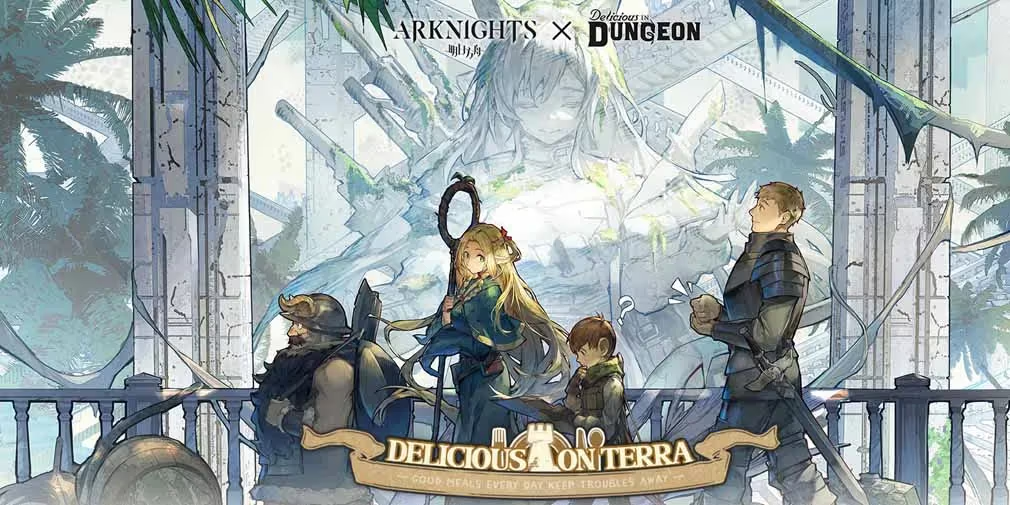
Global (Mobile) • Sep 2–Sep 23, 2025
What happened: New operator Izutsumi (5★ Specialist) debuts alongside limited “Vector Breakthrough” stages that combine ingredient crafting and environmental manipulation—bridging the anime’s cooking/dungeon themes with Arknights’ tactical DNA.
Why it matters: It’s a masterclass in mechanic-level IP fusion: not just a skin, but a new way to think about stage solutions.
Yodo1’s take:
- Mechanics, not Mascots. When the source IP has a strong verb (cook, sneak, unravel), bring that verb into your puzzle space. That’s what drives stickiness and rave reviews.
- Event On-Ramp. Provide a low-stress discovery path (story stages, “practice” tiles) so anime fans can enjoy the fantasy without slamming into high-APM walls.
- Post-Event Harvest. Migrate the best mechanics into a permanent roguelite node; let latecomers taste the magic while you rerun the monetization beat later.
Market Insights (and How to Use Them)
1) Reciprocal Crossovers Are the New Standard
The Subway Surfers × Brawl Stars play shows the market moving past “guest cameo” into co-created experiences. Expect players to compare your collab to the best they’ve seen.
Yodo1 guidance:
- Scope two mode hooks, one for each game.
- Share art pipelines early to avoid bottlenecks (shader parity, rigging constraints).
- Create a joint retention plan: alternating micro-beats that pass the baton week-to-week.
2) Anime IP Dominance, Still
Bleach, FMA, Jujutsu Kaisen—the pattern holds: passionate core audiences respond to authenticity, voice work, and lore-aware challenges.
Yodo1 guidance:
- Prioritize VO & story moments over sheer banner volume.
- Use region-specific challenges (kanji puzzles, spirit mechanics) where culturally appropriate.
- Budget for community collabs (fan artists, cosplayers) to turn your event into culture, not just content.
3) Nostalgia-Fueled Releases
From Valkyrie Profile celebrations to retro-style newcomers, emotional memory is a growth lever—if you modernize the experience.
Yodo1 guidance:
- Offer returning-player ladders (fast catch-up bundles + curated tips).
- Add modern QoL (auto-equip, smarter tutorials) and celebrate mastery with score attacks and time trials.
- Tie nostalgia to limited-time sinks that feel celebratory, not exploitative.
New Releases & Collab Potential
Borderlands 4 (PC/Console) — Sep 12, 2025
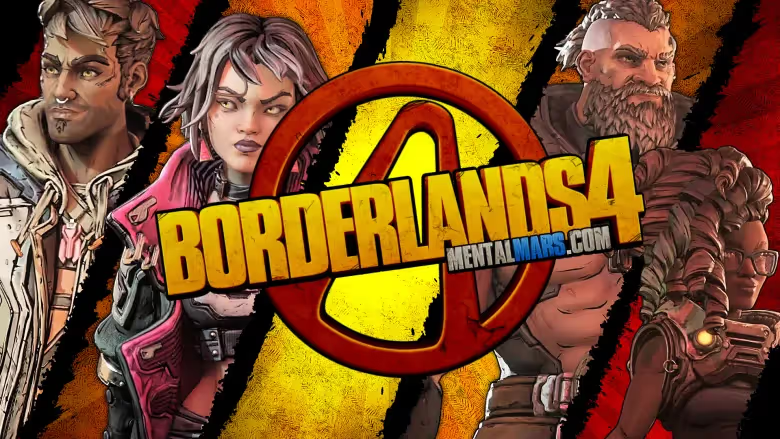
New planet (Kairos), upgraded traversal, 4-player co-op.
Yodo1’s take:
- Mobile Tie-ins: Co-branded timed events with loot chest cosmetics, skill-tree “skill shots,” or roguelite runs themed around Vault hunts.
- Partner Fit: Best for shooters, looters, and stylish action titles that can translate quirk + chaos into their core loop.
- What to Pitch: Weapon skin passes with perk ecosystems, streamer bounty boards, and clip-driven challenges.
Silent Hill f (PC/Console) — Sep 25, 2025
1960s Japan setting with psychological horror.
Yodo1’s take:
- Seasonal Anchor: Design your October slate around atmospheric modes, audio stingers, and “fear of the unknown” mechanics.
- Partner Fit: Titles with stealth, fog-of-war, or sanity meters; puzzle and narrative games can craft haunting, low-APM experiences.
- What to Pitch: Limited “whisper” cosmetics, diegetic UI glitches, audio lore collectibles.
Plants vs. Zombies 3 (China, Mobile) — Sep 26, 2025
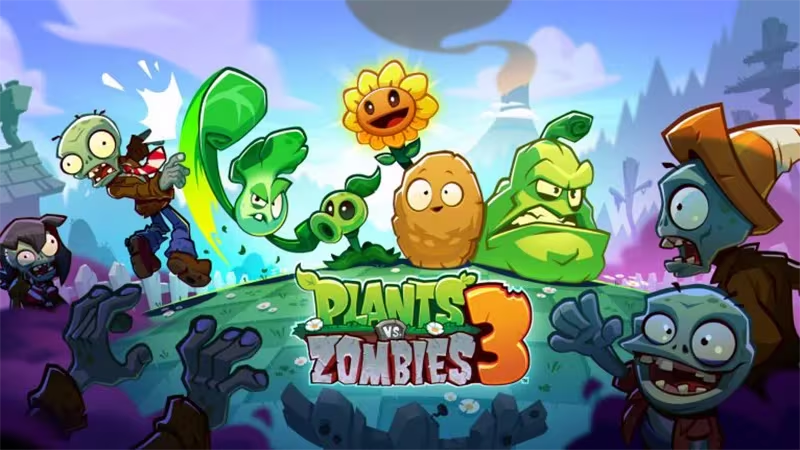
Element evolution and localized content aim to re-ignite a massive audience.
Yodo1’s take:
- CN-First Reality: Tune level ramps for short mobile sessions; front-load clarity, then depth.
- Partner Fit: Casual-midcore tower defense, merge, and builder games seeking broad four-quadrant appeal.
- What to Pitch: Festive holiday beats, brand tie-ins, and snackable challenges; maximize social graph reactivation.
How Yodo1 Helps You Win IP Collabs
- IP Sourcing & Fast-Track (LIFT): Shortlist the right IPs, negotiate win-win terms, and move from idea to signed deal without losing a season.
- Creative & LiveOps: From GDDs to playable prototypes, event economies, and calendar orchestration—we make sure the collab plays as good as it looks.
- Monetization Backbone (SABRE): Offers, sinks, and bundles engineered for event cadence and cohort health.
- Measurement That Matters (via IPverse): We align on cross-game KPIs—migration, elastic retention, and event ROI—so both partners see durable value.
Talk to Us
There are many ways to grow a game. The trick is knowing where to start. Whether you’re optimizing monetization or hunting for the IP that will light up your community, we’ll build the plan and run it with you.
Contact Yodo1 for IP Licensing & LiveOps Support.
Tell us your goals—we’ll do the rest.
Game Growth
Scaling Ad Monetisation with MAS
13.10.2025
•
5 mins read
Evaluating MAS at scale? Whether you’re testing it internally or looking for a better alternative to your current setup, this FAQ answers the questions large studios ask most — to remove any uncertainty and make your MAS journey smoother.
Integration & Setup
1. Do we need to connect or manage our own ad networks?
No. MAS runs on its own managed ad network accounts and operates them on your behalf.
2. How long does MAS integration take?
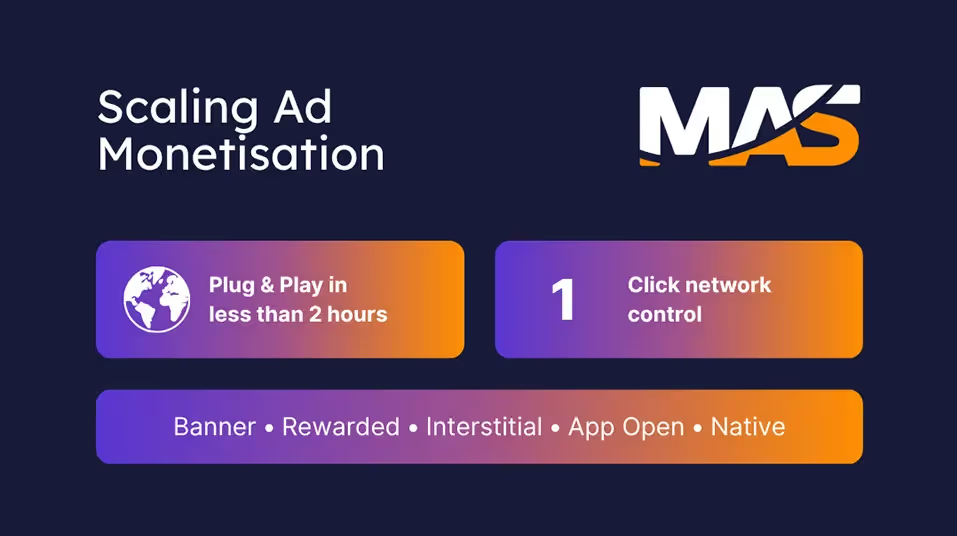
Integration is plug-and-play and typically takes under 2 hours, since there’s no need to set up ad units or connect multiple networks.
3. Which platforms are supported?
Android, iOS, Unity, Unreal Engine, Flutter, React Native, Godot, Cocos Creator.
Ad Formats & Controls
1. Which ad formats are available?
Banner, rewarded, interstitial, app open, and native.
2. What is capping and pacing, and does MAS support it?
Capping and pacing let you control how often interstitial ads appear, preventing ad fatigue. MAS provides these settings directly in the dashboard to keep users engaged and eCPMs strong.
3. Can MAS block unwanted ads?
Yes. MAS includes an ad blocking feature that filters out unwanted or sensitive ads.
4. Can we enable/disable specific ad networks in MAS?
Yes. MAS has a built-in ad network management tool that lets you easily add or remove ad networks with a single click.
Optimisation & Measurement
1. How does MAS optimise revenue?
MAS applies industry benchmarks, geo-based optimisation, fine-tuned ad durations, tag refreshes, and continuous addition of new networks to maximise your ad revenue.
2. Does MAS support different MMPs?
Yes. MAS supports Singular, Adjust, and Appsflyer.
3. Can I run ROAS campaigns if I’m using AppLovin UA?
Yes. MAS has MAX mediation built in, so AppLovin ROAS campaigns are supported.
4. Does MAS have impression-level revenue reporting?
Yes. MAS includes impression-level reporting, which can be used to send data to Firebase or any other platform.
Results & Eligibility
1. Will MAS affect app stability?
No. MAS is designed to be lightweight and even helps reduce ANRs compared to standard mediation setups.
2. Does MAS actually increase revenue?
Yes. On average, MAS improves ARPDAU by 20–50%. Some partners, like ActFirst Games, saw a 48% uplift. Learn more in the case study.
3. Can non-gaming apps also integrate MAS?
Yes. MAS works for apps as well as games. The only exceptions are:
- VPNs
- Apps from Google Play’s Designed for Families program that target children aged 12 and below.
Payments & Support
1. How do payments and thresholds work?
MAS consolidates all network revenue and pays you in advance on Net-10 terms, with a $100 minimum payout.
2. What support is provided?
Our Game Growth team will support you through integration, testing, and live optimisation to make sure everything runs smoothly.
Do you need more clarity or want to map out your migration plan?
Reach out to our Game Growth team to remove any blind spots: Contact Us
Or book a call to plan your journey with MAS.
Game Growth
Getting Started With Ad Monetisation
13.10.2025
•
5 mins read
Thinking about trying MAS but still have a few questions? Or maybe you’ve already started using it and need some clarity?
Our Game Growth team collected the most frequently asked questions about MAS to help you make a confident decision and speed up your onboarding.
Integration & Setup
1. What is required before I can monetise with MAS?
There are no special prerequisites — your app doesn’t even need to be live yet. You can integrate MAS at any stage of development.
2. How do I integrate MAS and how long does it take?
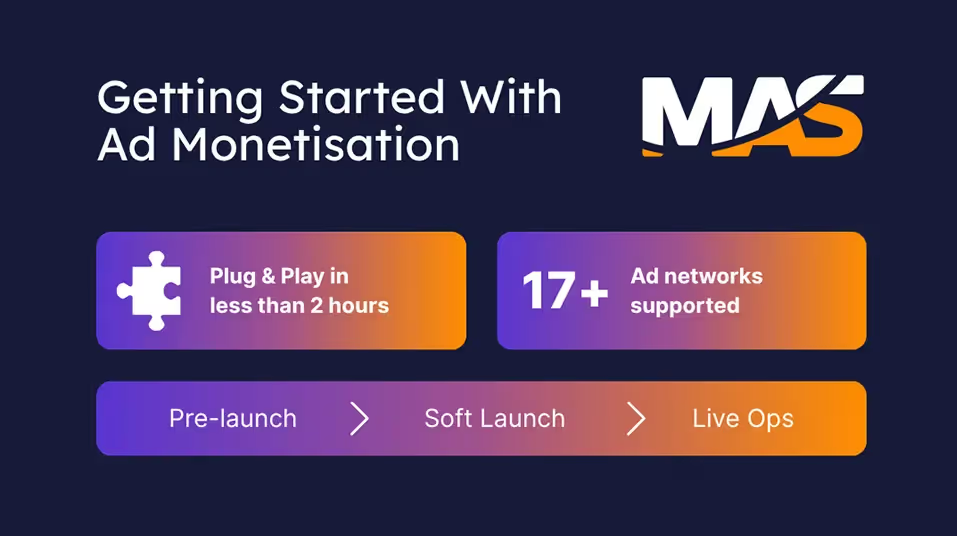
Integration is plug-and-play and takes less than 2 hours. You don’t need to connect or configure any ad network accounts — MAS uses its own accounts across 17+ networks.
3. Which platforms does MAS support?
MAS works with Native Android & iOS, Unity, Unreal Engine, Flutter, React Native, Godot, and Cocos Creator.
Ad Formats & Controls
1. Which ad formats are supported?
MAS provides banner ads, rewarded ads, interstitials, app open ads, and native ads.
2. What is capping and pacing, and does MAS support it?
Capping and pacing let you control how often interstitial ads appear, preventing ad fatigue. MAS provides these settings directly in the dashboard to keep users engaged and eCPMs strong.
3. Can MAS block unwanted ads?
Yes. MAS includes an ad blocking feature that filters out unwanted or sensitive ads.
4. Do I need to manage my own ad networks with MAS?
No — Yodo1 can fully manage your ad networks, allowing you to focus on what matters most: developing your game.
Optimisation & Performance
1. How does MAS optimise ads?
MAS continuously improves performance using:
- Industry benchmarks & geo-based targeting
- Ad duration adjustments & tag refreshes
- Regular addition of new networks
This ensures consistently high fill rates and eCPM across regions — lifting your total revenue.
2. What’s the difference between self-serve mediation and automatically managed solutions like MAS?
Self-serve mediation requires constant manual tuning and maintenance. MAS, on the other hand, automatically manages and optimises your ad stack in real time — boosting efficiency and ad revenue while saving you hours of work. Learn more
3. Will MAS increase my ad revenue?
Yes — MAS typically increases ARPDAU by 20–50%, depending on your existing setup.
4. Will MAS increase ANRs (App Not Responding errors)?
No. MAS is built to reduce ANRs, especially on low-end devices, by optimising SDK performance.
App Types & Compliance
1. Can apps (not just games) use MAS?
Yes — MAS works for both games and apps. The only exceptions are:
- VPNs
- Apps from Google Play’s Designed for Families program that target children aged 12 and below.
2. If my game has a mixed audience or requires age-gating, does MAS support that?
Yes. MAS automatically optimises ad delivery for mixed-audience apps using an age-gate system to serve appropriate ads. However, apps fully targeting children under 12 (part of Google’s Designed for Families program) are not supported.
Payments & Support
1. When do I get paid and what’s the payout threshold?
MAS pays in advance on Net-10 terms, with a minimum payout threshold of $100.
2. What kind of support will I get?
Our Game Growth team provides hands-on onboarding, integration, and continuous optimization — offering ongoing support to build long-term monetization success.
Is there a question that’s not on the list? Reach out to our Game Growth team for answers: Contact Us
Or book a free consultation to find out how MAS can help your game grow.
Get Updates From Yodo 1




Simplifying game growth
京ICP备12010993号-2 · 京ICP证120652号 · 京网文(2015)2029-371号 · 京公网安备11010502036836号
© Yodo1 Ltd. 2025 | All rights reserved.